
What is the hallmark of a truly successful workplace?
It is a feeling that connects an individual to their organization in a unique yet powerful way. A feeling of belonging and purpose. A feeling of being valued for the unique contributions one brings to the table. It is the result of belonging to a living, breathing community and not merely lifeless corporate machinery.
That feeling has a price tag when it is missing. Gallup's research on employee engagement in the US estimates that disengagement costs US employers approximately $1.9 trillion in lost productivity a year. A Deloitte study found that organizations with strong recognition cultures see 31% lower voluntary turnover. When employees feel appreciated, they stay, contribute, and thrive.
Leadership author Chester Elton put it simply on the Vantage Influencers Podcast:
The common thread through all the great leaders and teams we looked at was gratitude. They said people were their most important asset, and they meant it.
This post brings those two truths together: the leadership case for a people-first workplace, and the behavioral science that makes recognition work in practice. Let's delve deeper.
Why a People-First Workplace Starts with Recognition

Employees today want more than a paycheck. They want a purpose.
When people understand how their work contributes to something larger, motivation changes. Tasks feel meaningful. Effort turns into ownership. And that sense of purpose grows stronger when it is seen and recognized. Recognition is how leaders say, "I see what you did, and it matters." It connects effort to impact.
Research supports this link. According to McKinsey's research on employee purpose, 70 percent of employees say their sense of purpose is defined by their work. Yet only 18 percent strongly agree that they feel recognized for it. That is the gap modern leaders must close.
So why do companies with strong recognition cultures outperform those without one? Because recognition converts purpose into repeated behavior. Purpose tells employees why they matter. Recognition proves it, publicly and frequently, until contribution becomes culture.
It does not have to be a significant outlay either. Reportedly, 65% of employees prefer non-monetary incentives over fiscal ones. A simple thank-you or a personalized note can go a long way in making employees feel valued.

VANTAGE INFLUENCERS PODCAST
"A people-first culture is not a corporate buzzword. It is a genuine commitment to your employees' well-being, and when you invest in their growth and fulfillment, the success of the whole organization follows."
— Saleh Khaled Alghadouni, Human Resources Administrator at SABIC
Listen to the EpisodeThe Science Behind Recognition
Behavioral science offers a powerful truth: thoughtfully designed recognition can be a game-changer. It can make employees feel valued while driving the positive behavioral changes that push a business forward.
This is where Vantage Circle's proprietary AIRe framework comes in. It enables businesses to adopt a data-driven approach to R&R program design and execution, and lets HR leaders quantitatively measure program effectiveness against objectives like engagement, performance, and retention.
Our findings suggest that employees respond better to programs built on the AIRe framework's four fundamental themes:
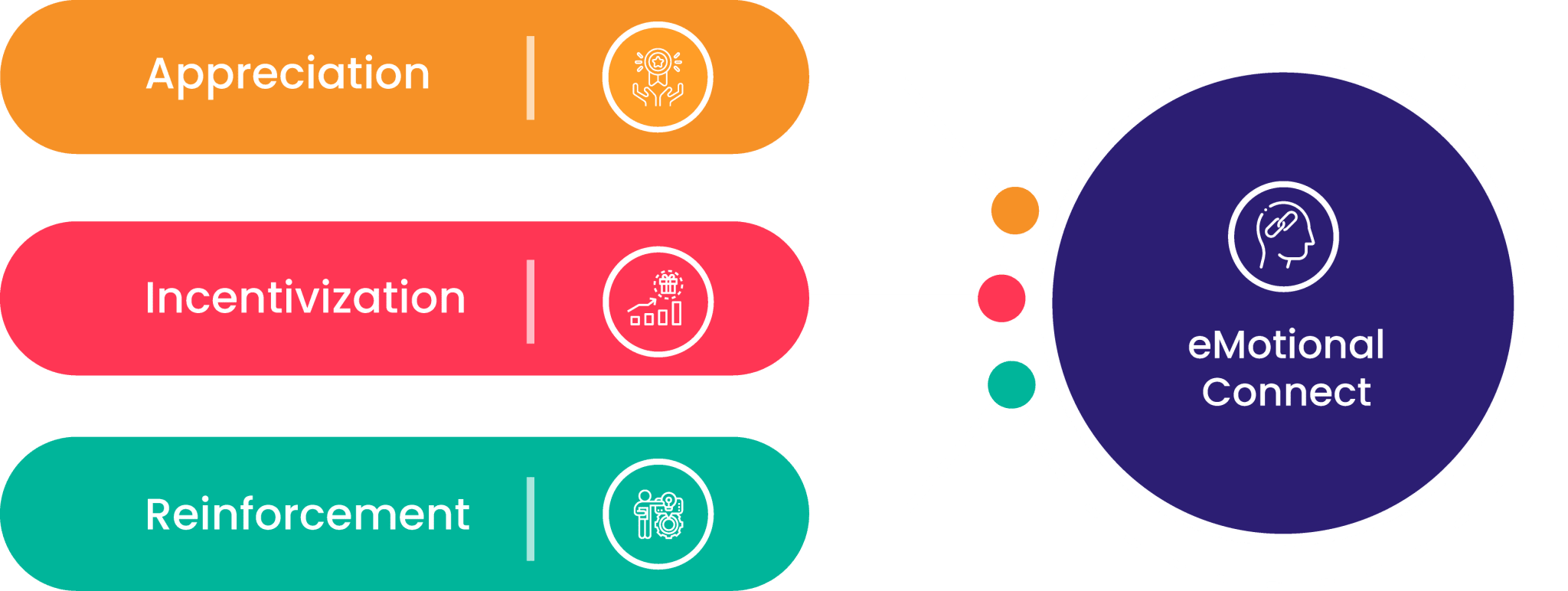
- Appreciation acknowledges a person's inherent worth, not just their performance. It is a simple thank-you for a job well done, or a public shout-out for ongoing dedication.
- Incentivization goes beyond money. It incites action by offering social validation and exclusivity.
- Reinforcement highlights the desired behaviors that drive organizational impact. It acknowledges not just the "what" but also the "why."
- eMotional Connect creates a strong feeling of association with recognition. It makes the moment feel special, meaningful, and truly connected to the individual.
This approach personalizes recognition and turns it from an obligatory annual HR practice into something frequent, thoughtfully designed, and personally valuable. Kudos come from peers, not just managers. The system acknowledges achievements, ongoing efforts, and contributions to company values alike.
Do Give a read: The Science of Recognition
Recognition as a Strategic Business Lever
Recognition cannot be just a feel-good practice. It is equally a performance driver.
When employees feel seen and valued, they contribute more, and the impact shows up in numbers.
According to Gallup, organizations with highly engaged employees experience 21% higher profitability and 17% higher productivity than those with low engagement.
The mistake many organizations make is treating recognition as an HR initiative instead of a leadership responsibility. Strategic recognition does not always mean rewards or bonuses. It means aligning appreciation with the actions that reflect company goals and values. When leaders do this consistently, recognition turns into reinforcement, and reinforcement turns into results.
A Deep Dive into the Data
Traditionally, R&R programs aimed to boost engagement and performance in the hope of inspiring loyalty. Our research shows that focusing on what employees actually do, meaning employee behavior, has a much stronger impact.
As per the Annual Recognition and Rewards Report for India (2024-25), a whopping 67% of companies that emphasized reinforcing desired behaviors reported high program effectiveness. On the other hand, less than half of the companies focused on loyalty and retention achieved similar results.
The secret to a well-designed R&R program lies in aligning it with the behaviors that drive the organization's success. There is currently a gap between what leaders value and what gets recognized. To bridge it, organizations need to translate core values into specific, actionable behaviors employees can exhibit every day, equip leaders to understand how those values translate into everyday actions, and design the R&R program to recognize those targeted behaviors, not just final results.
To boost the emotional value of recognition, consider a points-based rewards system instead of cash awards. It allows employees to choose rewards that are meaningful to them, making recognition more personal and impactful.
While most companies have decent program designs, execution is crucial. Programs need to be evaluated for frequency, alignment with desired behaviors, and delivery methods. Not just recognition counts and budget utilization. You need to ask yourself these fundamental questions:
- Is recognition happening often enough?
- Are the right things being recognized?
Recognition in Action: A 230,000-Employee Case Study
A compelling case study demonstrating the success of this approach comes from one of the world's largest IT services companies.
Engaging a massive, globally distributed workforce is a challenge. With over 230,000 employees across 66 countries, the organization partnered with Vantage Circle to launch an enhanced global peer-to-peer recognition and rewards program.
In addition to revamping the program around its core values, the company focused on two key levers: employee experience and analytics. The program is designed to recognize high performers, acknowledge employee efforts, and sustain motivation through timely, frequent recognition. Its instant, real-time capability drastically enhances appreciation, impacting both the frequency and coverage of the R&R program.
The program's framework is built on four main pillars:
- Unit awards
- Monetary spot awards
- Non-monetary spot awards
- Long service awards
Unit awards recognize significant impacts on business objectives, presented in collective forums such as town halls. Spot awards, in both monetary and non-monetary categories, reward behaviors aligned with the company's cultural values. Long service awards celebrate employees reaching service milestones, making their anniversaries memorable. And the platform seamlessly scales across the vast employee base without compromising speed or performance, regardless of location.
The results are impressive:
in non-monetary awards (badges and appreciation tokens) from 2021 to 2023, indicating a strong culture of peer-to-peer recognition.
long service awards given since 2021, with a 9.8x increase in engagement (wishes and praises) on those posts in the last two years.
awards given on average, totaling more than 553,490 awards over two years.
an employee was recognized in the last fiscal year, with over 57% of the workforce receiving recognition in 2023.
These numbers reflect the extensive reach and effectiveness of a global R&R program built on behavioral science, especially considering the organization's size.
Gratitude Turns Recognition into Culture
If recognition is the system, gratitude is the operating principle behind it.
Research from the Greater Good Science Center at UC Berkeley found that employees who feel appreciated are more than 50% more productive, more loyal, and significantly less stressed.
Gratitude does not just make people happier. It builds trust, strengthens collaboration, and creates a sense of belonging that cannot be faked.
Some organizations already lead by example. WD-40, known for its "tribal" culture, treats mistakes as learning moments rather than failures. American Express shows how recognition and empathy can scale across geographies. At Texas Roadhouse, gratitude flows from executives to servers, creating a workplace where people genuinely want to stay.
These cultures do not emerge by accident. They grow from leaders who model appreciation every day: a quick thank-you in a meeting, a handwritten note after a project milestone, calling out effort in front of peers. Each act reinforces that gratitude is part of how the company operates. Over time, the habit becomes identity. It is what employees talk about when they describe why they love where they work.
Related: National Gratitude Month: 20 Ways To Celebrate It At Work
Keeping Recognition Alive in a Hybrid, AI-Driven World

Hybrid and remote work have reshaped how teams connect. The spontaneous thank-you in the office kitchen has been replaced by Slack messages and Zoom check-ins, and SHRM notes that maintaining culture and connection across remote and onsite teams is one of the primary difficulties leaders face.
Gratitude cannot rely on proximity anymore. It has to be designed into the way work happens. Virtual recognition boards, shout-outs in team channels, and digital rewards make appreciation visible, but the real work lies in consistency. Employees do not need grand gestures. They need frequent signals that they are seen: weekly check-ins that start with appreciation, end-of-month reflections that highlight team wins, managers who take a minute to write a quick note of thanks.
Artificial intelligence raises the stakes further. McKinsey estimates that by 2030, automation could impact up to 30% of global work hours. AI can highlight patterns of burnout or automate recognition reminders, but only a leader can step in with the emotional support that makes employees feel seen and valued.
AI is going to disrupt everything we know, but I still see the future being very people-focused. Relationships will always matter.
– Chester Elton
Empathy is what makes that possible. Deloitte's Global Human Capital Trends research identifies empathy as one of the most critical leadership capabilities for driving innovation and engagement. Leaders who ask "what happened?" instead of "who's at fault?" replace blame with curiosity, and that psychological safety is what gives teams the courage to take risks, share ideas, and learn from mistakes.
Frequently Asked Questions (FAQs)
1. Why is employee recognition important for building a thriving workplace?
Recognition is important because it converts purpose into repeated behavior and makes people feel valued for what they contribute. Gallup estimates that disengagement costs US employers around $1.9 trillion in lost productivity a year, while Deloitte found that organizations with strong recognition cultures see 31% lower voluntary turnover.
2. What is a people-first workplace culture?
A people-first workplace culture prioritizes the holistic well-being of employees and treats them as the heart of the organization rather than as resources. It gives people purpose, autonomy, and appreciation, and it recognizes contributions frequently and personally.
3. How does employee recognition improve engagement and retention?
Recognition improves engagement and retention by connecting effort to impact and reinforcing the behaviors that matter most. According to Gallup, organizations with highly engaged employees experience 21% higher profitability and 17% higher productivity than those with low engagement. Recognition works best when it is frequent, timely, personalized, and aligned with company values, not limited to periodic top-down awards.
4. How can companies recognize employees in a hybrid or remote workplace?
Use a digital recognition platform to make appreciation visible across locations, encourage peer-to-peer kudos, and tie recognition to company values so it stays meaningful. Pairing the right technology with gratitude and empathy keeps culture strong even when teams are working apart.
The Road Ahead
That journey is a testament to the ongoing pursuit of recognition excellence, and the broader lesson applies to every organization: recognition is not a luxury, it is a necessity.
The road ahead is clear. By adopting a behavioral science-driven approach through frameworks like AIRe, organizations can create R&R programs that are impactful and aligned with strategic goals. By pairing those programs with gratitude and empathy, leaders can keep culture strong through hybrid work and AI disruption alike.
Recognition connects purpose to performance. Gratitude keeps cultures grounded through change. Empathy ensures that even in an AI-driven world, leadership remains human. When employees feel seen, trusted, and valued, they feel that they belong. And belonging is what turns a company into a community where everyone thrives.

Sanjeevani Saikia is a Senior Content Strategist at Vantage Circle, where she leads end-to-end content strategy across SEO, thought leadership, brand storytelling, podcasts, and video. She is also the host of the Vantage Influencers Podcast, where she brings conversations with HR and business leaders from top global organisations, including Fortune 500 companies.
Connect with Sanjeevani on LinkedIn.