
Career milestones are significant achievements that mark measurable progress in a person's professional journey: a first job, a promotion, a certification earned, a project led, a skill mastered. For employees, they are proof of growth. For organizations, they are recognition opportunities that directly affect engagement and retention, because milestones that go unnoticed become reasons to leave. SHRM research links effective recognition to lower voluntary turnover, and the Vantage Circle and Great Place to Work Recognition Effect study (2025) found globally that 92% of employees in high-recognition cultures intend to stay, compared to 76% in emerging recognition cultures.
I have spent over a decade in the professional world, and there is nothing quite like the moment when you, or someone on your team, realizes they have crossed one. This guide covers what career milestones are, 25 examples worth recognizing, and how to celebrate them in ways employees actually remember.
What Are Career Milestones?
Career milestones are those defining moments in our professional journeys when we pause, reflect, and realize just how far we've come. For employees, they're not just achievements; they're markers of growth, progress, and purpose. From landing that first job to leading a major project or even pivoting to a new industry, milestones remind us that we're moving forward, evolving, and carving a path that's uniquely ours.
HR professionals understand that career milestones matter not just to employees but also to an organization's culture, engagement, and retention. Aligning milestones with employee recognition programs creates a workplace where growth thrives and talent flourishes.
Why do they matter? Because they drive accomplishment and direction. For organizations, they offer chances to recognize and motivate employees, fostering a culture that values growth. For individuals, they serve as proof that every effort, whether a small step or a monumental leap, makes a difference.
Second to pay, a lack of career progression is Gen Z's biggest driver for changing jobs (Randstad Gen Z Workplace Blueprint, 2025)
25 Career Milestone Examples Worth Recognizing
Skill-based milestones
1. Earning a professional certification. A PMP, SHRM-CP, or cloud certification means an employee spent their own evenings on growth. Recognize it publicly, and tie it to something visible: a project, a role change, a raise conversation. Certificates that vanish into HR files teach people not to bother next time.
2. Mastering a new technical skill. Learning a programming language or an AI tool mid-career takes more courage than it did at 22. A note from the direct manager lands better here than a company-wide post.
3. Becoming the go-to expert on a topic. No certificate marks this one. But when colleagues start routing questions to one person, that person has crossed a milestone nobody formally awarded. We have seen managers spot this months before HR does; give them a way to flag it.
4. Presenting at an industry event or conference. External visibility for the employee, free credibility for the employer. Fund the travel and feature the talk internally afterward.
5. Completing a degree while working. An evening MBA finished alongside a full-time role deserves more than a line in the newsletter. This is a moment for leadership to acknowledge personally.
Role-based milestones
6. Landing the first job. The start of everything. Onboarding is the recognition here: a structured first week tells a new hire the organization noticed they arrived.
7. Passing probation. Rarely celebrated, quietly significant. A confirmation conversation that names what the employee did well sets the tone for everything after.
8. Earning a first promotion. The clearest traditional milestone. Announce it with specifics about what earned it, not just the new title. The rest of the team is watching to learn what progression looks like here.
9. Managing people for the first time. The hardest role transition most professionals ever make, and the one organizations most often celebrate without supporting. Pair the announcement with manager training.
10. Moving into a leadership or executive role. Give senior transitions visibility across the organization. Everyone ambitious is watching.
11. Making an internal move across functions. A marketer moving into product, an engineer into sales engineering. We have seen lateral moves quietly save careers that a resignation letter was about to end; celebrating them tells employees they do not have to leave to grow.
Impact-based milestones
12. Leading a major project to completion. Recognize the outcome, and name the specific decisions the person made along the way. Generic praise for big projects is forgotten by Friday.
13. Landing or saving a significant client. Revenue moments are the easiest milestones to celebrate and the most often kept inside the sales team. Make them visible beyond the sales floor.
14. Improving a process everyone hated. The employee who fixed the expense workflow or killed a redundant weekly report saved hundreds of hours across the company. Nobody sees it unless recognition makes it visible.
15. Mentoring someone to their own milestone. When a mentee gets promoted, the mentor hit a milestone too. Recognizing them is what makes mentorship worth doing a second time.
16. Driving a change that outlasts the person. A policy written, a framework adopted, a team built from scratch. These usually surface only in farewell speeches. Surface them earlier.
Tenure and service milestones
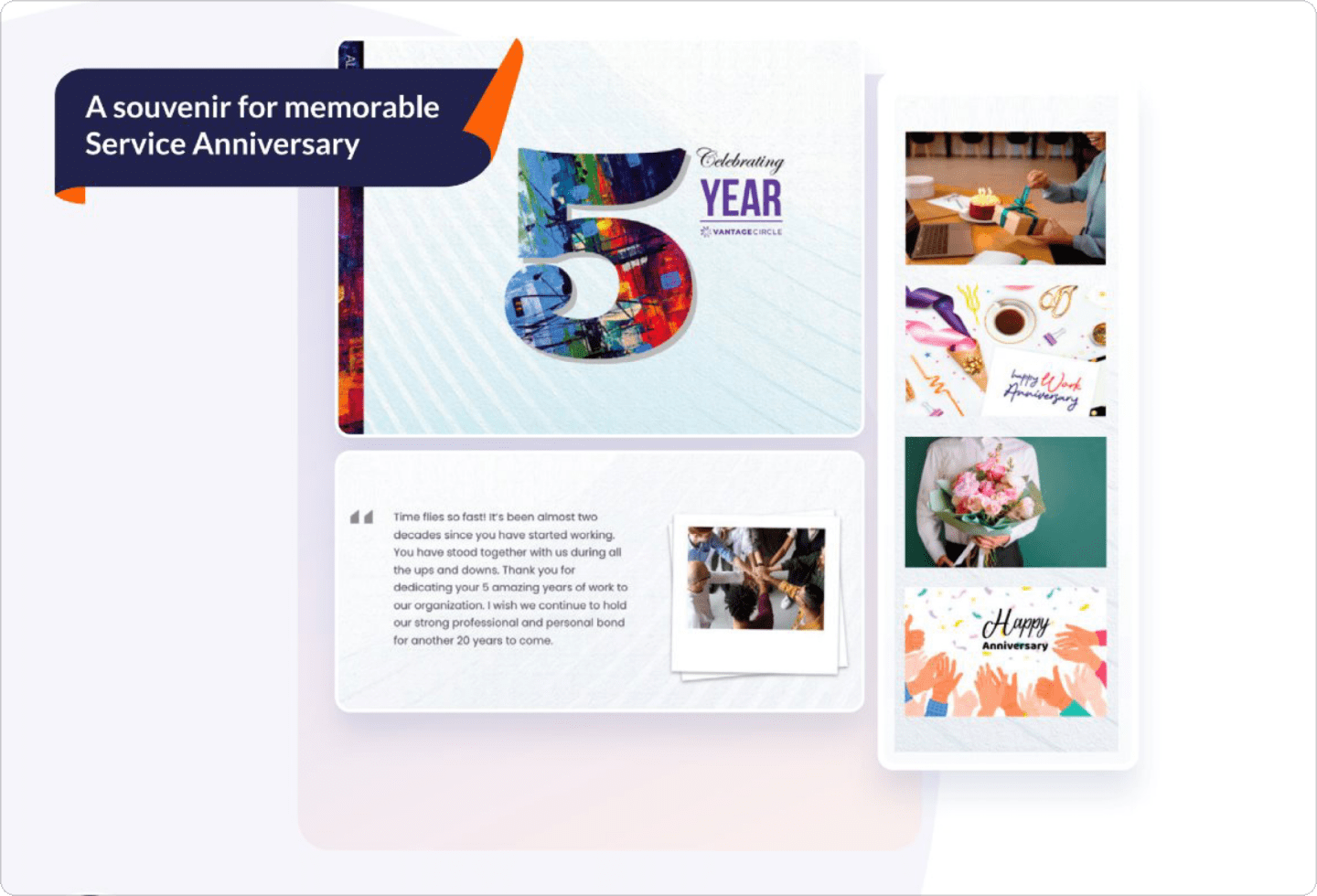
17. The first work anniversary. Year one is the highest-risk retention window, which makes this the highest-leverage anniversary to celebrate well. A personalized note beats an automated badge. At Vantage Circle, every tenure milestone triggers two things: a shoutout on our internal employee platform, where colleagues add their own messages, and a personalized mail from management. The mail is the part people talk about, because it is written for one person and reads that way.
18. Five years of service. By year five an employee has survived at least one reorganization and several managers. Mark it with something specific to their contribution, not a catalog gift.
19. Ten years and beyond. Long tenure is increasingly rare. These are the people who carry institutional memory; celebrate them in front of the people they trained.
20. Retirement. The final milestone deserves the most personal treatment: messages from colleagues across the years, not just the current team.
Personal growth and unconventional milestones
21. Returning from parental leave or a career break. Re-entry is a milestone most recognition programs skip entirely. A deliberate welcome-back signals the break cost nothing.
22. Overcoming imposter syndrome to take a stretch role. Nobody announces this one, but managers see it happen. Private, specific acknowledgment from a manager fits better than anything public.
23. Turning down a promotion that did not fit. We have seen employees turn down the management track because it did not fit where they wanted to grow. Organizations that respected the call kept their best specialists.
24. Switching industries entirely. Hiring a career changer, or supporting an internal one, is a bet on transferable skill. Recognize the transition publicly so the next person considering one knows the organization can handle it.
25. Taking a sabbatical and coming back. A supported sabbatical is a retention tool. Celebrating the return, and what the person brings back with them, is what completes it.
Short-Term vs. Long-Term Milestones
Short-Term Milestones: These are stepping stones, like completing a key project or passing a certification exam. They give employees quick wins and keep them motivated. As HR, celebrating these moments through public recognition or small rewards helps reinforce a culture of progress.
Long-Term Milestones: These are the big-picture goals, like becoming an executive leader, establishing a thriving business, or building a legacy within your industry. These milestones take time and require strategic career development and mentorship. HR plays a key role in providing the resources and opportunities that allow employees to achieve these goals.
Why It All Matters
When organizations celebrate their people's victories – from landing that challenging client to launching an innovative project – they spark something extraordinary. The ripple effect turns individual wins into team-wide momentum.
Career milestones are more than just achievements; they're stories of resilience, learning, and growth. For employees, they inspire confidence and motivation. For organizations, recognizing these milestones strengthens engagement and retention, creating a supportive culture where people want to stay and grow.
As HR professionals, it's crucial to not only recognize and celebrate these milestones but also to provide the tools, resources, and opportunities that help employees reach them. 70 percent of employees said their sense of purpose is defined by their work (McKinsey & Company, 2021). When employees feel supported in their journey, they are more likely to contribute fully to the organization's success.
Whether short-term or long-term, conventional or unconventional, every milestone is worth celebrating. Because at the end of the day, it's these moments that shape our professional lives and remind us of the progress we've made. So, as you think about your journey and the journeys of those you support, what milestones are you most proud of? And what's next on your horizon?
Setting Effective Career Milestones: A Guide for Employers
As an employer, helping employees set and achieve career milestones isn't just good for them; it's good for your business. Employees who see clear growth opportunities are more engaged, motivated, and likely to stay. In fact, 94% of employees say they would stay at a company longer if it invested in their career development (LinkedIn Learning).
Use the SMART Approach
Encourage employees to set SMART milestones, defined as goals that are:
- Specific – Clearly defined (e.g., "Lead a project" instead of "Do better at work").
- Measurable – Trackable progress (e.g., "Complete three leadership training sessions").
- Achievable– Challenging yet realistic.
- Relevant – Aligned with both company and personal goals.
- Time-bound – Set within a timeframe to stay on track.
When employees set clear goals, they feel more in control of their careers, leading to higher productivity and job satisfaction.
Break Down Long-Term Growth into Smaller Steps
Big goals can feel daunting, so help employees focus on small, achievable steps. If someone wants to grow into a leadership role, support them by:
- Take ownership of a small project.
- Enroll in a leadership training program.
- Get mentorship from a senior leader.
- Gradually take on more responsibilities.
Small milestones keep motivation high and prevent employees from feeling stuck.
Provide Structure with Career Pathways
Having a clear career roadmap makes employees feel valued and invested in. Companies can:
- Outline career progression paths for different roles.
- Offer learning opportunities like certifications, mentorships, and cross-functional projects.
- Set measurable goals for individual and team growth.
Be Flexible & Support Changing Goals
Not all career growth is linear. Some employees may want to explore different departments or even shift industries. Supporting these transitions can help boost retention and strengthen internal talent.
Recognize and Celebrate Milestones
Acknowledging career achievements, big or small, makes a huge difference. Whether it's a promotion, skill development, or a completed project, recognizing these moments fosters a culture of appreciation and growth.
Celebrating Career Milestones: How Are You Recognizing Growth?
Celebrating career milestones boosts engagement, motivation, and retention by validating hard work and fostering a positive culture. Effective recognition considers each employee's journey: early-career professionals may value public acknowledgment and mentorship, mid-career employees appreciate leadership opportunities, and late-career professionals find meaning in mentoring or legacy recognition.
Colleagues make celebrations memorable by sharing personal stories rather than generic messages. The most impactful recognition is tailored: whether public praise, private appreciation, or rewards that align with an employee's interests and aspirations.
Now that we have established that Career milestones mark significant achievements in an employee's journey, the real question remains: how often do we stop to celebrate them meaningfully?
As an employer, here's how you can make milestones more meaningful:
Who Should Celebrate Career Milestones? (Hint: It's Everyone!)
Think about the last time you hit a major career milestone. Who celebrated with you? Recognition isn't just an HR responsibility; it's a shared effort:
Managers: Have you publicly acknowledged your team's achievements in meetings or company updates? A simple shoutout can go a long way.
Colleagues: Have you sent a note of appreciation or a small token of congratulations? Peer recognition fosters stronger team bonds.
Organizations: Do you have structured recognition programs for key milestones? If not, it's time to start!
How Should You Celebrate? (Make It Personal!)
A generic "congrats" email won't cut it. Employees want recognition that feels meaningful and tailored to their journey. Here's how to celebrate milestones at different career stages:
- Early Career (First Job, 1-Year Anniversary, Skill Mastery)
Feature them in a company newsletter or social media post. At Vantage Circle, every tenure milestone is celebrated. Each anniversary triggers a shoutout on our internal employee platform, where colleagues add their own messages, and a personalized mail from management. The mail is written specifically for that person, and it is the part employees talk about long after the day.
Offer a mentorship opportunity with a senior leader.
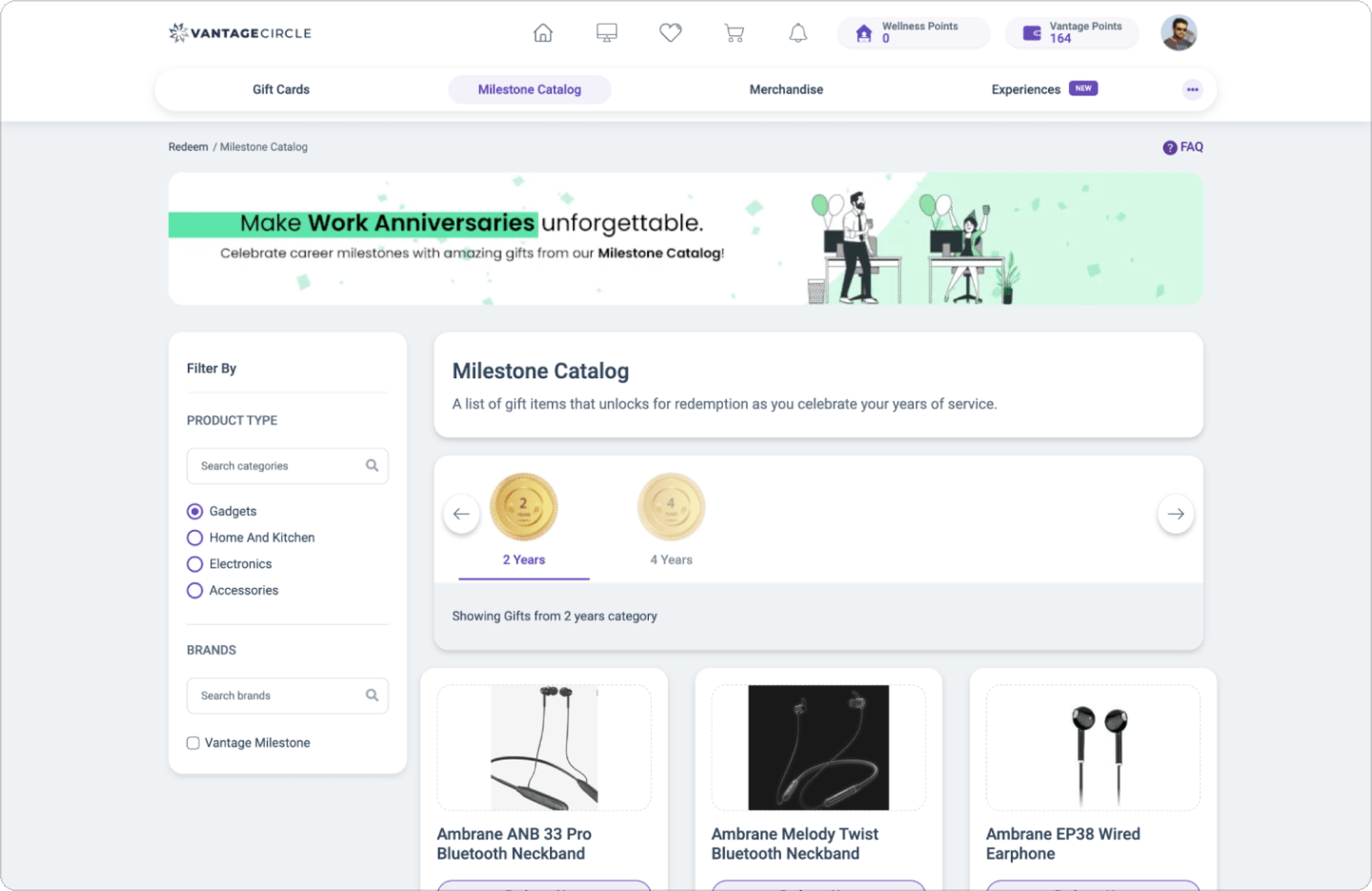
Surprise them with a small personalized gift.
- Mid-Career (Promotion, Major Project, Leadership Role)
Provide funding for professional development (certifications, training).
Give them visibility: let them lead a company-wide presentation or event.
Organize a team outing or lunch to celebrate together.
- Late Career (Work Anniversaries, Retirement, Long-Term Contributions)
Create a legacy project in their honor.
Offer flexible transition plans (e.g., advisory roles, mentorship).
Host a meaningful farewell event with personal messages from colleagues.
What Are Some Creative Celebration Ideas?
- Public Acknowledgment: Social media shoutouts, newsletters, CEO mentions.
- Personalized Gifts: Tailor rewards to the employee's interests and career goals.
- Growth Opportunities: Sponsor training programs or send them to industry events.
Recognition doesn't have to be expensive, but it does need to be thoughtful. By making celebrations engaging and personal, organizations create an environment where employees feel valued, not just for their work, but for their growth.
Conclusion
Career milestones aren't just markers of progress; they shape both personal and professional growth. From small wins to major achievements, each step forward builds confidence, fosters motivation, and strengthens engagement.
As employers, recognizing and supporting these milestones isn't just about celebration; it's about creating a culture of growth and appreciation. When employees see their progress valued, they stay inspired to keep pushing forward.
So, what's the next milestone for you or your team? Take a moment to reflect, set new goals, and create a path toward even greater success. After all, every milestone, big or small, is a step toward something bigger.

Supriya is a Content Marketing Lead at Vantage Circle, where she writes on employee engagement, recognition, workplace communication, and culture. Her work on remote team recognition draws on primary research from Vantage Circle's platform data and customer deployments across distributed workforces. She spent the earlier part of her career in corporate communications at Burson, ESPN Star Sports, and CBRE, advising organizations on the messages employees actually hear.
Connect with Supriya on LinkedIn.

