
You know what, "teamwork" and "team-building" are related but not the same. Team building is the activity that forms a group, and teamwork is the ongoing way that group collaborates.
It is easy to confuse the two because they sound similar but are distinct concepts. If teamwork focuses on the functioning of groups, team building means the formation of the groups.
You can think of it as form versus function: one builds the team, the other is what the team does every day. And for HR, the difference decides whether collaboration lasts past the offsite.
Below, you'll find the side-by-side comparison, what each term really means, and how to make teamwork stick.
Key Takeaways
- The core difference between teamwork and team building (form versus function)
- What team building is and the HR objectives it drives
- What teamwork is and the everyday behaviors it runs on
- Why the difference matters for HR, and how recognition keeps collaboration alive
- Common myths about teamwork and team building, cleared up
What is the difference between teamwork and team building?

The difference between teamwork and team building is one of form versus function: team building is the point-in-time activity (the event, the input) that forms a group, while teamwork is the continuous, everyday behavior (the output) of that group collaborating.
| Dimension | Team Building | Teamwork |
|---|---|---|
| What it is | The activity or process of forming a group | The ongoing function of a group working together |
| Nature | Form (structured, event-based) | Function (continuous, behavioral) |
| Timing | Point-in-time (offsites, workshops) | Every day |
| Who drives it | HR, managers, and facilitators | Every team member |
| How you measure it | Participation, activity completion | Collaboration frequency, peer recognition, output |
| Example | A problem-solving workshop | Colleagues covering for each other to hit a deadline |
What it is
Team Building: The activity or process of forming a group
Teamwork: The ongoing function of a group working together
Nature
Team Building: Form (structured, event-based)
Teamwork: Function (continuous, behavioral)
Timing
Team Building: Point-in-time (offsites, workshops)
Teamwork: Every day
Who drives it
Team Building: HR, managers, and facilitators
Teamwork: Every team member
How you measure it
Team Building: Participation, activity completion
Teamwork: Collaboration frequency, peer recognition, output
Example
Team Building: A problem-solving workshop
Teamwork: Colleagues covering for each other to hit a deadline
Only one of these shows up in day-to-day output and retention, and it is not the offsite.
What is Team Building?
Team building is the activity of forming and developing a group into a team, by bringing together people with complementary strengths and engaging them through structured activities.
Before the 1960s, team building was popularly known as "team spirit." The goal has not changed: better relationships, higher productivity, and open discussion.
Team building deals with two main aspects: recruiting people from the same or different teams, and engaging them in activities to achieve results. Managers can recruit strategically, then build the bond through team building activities, or virtual team building activities for remote teams.
The objectives are HR outcomes: team building can boost morale and motivation, lift engagement, and give people fewer reasons to leave their jobs.
Gallup finds 77% of employees are not engaged or actively disengaged. That is the gap well-designed team building is meant to close.
Objectives of Team Building
1. Boost Morale
To ensure high team performance, every member of the team should feel motivated and confident in their team members and goals to achieve it. Team building activities help employees feel a sense of shared purpose which inspires them to achieve the task at hand and do it perfectly.
2. Increase Employee Retention
This was the second most popular reason cited by professionals to conduct these activities, which are an outlet for effective team building. They said that because employees feel a boost in their morale and motivation to succeed, they start enjoying their work. This translates to fulfilled expectations from their work which on a large scale can lead to improved company culture. Therefore causing employees no reason to leave their jobs.
3. Improve Employee Engagement
In a workplace, you have to work with people. And when your employees can have a team with whom they can exchange ideas and achieve their targets, they start getting invested in the organization and its people. They will care about the organization's success because they will feel like a part of a team, of something bigger than themselves. This will eventually lead to high motivational teams who feel attached to their organisation and work hard to achieve their goals.
What Is Teamwork?
Teamwork is the ongoing function of a group collaborating toward a shared goal. It is the daily behavior that team building is meant to produce.
The Cambridge Dictionary defines teamwork as "the activity of working together in a group with other people, especially when this is successful."
For teams to succeed, they need teamwork and the readiness to accept each other. As the legendary baseball player Babe Ruth rightly said:
The way a team plays as a whole determines its success. You may have the greatest bunch of individual stars in the world, but if they don't play together, the club won't be worth a dime.
Teamwork runs on a set of everyday behaviors:
- Defined roles and responsibilities
- Strong internal communication
- Mutual respect
- Accepting people with diverse opinions
- Holding discussions before arriving at a consensus
- Involving everyone in decision-making processes
- Giving everyone the freedom and autonomy to fulfill their functions
- Strong leadership skills
- Having the required skills and ability to come up with innovative ideas
- Being accountable and responsible for their actions
When those behaviors hold, the objectives of teamwork follow naturally: diverse ideas solve complex problems, cooperation becomes the default, and the group gets more done in less time. That is the importance of teamwork in one line: individual skill turned into collective output.
Related Resource: Importance Of Teamwork: 6 Greatest Benefits
Objectives of Teamwork
1. Problem Solving
Diverse opinions and ideas, if harnessed properly, can solve even the most complex set of problems.
There are several teamwork strategies you can utilize to practice problem solving with the members of your team. Teamwork aims to achieve thorough problem solving because it believes that diverse ideas when combined together can lead to effective problem solving. Working in a team exposes people to new ideas, perspectives and learn new problem-solving methods. This also encourages people to share their opinions on matters, improve communication and can actually regulate more collaboration.
2. Encourage Cooperation
Working in a team requires people to work towards a common goal. This can only be achieved when they give each other a chance to portray their individual expertise. Teamwork’s objective is to help employees learn skills like patience, trusting each other, listening and trying to find common ground. These skills will only help team members to open up to each other and participate in the completion of their function.
3. Improve Team Productivity
When you make a group of skilled people strive towards achieving the same thing, you can get more done in less time. There can be many tasks which are too complex or time-consuming to be undertaken by a single employee. But when you assign these tasks to a group, they can divide it among themselves and strategize the best possible way to complete it. This saves time, enhances individual performance and increases the team’s overall productivity.
Do Give a Read: Employee Productivity: How To Measure, Improve, and Overcome Challenges
Why the difference matters for HR?
A successful offsite can spark stronger connections, but that momentum rarely lasts. Once everyone is back to deadlines and meetings, it's easy to slip into old habits. The real challenge for HR isn't planning another event. It's keeping collaboration alive long after the event ends.
Recognition is one of the simplest ways to make that happen.
When employees publicly appreciate a teammate for helping out or solving a problem, it reinforces the behaviors you want to see more often. A social recognition feed makes those moments visible across the organization, while value-based badges, such as a Team Player badge, reinforce everyday collaboration.
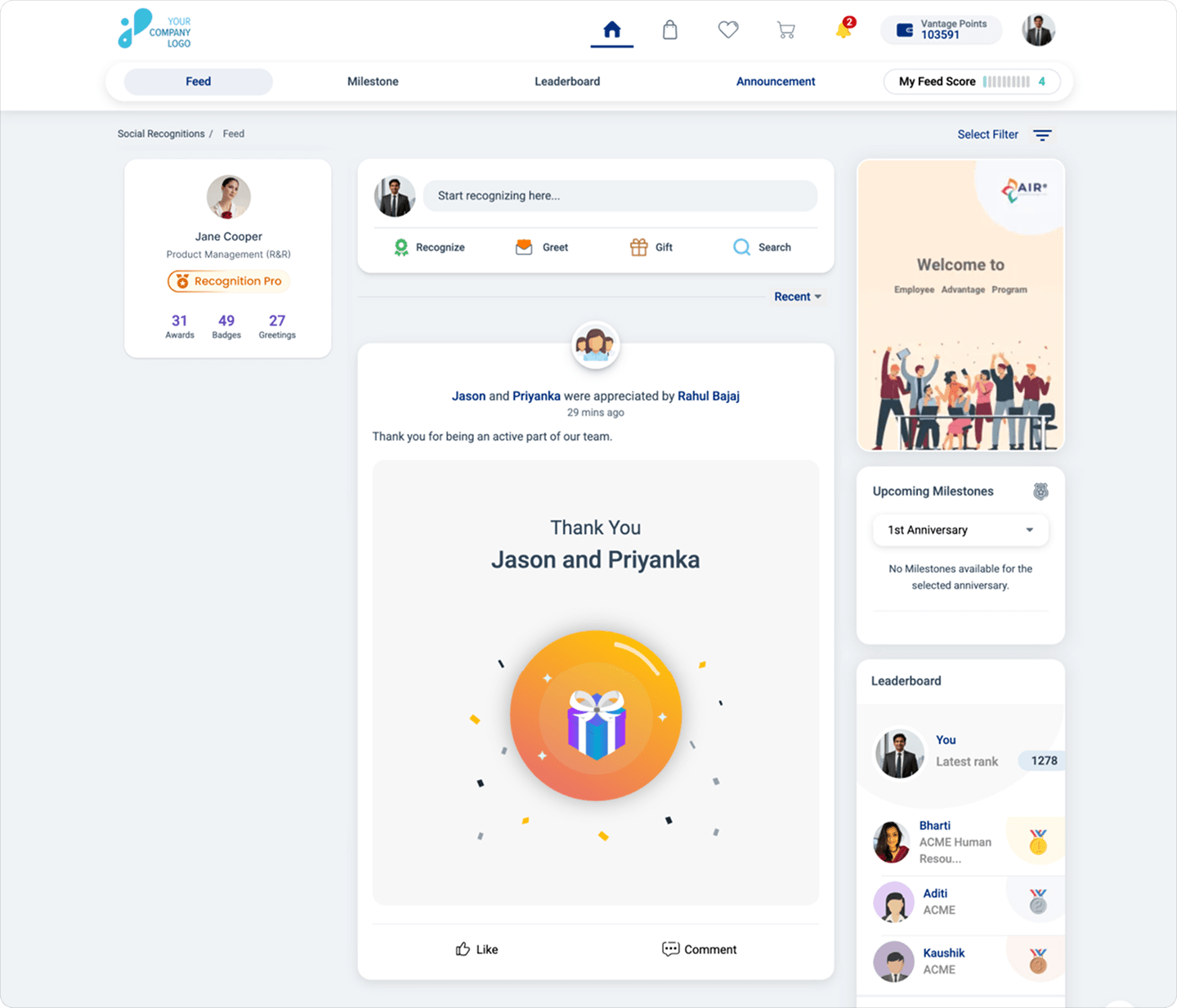
Recognition also gives HR meaningful data. Instead of focusing on workshop attendance, you can track recognition frequency, participation, and how often appreciation crosses teams. These insights show whether collaboration is becoming part of the culture. p

Vantage Circle HR Influencers Podcast
"Nurturing a culture of respect and kindness can also enhance innovation and collaboration within teams."
Mike Horne, Executive Coach & Organizational Development Consultant
Listen on SpotifyFree Ebook
Turn Everyday Collaboration Into a Culture of Recognition
Team building sparks connection; recognition makes it stick. Get our Rewards & Recognition Guide, packed with the frameworks and best practices top HR teams use to keep teamwork alive long after the offsite.
Download the Free Guide →Common Misconceptions about Teamwork and Team building
The most common misconception about teamwork and team building is treating them as the same thing, when one is the form and the other is the function. Here are the three confusions worth clearing up:
Myth 1: A fun offsite creates teamwork
Reality: the offsite is team building. Teamwork is what happens the other 364 days, and it needs day-to-day reinforcement to survive.
Myth 2: Team building and teamwork are the same thing
Reality: one is the form (the event that creates the group), the other is the function (the everyday behavior of collaborating). The comparison table above shows the difference on every dimension.
Myth 3: More activities automatically mean better collaboration
Reality: activities are the input. There are many types of team building and plenty of great team building activities for work, but teamwork only sticks when the behavior is recognized and repeated after the activity ends.
Clear these three up, and the rest of your collaboration strategy gets easier.
Frequently asked questions
1. Is team building the same as teamwork?
No. Team building is the point-in-time activity that forms a group, while teamwork is the ongoing, everyday behavior of that group collaborating. They are related but not the same.
2. What comes first, team building or teamwork?
Team building usually comes first. It forms and develops the group; teamwork is the function that group performs afterward. The form precedes the function it is meant to produce.
3. Can you have teamwork without team building?
Yes, teamwork can emerge informally without a structured team-building event, but deliberate team building makes collaboration faster to form and easier to sustain. The behavior still needs day-to-day reinforcement.
4. How do you measure teamwork?
Measure teamwork through ongoing behavior, not attendance: collaboration frequency, peer recognition (giver and receiver coverage), cross-department recognition, and team output. Activity completion measures team building, not teamwork.
Conclusion
While there is a visible difference between teamwork and team building, one cannot exist without the other. To build successful teams, you need to recruit people who complement each other’s differences and engage in activities which boost qualities like communication, cooperation and collaboration.

Sanjeevani Saikia is a Senior Content Strategist at Vantage Circle, where she leads end-to-end content strategy across SEO, thought leadership, brand storytelling, podcasts, and video. She is also the host of the Vantage Influencers Podcast, where she brings conversations with HR and business leaders from top global organisations, including Fortune 500 companies.
Connect with Sanjeevani on LinkedIn.


