
Your company has a diversity statement on its careers page. You ran unconscious bias training last quarter. You sponsor an ERG. And yet, when you ran the numbers last week, three of the four people who quit your engineering team this year were women of color.
If something in that sentence felt familiar, this blog is for you.
DEIB (Diversity, Equity, Inclusion, and Belonging) is often presented as a declaration of values, polished into a slide deck and recited at quarterly town halls. But company culture is rarely shaped in those ceremonial moments. It is shaped in repetition, in the ordinary interactions that accumulate into a workplace’s unwritten constitution.
It reveals itself in who gets interrupted during the Monday standup and who is allowed to finish a thought. In whose request for flexible work is approved with a thumbs-up emoji and whose is escalated into a bureaucratic review.
And employees notice the discrepancy long before leadership does. The distance between what a company says and what it consistently rewards is where trust erodes. It is also where many of the most thoughtful employees begin planning their exit.
In this piece, we’ll walk you through what each of the four pillars actually means, what separates the companies that get it right from the ones that just have the right poster in the lobby, and the specific changes that move the needle.
| Diversity | Equity | Inclusion | Belonging | |
|---|---|---|---|---|
| The question it answers | Who’s in the room? | Do the rules apply the same way? | Are people actually heard? | Can people show up as themselves? |
| What it focuses on | Representation | Fairness of process | Participation and voice | Psychological safety |
| How you measure it | Demographics, hiring data | Pay audits, policy reviews | Meeting dynamics, idea attribution | Surveys, stay interviews, what people don’t say |
| Where it breaks down | Counting the right categories but missing cognitive diversity | Policies that exist on paper but bend for certain people | Diverse team, one or two people doing 90% of the talking | People code-switch to fit in rather than speak up |
| The warning sign | Diverse roster, homogeneous thinking | Same request, different approval process | Ideas restated by others and credited to them | High attrition among underrepresented groups |
Diversity: Who’s in the Room

2 out of 3 job candidates seek companies with diverse workforces.
Source: Glassdoor Report
Diversity is the easiest of the four to measure and the hardest to do honestly. It's the demographic composition of your workforce. It includes race, gender, age, disability status, sexual orientation, religion, socioeconomic background, neurotype, and many other ways humans differ from one another.
Most companies count diversity by what's legally protected and visible. That's a starting point, not a finish line. A team can be racially diverse and still be entirely composed of people who went to the same five universities and think about problems the same way.
Different Types of Diversity
1. Cultural Diversity
Cultural diversity refers to the variety of cultures represented in a group or organization. It includes differences in language, traditions, beliefs, and values.
Companies with culturally diverse teams can tap into a broader range of perspectives, experiences, and ideas that can give them a competitive edge.
2. Gender Diversity
Gender diversity focuses on the presence of various gender identities. It goes beyond traditional genders (male and female) and include non-binary, genderqueer, and genderfluid individuals.
3. Sexual Orientation
Sexual orientation refers to an individual’s emotional, romantic, or sexual attraction to other people. It is a deeply personal aspect and is not the same as gender identity.
It encompasses the range of sexual orientations that individuals may identify with, including heterosexual, homosexual, bisexual, pansexual, and asexual orientations.
4. Religious Diversity
Religious diversity refers to the variety of religious beliefs and practices within a group or organization. It includes different religions, such as Christianity, Islam, Hinduism, Buddhism, Judaism, and many others.
5. Racial Diversity
Racial diversity focuses on the representation of different races and ethnicities. It enriches the workplace by bringing together individuals with unique experiences and backgrounds.
Best Practices for Promoting and Maintaining Diversity
1. Increase Diverse Representation
To promote diversity effectively, it's crucial to increase the representation of diverse groups across all levels of your organization.
This means actively seeking out candidates from underrepresented backgrounds when hiring and promoting employees. By doing so, you create a more inclusive workplace.
Let’s look at few strategies that organizations can implement to increase diverse representation:
- Inclusive Job Descriptions: Ensure that job descriptions are inclusive and appeal to a diverse range of candidates.
- Diverse Interview Panels: Include individuals from diverse backgrounds in the interview process to ensure a fair and unbiased selection process.
- Diversity Training: Provide training to hiring managers and employees involved in the recruitment process to raise awareness about unconscious bias.
2. Spotlight Diverse Success Stories
Showcasing achievements of employees from diverse backgrounds fosters an inclusive culture and inspires others. It demonstrates that your organization values diversity and provides visible role models.
Organizations can regularly feature stories of successful employees or leaders from diverse backgrounds in internal communications to inspire and motivate others.
3. Conduct Regular Diversity Audits
Regularly auditing your diversity efforts can help identify areas for improvement and ensure that your policies and practices are effective. It also helps you identify areas where diversity initiatives are working well, and areas needing improvement.
To conduct a successful audit, organizations should first define clear objectives, including the aspects of diversity they want to assess. Next, they should gather relevant data on workforce demographics.
Based on the findings, organizations should develop actionable recommendations and create an action plan to implement these recommendations.
4. Diversity Training
Diversity training is a critical component of promoting diversity in the workplace. By providing ongoing training to employees and managers, organizations can increase awareness of the importance of diversity.
The training can include workshops or seminars on unconscious bias, cultural competency, and inclusive leadership. This will help to create a more inclusive work environment that actively listens to diverse perspectives and fosters open communications.
Equity: Whether the Rules Apply the Same Way

Here's the cleanest way to understand equity. A product manager and a senior engineer both ask for the same flexible schedule to handle childcare. The PM gets approved in a Slack message. The engineer's request goes to HR, then to legal, then comes back with conditions.
Equity isn't whether the policy exists. It's whether the policy applies the same way to both of them. Equity builds on a baseline of equality in the workplace, the same rules and access for everyone, and then calibrates support on top of that baseline wherever it doesn't land evenly.
Strategies for Promoting Equity in the Workplace
1. Conduct Regular Pay Audits
Regular Pay audits increase transparency and trust among employees by ensuring that they are paid fairly for their work, regardless of gender, race, or other factors.
Through pay audits companies can pinpoint areas where inequities may be present and take corrective action to address them. When employees see that their company is actively monitoring and addressing pay equity issues, they are more likely to trust that they are being treated fairly.
2. Offer Flexible Work Arrangements
Offering flexible working arrangements, such as flexible work hours and work from home options, is a valuable strategy for promoting equity in the workplace. This approach recognizes that employee's diverse needs and responsibilities outside of work.
For caregivers, such as parents or those caring for the elderly, flexible working hours can make it easier to maintain a work-life balance. They can adjust their schedules to accommodate their responsibilities without sacrificing their job performance.
3. Provide Equal Access to Development Opportunities
Providing equal access to development opportunities ensures that all employees have a fair chance to enhance their skills, knowledge, and career prospects. This includes access to training programs, mentorship, and opportunities for advancement within the organization.
However, make sure that these programs are accessible to all employees, regardless of their location or work schedule, to promote equity.
4. Survey and Address Equity Gaps
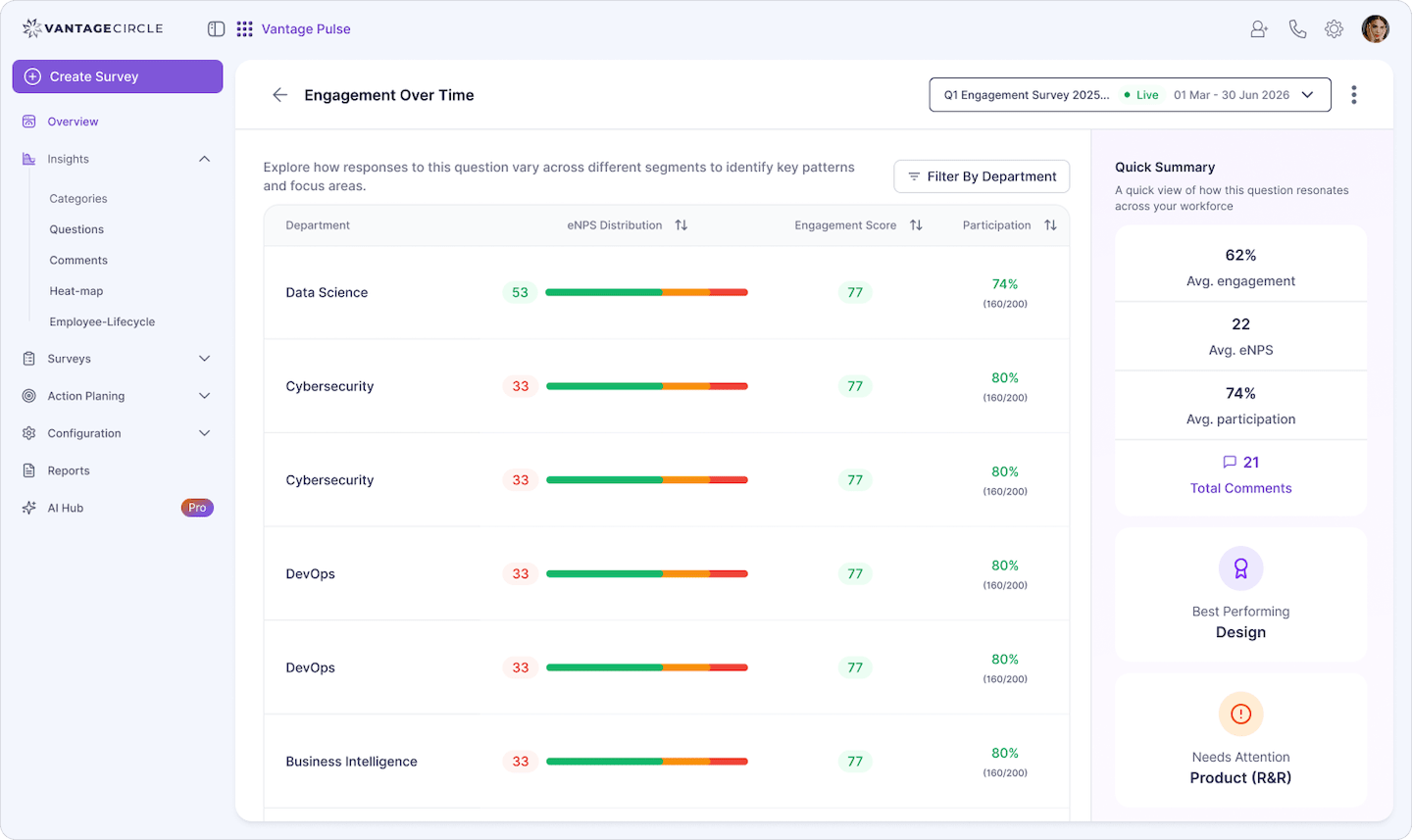
Regularly conducting employee surveys about employee experience and perceptions of equity in the workplace can help companies identify and address potential gaps. The surveys can help organizations to take proactive measures against disparities or inequities.
It also enables employees to raise their voice about any challenges or difficulties they face. The idea is to address everyone and understand the various pain points existing in the workplace.
Inclusion: Whether People Are Actually Heard

Inclusion is what you do with the diversity you have. A team can be diverse on paper and still have one or two people doing 90% of the talking in every meeting. That's a non-inclusive team with a diverse roster.
The mechanics of inclusion are mostly meeting-level and manager-level. Who gets called on. Whose ideas get credited to them versus restated by someone else two minutes later and credited to that person. Who gets interrupted and who interrupts. Whether dissent is welcomed or quietly punished in the next round of project assignments.
Effective Strategies for Promoting Inclusion in the Workplace
1. Support Employee Resource Groups (ERGs)
Employee Resource Groups (ERGs) are voluntary, employee-led groups that are often formed around shared characteristics or experiences. These groups serve as a support network for employees in an organization.
To maximize the impact of ERGs, you can:
- Provide dedicated resources such as allocating budget, meeting spaces, and time for ERG activities in the organization.
- Pair each ERG with a senior leader who can champion their causes and provide strategic guidance.
- Involve ERGs in product development, marketing campaigns, and recruitment efforts to tap into diverse perspectives and reach new markets.
2. Establish Zero-tolerance Policy for Discrimination
Implementing a robust zero-tolerance policy serves as a powerful declaration that discriminatory behavior will not be tolerated under any circumstances.
To maximize its effectiveness, the zero-tolerance policy should be comprehensive, clearly articulated, and consistently enforced. The policy should also address subtle forms of discrimination, including microaggressions and unconscious bias, to ensure a truly inclusive environment.
3. Encourage Collaboration
Encouraging collaboration among employees from diverse backgrounds is a powerful way to promote inclusion in the workplace. When employees from different backgrounds work together on projects and initiatives, they learn from one another and gain new perspectives.
Furthermore, while working together they develop a greater appreciation for each other's strengths and contributions, fostering a sense of camaraderie and teamwork. This can further help break down barriers and stereotypes that may exist among employees from different backgrounds.
4. Spotlight Cultural Celebrations
Organizations can create a sense of belonging by recognizing and celebrating cultural diversity through celebrations such as Diwali, Mardi Gras, Oktoberfest or Pride Month.
Encouraging employees to participate in these cultural celebrations can help break down barriers between people of different backgrounds. It also helps to create a sense of unity among employees, as they come together to celebrate and learn from one another.
🎙 Vantage Influencers Podcast
The Strategic Importance of HR Focusing on DEI and AI
Angela Cheng-Cimini, SVP Talent & CHRO at Harvard Business Publishing, talks with Matt Burns about DEI as a business strategy and how Harvard revised its values to align with a global, diverse workforce.
Listen to the Episode →Belonging: Whether People Can Show Up as Themselves

If inclusion is being invited to the meeting. Belonging is being able to disagree in that meeting without softening your tone, apologizing first, or worrying you'll be labeled "difficult."
Most companies are decent at the first and terrible at the second.
Belonging is the felt experience of inclusion. It's not measurable through demographics or policy audits. You measure it by asking people, and by paying attention to what they don't say when you ask.
64%
of employees at average workplaces feel they can be themselves — compared to 88% at the best companies.
Source: Great Place to Work
Effective Strategies for Promoting a Sense of Belonging in the Workplace
1. Create a Sense of Purpose
When employees understand how their efforts directly contribute to organizational goals, they become deeply invested in their work. It makes them feel like an integral part of the company's success.
By aligning individual roles and responsibilities with the company's larger objectives, organizations can help employees see the value in their work.
Additionally, leaders should also take the time to connect with employees on a personal level, helping them see the significance of their contributions. This can lead to increased motivation and overall employee engagement.
2. Reward and Recognize Employees
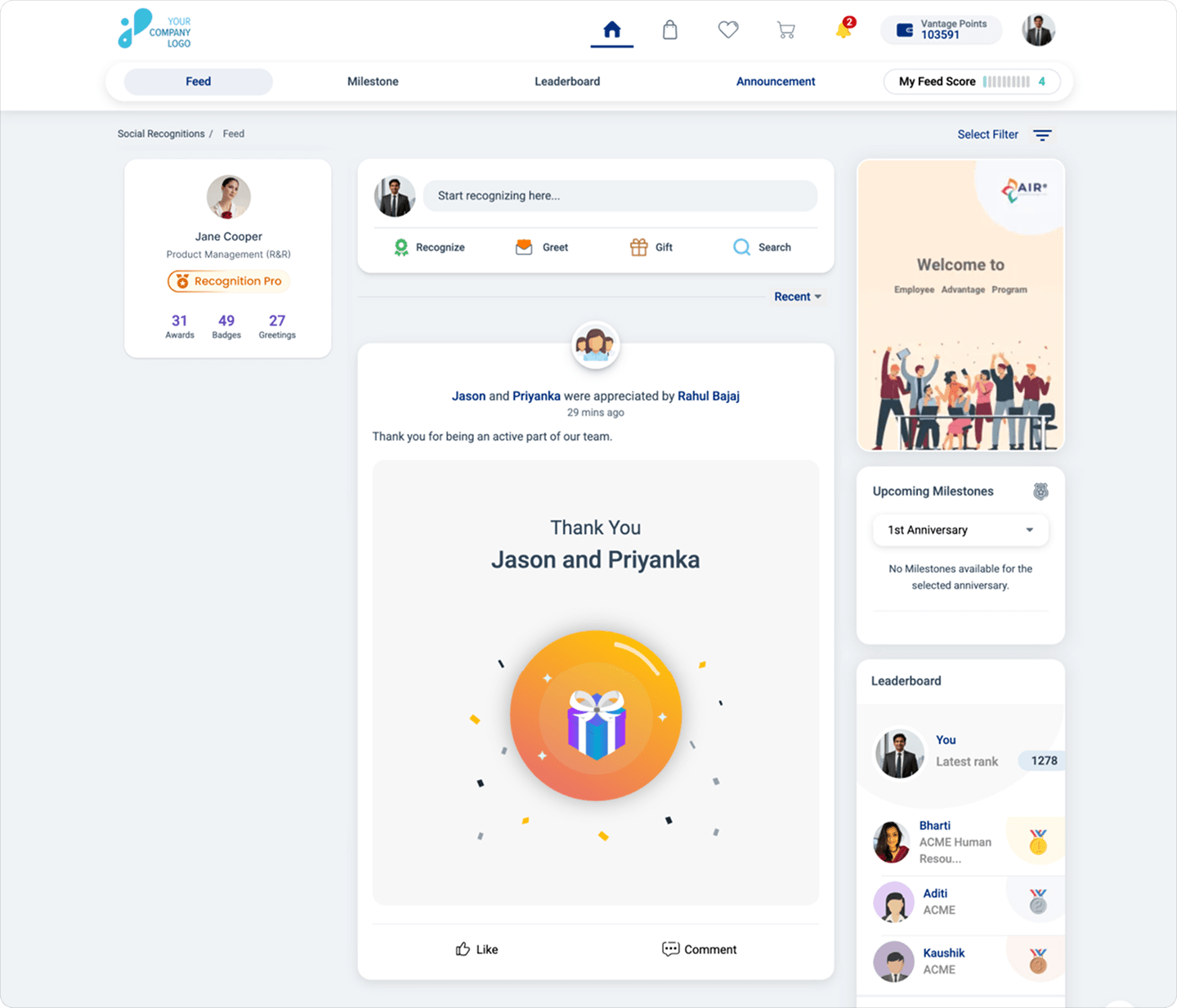
Recognizing and rewarding employees for their contributions is a powerful way to foster a sense of belonging in the workplace. Employees who feel that their hard work and achievements are appreciated are more likely to feel valued as a team member.
Implementing a robust employee recognition program can significantly boost employee morale and engagement by celebrating individual and team achievements.
Whether through public recognition, tangible rewards, or personalized appreciation, letting employees know that their efforts are recognized and valued can have a profound impact on their motivation.
Source: Vantage Recognition
3. Promote Work-Life Balance
Promoting work-life balance involves providing employees with the resources and flexibility to effectively manage their work responsibilities along with personal well-being.
To effectively promote work-life balance, you can:
- Offer remote work options, flexible hours, or compressed workweeks. This empowers employees to manage personal responsibilities without sacrificing professional commitments.
- Promote the use of vacation days and create a culture that respects disconnecting from work.
- Establish guidelines for after-hours communication and respect employees' personal time.
4. Seek Feedback and Act on it
Seeking feedback from employees and acting on it is not just a good practice but a crucial strategy that fosters a sense of belonging.
To effectively seek feedback, organizations can use a variety of methods, such as employee surveys, focus groups, one-on-one meetings or digital suggestion boxes. This variety accommodates all personality types and communication preferences.
Once feedback is gathered, organizations should take action based on the insights provided. This could involve adjusting policies, procedures, or practices to resolve concerns raised by employees.
Importance of Diversity, Equity, Inclusion, and Belonging in the Workplace

The business case for DEIB has been repeated so often that it now arrives prepackaged, stripped of urgency and flattened into corporate shorthand. Diverse teams make better decisions. Inclusive companies retain talent longer. Employees who feel a sense of belonging are more engaged, and engaged employees tend to perform better.
All of it is true. But the repetition has made the language feel strangely bloodless, as though DEIB exists merely to improve quarterly performance metrics rather than shape the daily experience of work itself. The reality is more consequential than that.
DEIB determines who gets heard, who gets trusted, who gets opportunities without having to fight twice as hard for them, and who quietly decides a workplace was never built with them in mind.
The organizations that understand this treat DEIB not as a branding exercise, but as operational infrastructure. It changes how decisions are made, how ideas are surfaced, how reputations are built, and how responsibility is practiced when no one is watching.
1. Better Decision-Making
Organizations often mistake consensus for alignment. But the strongest decisions rarely come from rooms where everyone thinks alike. They come from environments where different perspectives are allowed to challenge each other openly before a direction is chosen.
DEIB strengthens decision-making because it interrupts the comfort of monotony. Employees with different backgrounds, experiences, and worldviews notice risks others overlook.
2. Enhances Creativity
Creativity does not thrive in cultures obsessed with conformity. It thrives in environments where people feel safe enough to think differently without being socially punished for it.
A diverse workplace naturally brings together employees with contrasting experiences, cultural references, and approaches to problem-solving. But diversity alone is not enough. Inclusion is what allows those ideas to survive long enough to matter.
When employees feel valued rather than managed around, they contribute more freely. Conversations become more dynamic. New ideas emerge from unexpected intersections. And innovation stops being something reserved for brainstorming sessions and becomes part of the organization’s everyday rhythm.
3. Boosts Company Reputation
Modern employees, customers, and business partners are no longer evaluating companies solely on products or profit margins. They are paying attention to culture. They notice who leadership promotes, whose voices are amplified, and whether a company’s public values hold up under scrutiny.
Organizations with a genuine commitment to DEIB tend to build stronger reputational trust because people can often tell the difference between performance and practice. A workplace that consistently demonstrates fairness, representation, and respect becomes more attractive not only to top talent, but also to customers and collaborators looking for organizations that reflect the realities of the modern world.
4. Promotes Social Responsibility
At its core, DEIB is not simply a workplace strategy. It is a question of fairness.
For decades, many professional systems were designed around narrow definitions of leadership, professionalism, and success, often excluding talented people before they ever had a chance to contribute fully. DEIB efforts attempt to correct those structural imbalances by creating workplaces where opportunity is not determined by proximity to privilege.
Companies that take this responsibility seriously understand that ethical leadership extends beyond compliance policies and public statements. It is reflected in hiring practices, pay equity, accessibility, promotion pathways, and the everyday behaviors leadership chooses to reward or ignore.
Why Most DEIB Efforts Fail?

1. Resistance to Change
Many employees and leaders may resist DEIB initiatives due to the fear of addressing sensitive topics, or skepticism about the benefits. They may worry about lowered productivity or divisions among staff.
However, organizations can overcome this resistance with genuine empathy, open communication and initiatives tailored to employees' needs. Hosting regular seminars or forums where employees can openly discuss DEIB topics can help in this regard.
Read More: 5 Barriers To Diversity And Inclusion Every Leader Must Know
2. Ineffective Policies
Only having a well-intended DEIB policies is not enough, organizations should work towards introducing them effectively. If not properly implemented and monitored, they can be counterproductive and lead to tokenism, heightened tensions, and increased feelings of exclusion.
Therefore, organizations should conduct regular audits to assess the impact of their policies from time to time. They should also provide training to ensure understanding and seek feedback from employees to identify areas for improvement.
3. Token Hiring Practices
Token hiring practices refer to the act of hiring employees primarily to fulfill diversity quotas. It creates a superficial appearance of inclusivity without genuine commitment.
For employees from underrepresented backgrounds, this approach can foster feelings of exploitation as they may perceive that their hiring is based more on meeting quotas rather than their qualifications. This can undermine their sense of value and belonging within the organization.
Therefore, to truly promote DEIB initiative, organizations must focus on genuine efforts that prioritize merit, support, and inclusivity for all employees.
4. Lack of Accountability
DEIB policies can be meaningless without accountability. Leaders play a crucial role in this regard, as they must not only endorse these policies but also embody the behaviors they promote.
This includes demonstrating respect for all individuals and actively listening to diverse perspectives. By modeling these behaviors, leaders set the tone for the entire organization and inspire others to follow suit.
Organizations can also provide training for managers on how to address DEIB issues effectively and establish regular reviews of progress towards DEIB goals.
Moreover, implementing a zero-tolerance policy for discrimination and harassment ensures accountability in the workplace.
The DEIB Workplace Self-Diagnostic
Four short checks — one per pillar. Answer honestly about your workplace today, not where you hope to be. You'll get a red / yellow / green flag per pillar and a priority action report at the end.
Where to Start on Monday
If this article has convinced you of anything, don't react by drafting a new policy or scheduling a training. Both might come later. Start smaller.
Pick the next meeting you run. Notice who speaks first, who interrupts whom, who gets credited for ideas, and who gets asked to take the notes. Don't intervene yet. Just watch.
Then pick one thing and change it. Maybe you ask the quietest person in the room what they think before you close the topic. Maybe you credit an idea correctly that would have otherwise drifted to the loudest voice.
That's where DEIB actually lives. Not in the values statement. Not in the training deck. In the ten seconds where you decide whether to do the small, correct thing or to keep the meeting moving.
FAQs
1. What does DEIB Stand for?
DEIB stands for Diversity, Equity, Inclusion, and Belonging.
2. Difference Between Equity and Equality
Equity focuses on fairness and providing resources based on individual needs. While equality focuses on treating everyone the same regardless of their circumstances.
3. Difference Between Diversity and Equity
Diversity focuses on increasing the representation of underrepresented groups. While equity focuses on addressing the underlying causes of disparities and ensuring fairness.
4. Difference Between Inclusion and Belonging
Inclusion is the act of ensuring that all individuals are welcomed, respected, and supported. While belonging is the feeling of being accepted, valued, and included.
5. Difference Between DEI and DEIB
DEI focuses on Diversity, Equity, and Inclusion. While DEIB includes an additional focus on fostering a sense of belonging.

Shikha Gogoi is a Content Marketing Specialist focused on SEO-driven content around employee engagement, recognition, and workplace culture, helping build people-first workplaces.
Connect with Shikha on LinkedIn.