The workplace is no longer defined by where employees sit, but by how effectively they work together. Hybrid work has fundamentally reshaped employee expectations, management practices, and the way organizations build workplace culture.
Although remote work was gaining momentum before COVID-19, the pandemic accelerated its adoption, forcing organizations to rethink how teams collaborate and stay connected. What began as an emergency response has since become an established working model, with employees increasingly valuing the flexibility it offers.
But flexibility alone doesn't create an engaged workforce. When employees are spread across offices and home workspaces, maintaining meaningful connections, effective communication, and a shared sense of belonging becomes considerably more challenging.
For HRs, this means rethinking traditional engagement strategies. This blog explores how hybrid work influences employee engagement, the challenges organizations face, and the practical strategies leaders can use to keep their people connected, motivated, and engaged.
What is Hybrid Working?
Hybrid working is a model where employees split their time between the office and remote locations, on a schedule set by the company, the team or the individual.
Gallup counts anyone who works remotely between 10% and 99% of the time as hybrid, and by that measure it is now the default for desk-based work. As of August 2026, 54% of US employees in remote-capable jobs worked hybrid, a share that has barely moved since 2022.
The pattern holds outside the US too.
Across Alberta, Canada, a 2025 study by CPHR Alberta and Vantage Circle found hybrid has become the operating model for most employers, not a pandemic leftover. That matters for engagement. Once a model is permanent, its flaws stop being temporary inconveniences and start shaping how people feel about their jobs every single week.
The Four Common Hybrid Work Models
Most organizations run one of four hybrid models, and each one carries its own engagement risk. The model matters less than whether leaders know which risk they signed up for.
In this hybrid model, employees usually work remotely, making occasional visits to the office for team meetings or projects. This model is ideal for organizations prioritizing flexibility and attracting talent from diverse locations.
In this model, employees are expected to be on-site but are given the flexibility to work remotely. However, employees are usually encouraged to work in the office most of the time.
Here, the employees are given the autonomy to choose their location and work hours based on their daily priorities. They also have the flexibility to prepare their work schedule.
In this model, employees alternate between in-office and remote work based on a set schedule. For instance, teams might work from the office three days a week and remotely for the rest. This structure facilitates consistency and flexibility.
Hybrid Work Pros and Cons for Employee Engagement
The main engagement upsides of hybrid work are autonomy, balance and less commuting. The main downsides are weaker connection, uneven visibility and blurred boundaries.
Notice that every upside belongs to the individual, while most downsides belong to the team. That asymmetry explains a lot.
| Theme | Pros | Cons |
|---|---|---|
| Flexibility | Greater autonomy and flexibility: More control over where and when they work improves balance and satisfaction. | Blurred boundaries: Hard to switch off, leading to longer hours and burnout. |
| Wellbeing | Better work-life integration: Less commuting frees time for rest and personal life. | Social isolation: Fewer casual conversations weaken relationships and belonging. |
| Opportunity | Wider talent pool: Hiring beyond one location brings in diverse skills. | Unequal experiences: Remote staff miss informal networking and career opportunities. |
| Collaboration | More focused work: Quieter spaces cut office distractions. | Communication gaps: Digital-only exchanges cause delays and misunderstandings. |
| Ownership & culture | Greater employee choice: Choosing where to work builds ownership. | Weaker team connections: Less time together makes trust and culture harder to build. |
| Inclusion | More inclusive participation: Well-run virtual meetings let everyone contribute. | Proximity bias: Managers may favor people they see more often. |
Where Hybrid Work Hurts Employee Engagement
Hybrid work doesn't necessarily weaken employee engagement. Poorly managed hybrid work does. The distinction matters. The real challenge isn't having employees work from different locations. It's carrying office-based habits into a workplace that no longer operates from a single location.
1. Proximity Bias
Proximity bias is the tendency to favor the people you see in person, and hybrid work gives it more room to operate. Nobody decides to overlook a remote colleague. It happens through a hundred small defaults: who gets pulled into the hallway conversation, whose name comes to mind when a stretch project opens up, who the manager thinks of as "really on top of things."
Kriti Mehrotra, Senior Lead, Total Rewards at Synamedia, put it plainly on the Vantage HR Influencers Podcast:
"Remote employees can feel aloof if they're not present, and there can be proximity bias, which is the term we use, we have to avoid it, because if you're closer to where the manager or leadership sits, your chances of being seen and getting recognized are higher."
Employees sense this before leaders admit it. In the Trip.com trial, women were less likely to volunteer for hybrid at all, a pattern the researchers linked to fear of being judged as less committed.
2. Isolation and Weaker Team Connections
In a traditional workplace, connection often develops without much planning. People catch up over coffee, ask a colleague for help, celebrate small wins, or have conversations that have nothing to do with deadlines. Hybrid work removes some of these natural opportunities.
The problem becomes more pronounced when virtual interactions are limited to project updates and scheduled meetings. Employees may know exactly what their colleagues are working on without knowing much about the people behind the work.
That distinction matters. Engagement is not built on communication frequency alone. It also depends on trust, familiarity, and the feeling that someone has your back. HR leaders need to create opportunities for informal interaction, peer recognition, and shared experiences across locations. Otherwise, employees can remain productive while gradually feeling less connected to the organization.
3. Two-Tier Meetings
One of the most overlooked problems in hybrid workplaces is the divide between employees in the conference room and those joining remotely. The people in the room can read body language, exchange quick observations, and pick up on conversations before and after the meeting. Those joining virtually often receive only the formal version of the discussion.
Even when nobody intends to exclude them, remote participants can become passive listeners rather than active contributors. Decisions may also take shape through conversations they were never part of.
Over time, this creates two different employee experiences: one group participates in shaping decisions, while the other is expected to stay informed.
4. Always-On Communication
Hybrid work can make the boundaries between professional and personal life harder to maintain. Without the natural separation of commuting to and leaving an office, employees may find themselves answering messages during dinner, checking emails before the workday begins, or staying online simply because colleagues are still active.
The problem isn't digital communication itself. It's the expectation that being reachable is the same as being productive.
Which is why setting communication norms is just as important as providing collaboration tools. Establish reasonable response-time expectations, respect different working schedules, and discourage unnecessary after-hours messages.
Five Ways HR Can Protect Engagement in Hybrid Model
Hybrid work requires more than giving employees the freedom to choose where they work. Organizations must also rethink how they communicate, recognize contributions, build relationships, and create opportunities for growth. Without that effort, flexibility can quietly turn into a fragmented employee experience.
Here are five ways HR leaders can make engagement more consistent across locations.
Write Team Norms
A hybrid work policy works best when employees have a say in how it operates.
A company-wide policy can establish the broad expectations, but the everyday details are best worked out at the team level. When should employees be available? How quickly should colleagues respond to messages? Which conversations require a meeting, and which can happen asynchronously?
Furthermore, HR should give teams a framework to agree on core hours, communication channels, meeting expectations, and response times. Documenting these decisions in a simple team agreement makes accountability clearer and reduces unnecessary friction.
Make Office Days Purposeful
Bringing employees into the office only to spend the day attending virtual meetings defeats much of the purpose of hybrid work. Office days should create opportunities that are difficult to replicate remotely: collaborative problem-solving, mentoring, team discussions, relationship-building, and conversations that benefit from being in the same room.
HR and managers should coordinate schedules around these activities rather than treating attendance as an objective in itself. For instance, teams can reserve office days for project planning, brainstorming sessions, onboarding, or cross-functional workshops.
The distinction is important. Employees are more likely to value office time when it helps them do their work better or build stronger relationships. A meaningful reason to come together will always be more persuasive than another attendance requirement.
Make Recognition Visible Across Locations
Recognition is one of the most practical ways to maintain connection in a hybrid workforce. Yet many organizations still rely on informal appreciation.
HR leaders need to make appreciation part of the organization's shared digital experience. A company-wide recognition feed, peer-to-peer appreciation, and timely acknowledgments of individual contributions can help employees feel valued regardless of their location.
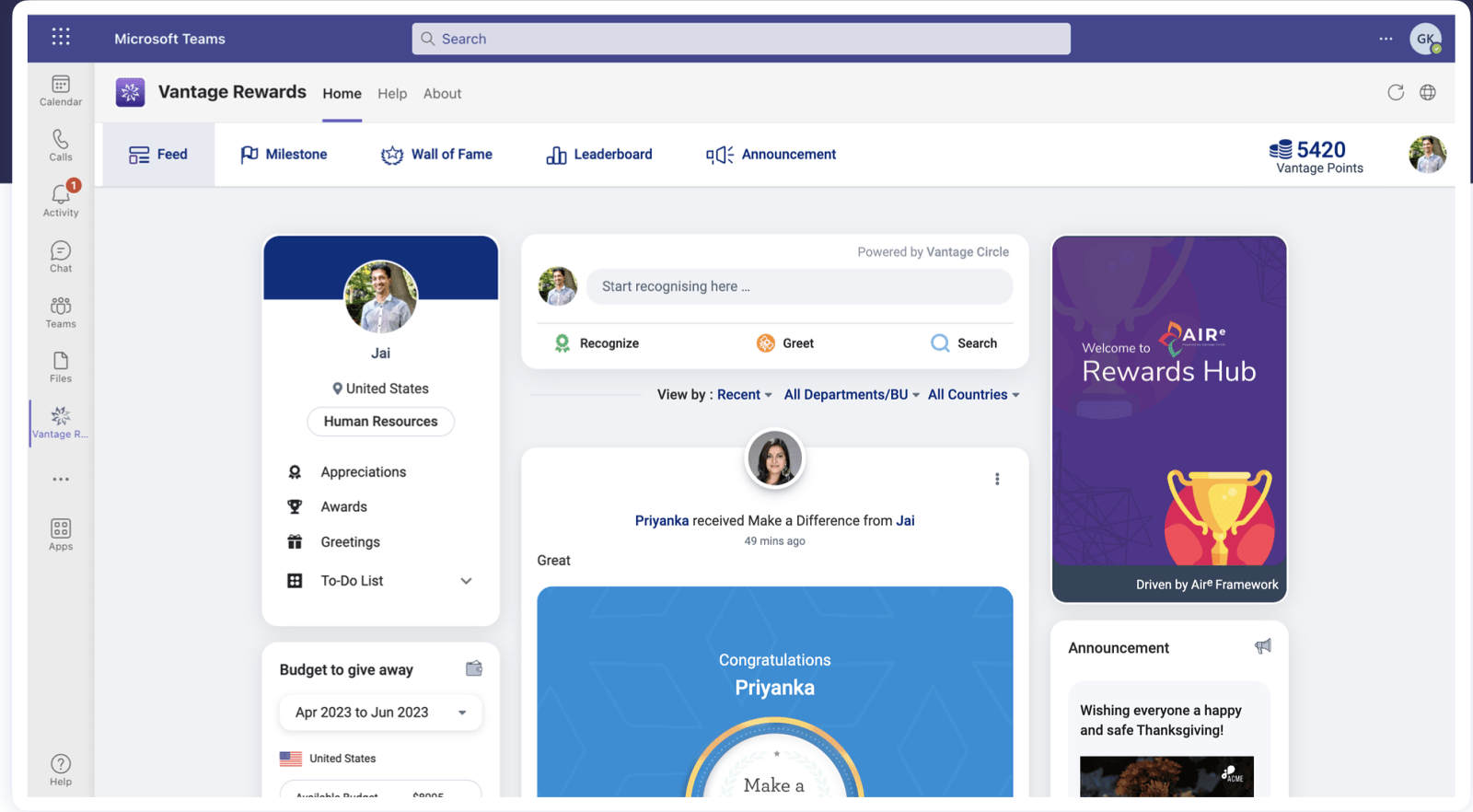
Friction matters too. Hybrid teams already live in Microsoft Teams, so recognition sent from inside the chat removes the "log in somewhere else" step that makes remote staff recognize less often.
Tie Career Growth to Outcomes, Not Attendance
One of the biggest risks in a hybrid workplace is allowing physical visibility to influence career decisions. Employees who regularly interact with senior leaders may find it easier to demonstrate their capabilities, build relationships, and hear about new opportunities. Those working remotely may have to make a greater effort to achieve the same visibility.
You need to make performance and promotion criteria explicit. Evaluate employees on measurable outcomes, quality of work, problem-solving, collaboration, and leadership potential rather than informal impressions of commitment.
Managers should also make development opportunities accessible to everyone. Mentoring, stretch assignments, leadership training, and internal mobility should not depend on who happens to be available in the office.
Measure Engagement by Work Mode
A company may report strong engagement overall and still have remote employees struggling with isolation, frontline teams feeling overlooked, or office-based employees frustrated by inconsistent communication. When all these experiences are combined into one score, meaningful differences can disappear.
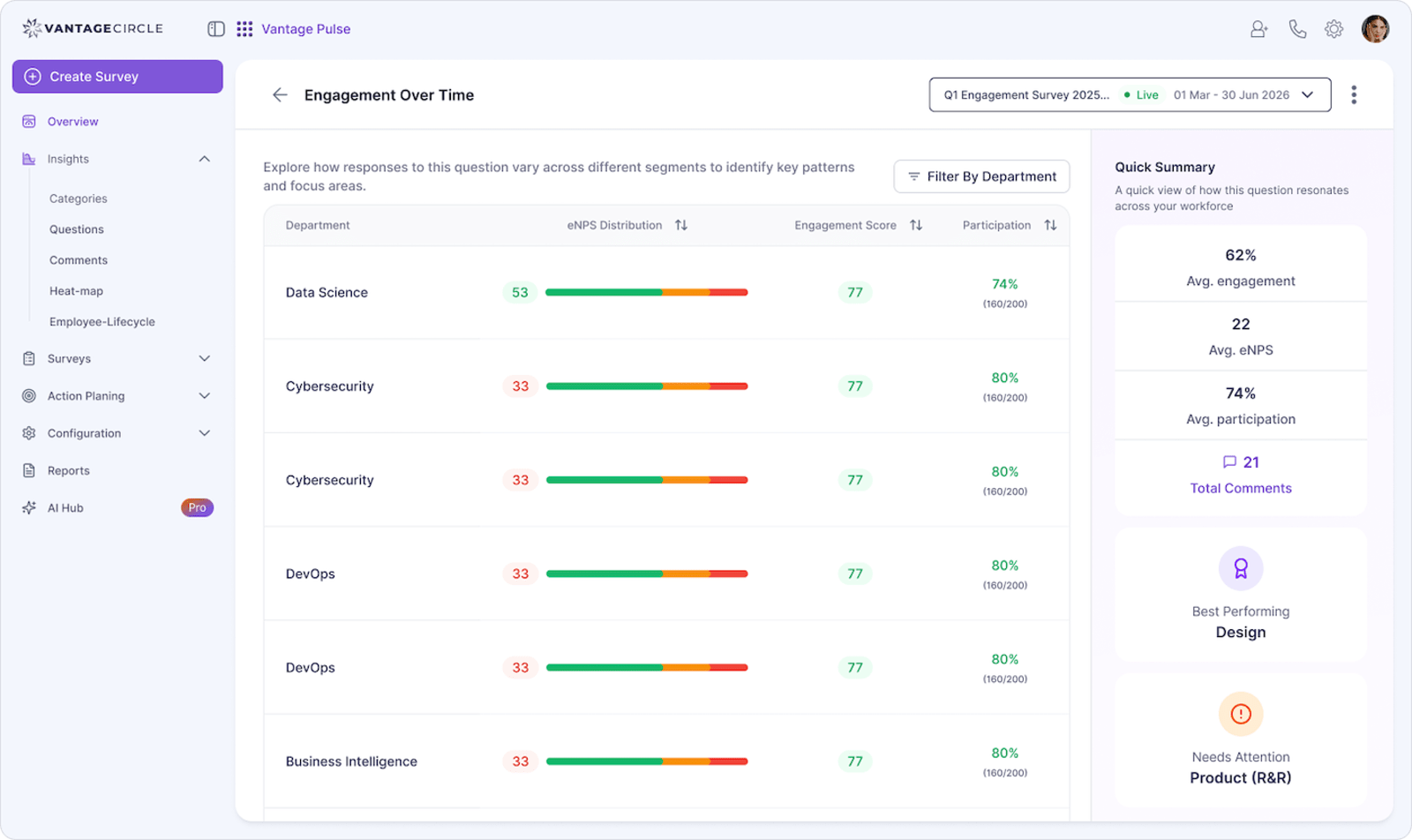
HR should examine engagement results by work arrangement, department, location, and role wherever sample sizes allow meaningful comparisons. Look beyond overall satisfaction to understand whether employees feel recognized, included in decisions, supported by managers, and confident about their growth opportunities.
If remote employees report weaker connections with managers, investigate the quality of their check-ins. If office-based employees feel excluded from flexible arrangements, examine how policies are being applied. Regular pulse surveys, manager conversations, and recognition participation data can help you identify these patterns before they become retention problems.
Future Trends Shape Organizational Strategies
Hybrid Becomes a Permanent Operating Model
Gallup's data shows the hybrid share of remote-capable employees has barely moved since 2022. That settles the question organizations were asking a few years ago. The work now is not deciding whether to offer hybrid, but running it well.
That means treating hybrid policy as something to review, not something to announce once. Organizations that keep checking in with employees through surveys, team conversations and manager feedback can adjust office-day expectations, meeting norms and recognition practices before small frustrations turn into disengagement.
Technology Supports Connection, Not Just Productivity
Hybrid work depends on technology, and the evidence suggests it is paying off.
The more interesting shift is in how organizations use these tools. AI-powered meeting recaps and live transcription help remote colleagues catch up on discussions they could not attend, which narrows the gap behind two-tier meetings. Recognition and feedback tools built into everyday chat platforms lower the effort of showing appreciation across locations.
Tools only help when teams agree how to use them. A recap does not fix a meeting where remote participants never get to speak, and a recognition feed does not work if nobody has the habit of posting to it.
Engagement Measurement Gets More Granular
A single company-wide engagement score hides too much in a hybrid workforce. Expect more organizations to compare results by work arrangement, location and role, and to track the gap between on-site, hybrid and remote employees as closely as the overall number.
That gap is where problems show up first: weaker manager check-ins for remote staff, fewer promotion opportunities for people who are rarely in the office, or recognition that reaches only the people who are seen. Organizations that watch these gaps can act early. Those that rely on one average score tend to find out when people resign.
Conclusion
Hybrid work is now the standard way desk-based teams work, and its effect on engagement depends on how well it is managed. The risks are real: proximity bias, weaker connection, two-tier meetings and always-on communication. None of them come from where people work. They come from carrying office habits into a workplace that no longer sits in one place.
HR can close the gap by writing team norms, making recognition visible, tying growth to outcomes, and measuring engagement by work mode. Start with one question: do remote and office-based employees get the same experience of recognition, decisions and growth?
FAQs
What are the Advantages and Disadvantages of Hybrid Working?
The main advantages are time saved, better wellbeing, stronger retention and flexibility employees value highly. The main disadvantages are weaker team connection, proximity bias, two-tier meetings and blurred work hours.
Does Hybrid Work Improve Employee Retention?
Yes. In the largest randomized trial of hybrid work, two remote days a week cut quit rates by one-third, with the biggest effect among non-managers, women and long-distance commuters (Bloom, Han and Liang, Nature, 2024).
What are the Biggest Challenges of Hybrid Work?
The biggest challenges are proximity bias, isolation, uneven meeting experiences and an always-on culture. Employers also report that hybrid makes it harder for managers to lead teams and for employees to feel connected to the organization's purpose.
How do you Measure Engagement in a Hybrid Workforce?
Cut every engagement metric by work mode and track the gap between on-site, hybrid and remote employees. Useful metrics include pulse scores, eNPS, recognition received, promotion and pay increase rates, and voluntary attrition.

Shikha Gogoi is a Content Marketing Specialist focused on SEO-driven content around employee engagement, recognition, and workplace culture, helping build people-first workplaces.
Connect with Shikha on LinkedIn.