Two writers on my team once turned in drafts of the same quality in the same week. One cleared edits in a day. The other took nine. The gap had nothing to do with writing. The first writer asked the designer one question up front and flagged a missing stat to the SEO lead before anyone had to chase her.
That gap comes down to interpersonal skills, which is how well you communicate and work with the people around you. This guide covers the 10 that matter most at work. For each one, you'll see what it looks like on a normal workday and the warning sign that it's missing. After that come practical steps to improve these skills yourself, and what managers can do to build them across a team.
Key Takeaways
- People skills, basically. Listening counts. So does handling a disagreement well.
- Intrapersonal skills point inward, at your own focus and moods.
- Each skill shows up in small habits you can see, like summarising a point before you reply.
- All 10 improve with practice and specific feedback.
- In NACE's 2026 employer survey, 85% said they look for teamwork on a resume.
- Managers build these skills fastest by naming the help behind a result when they recognise someone.
What Are Interpersonal Skills?
Interpersonal skills are the abilities you use to communicate and work with other people. Listening well is one of them. Disagreeing without damaging the relationship is another. Most people call them people skills. They make up one part of the wider set of soft skills.
Priyanka Anand, Ericsson's HR head for the region, gave a plainer version on our podcast in May 2024.
VANTAGE INFLUENCERS PODCAST
"Make sure that you're investing enough in honing your interpersonal skills, which in simple terms boils down to having effective communication, prioritizing collaboration and teamwork, and making sure that one can succeed in diverse environments."
Priyanka Anand, Vice President and Head, HR Southeast Asia, Oceania and India at Ericsson
Listen to the EpisodePeople skills means the same thing. Soft skills is the bigger umbrella. It also covers inward abilities like time management. Emotional intelligence sits underneath all of it. It's the ability to read emotions, your own included. Most of the skills below run on it.
Interpersonal vs Intrapersonal vs Soft Skills
Ask one question: who is the skill aimed at? The table below sorts them.
| Interpersonal skills | Intrapersonal skills | Soft skills | |
|---|---|---|---|
| Focus | Other people | Yourself | Both |
| Examples | Active listening, conflict resolution | Self-discipline, resilience | Everything in the first two columns, plus adaptability |
| How others notice it | In conversations and meetings | Mostly through your results and consistency | Across your whole working style |
| Where it shows up at work | A tense client call | Hitting a deadline with no reminder | Your performance review |
The two do lean on each other. If I'm rattled and haven't noticed, I misread the room too. Every time.
10 Interpersonal Skills Examples (and What They Look Like at Work)
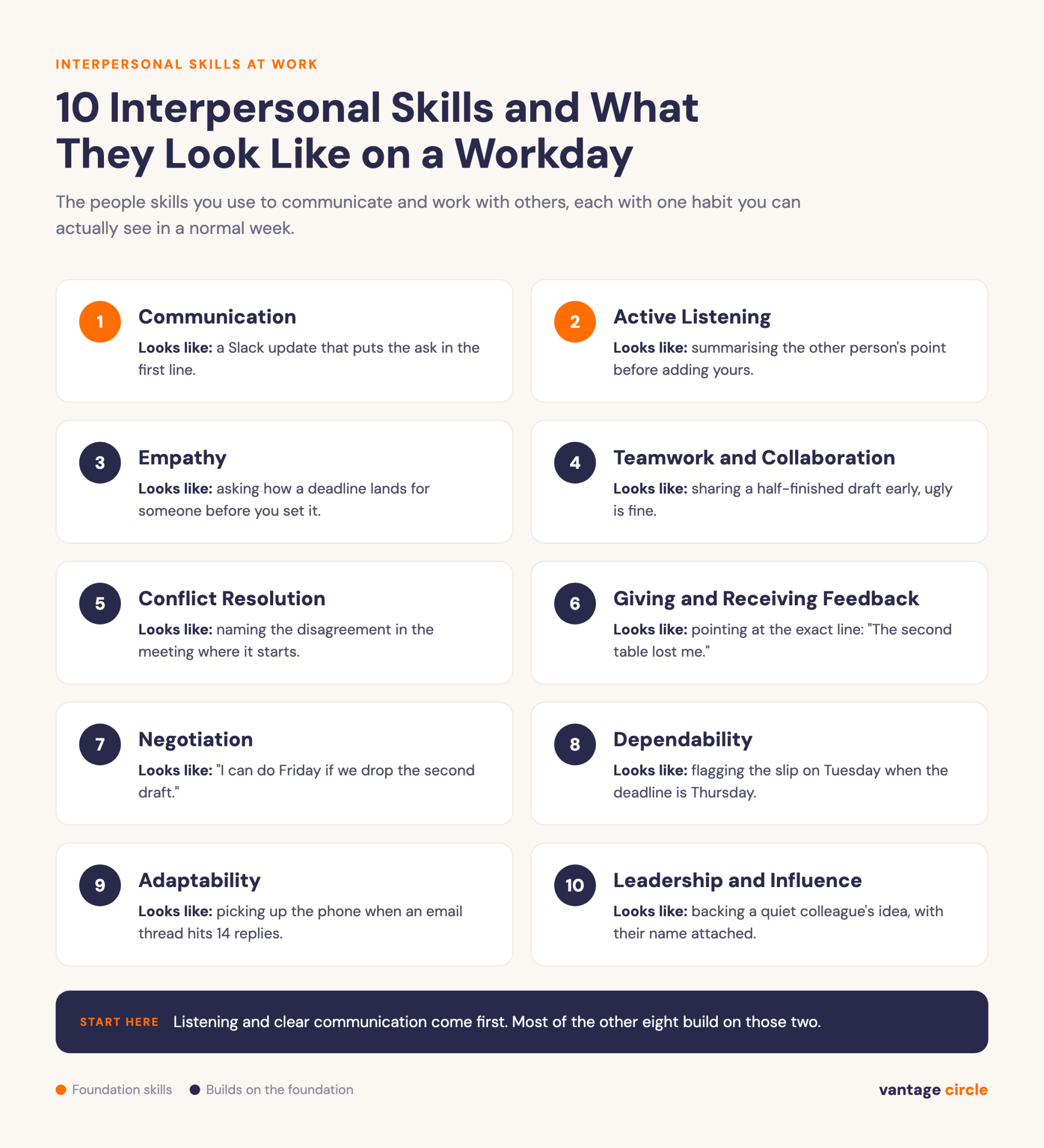
Ten skills. Each comes with a workday example and a warning sign. Check yourself against each one.
1. Communication (Verbal, Written and Nonverbal)
Getting an idea into someone else's head, intact. Talking and typing both count. Body language and tone count too. That's the nonverbal side. An email or a report is written communication. Eye contact on a video call is nonverbal.
At work, it looks like:
- A Slack update that puts the ask in the first line
- Saying "I'm not sure that works" in the meeting, before the decision gets made
- Camera on and eyes up while a colleague presents
The warning sign is easy to spot. People reply to your emails with questions you thought you'd already answered.
Our guide to communication skills goes deeper.
2. Active Listening
Hearing someone out. Then checking you got it before you say anything back.
One 2025 Harvard Business Review piece stuck with me. Its authors, Jeffrey Yip and Colin Fisher, read through 117 studies on listening at work. Their finding is blunt. Managers can describe good listening far more easily than they can do it. Haste and defensiveness were two of the five habits they found getting in the way.
On a normal Tuesday, good listening looks like:
- Summarising the other person's point in one line before adding yours
- Letting a pause sit for three seconds before you fill it
Weak listening gives itself away with a reply to a question nobody asked.
More in our piece on active listening.
3. Empathy
Empathy is understanding how a situation feels from the other person's side.
One Josh Bersin Company finding from 2023 surprised me. Organisations whose leaders demonstrate empathy are three times more likely to exceed their financial targets. The research covered more than 1,000 companies and appeared in its 2023 leadership development study. It's a correlation. The study didn't test whether empathy causes the result.
What it looks like:
- Asking how a deadline lands for someone before you set it
- Noticing the teammate who went quiet after a reorg
Missing empathy often looks like a big change announced by email at 6 p.m. on a Friday.
See more on empathy at work.
4. Teamwork and Collaboration
Doing your bit so the group isn't waiting on you. That's teamwork. Collaboration is messier. The work gets built together, often before anyone knows what it'll look like.
- Share a half-finished draft early. Ugly is fine.
- Teammate out sick on deadline day? Pick up the task even if it's technically theirs.
- Credit the person whose idea you built on, out loud
The red flag is a stream of "my part is done" messages. Meanwhile the shared deadline slips.
There's more on team-level habits in our collaboration guide.
5. Conflict Resolution
Settling a disagreement so both sides can live with the result.
I used to think the best teams had less conflict. Then I watched one team argue every Monday and still ship more than anyone else on the floor. Their fights stayed on the work itself. Personal jabs were rare.
At work, it looks like:
- Naming the disagreement in the meeting where it starts
- Asking "What would you need to agree to this?"
- Keeping the person separate from the proposal
The warning sign here is silence. Meetings where nobody pushes back usually mean the arguing moved to DMs.
6. Giving and Receiving Feedback
Telling someone how their work landed. Specific enough to act on. Then the harder half: hearing it about your own work without bristling.
- Point at the exact line. "The second table lost me."
- Saying thank you before defending a choice
- Ask for input a week before the review. There's still time to use it then.
Hearing from you only at appraisal time? Your team notices.
For wording, try these constructive feedback examples.
7. Negotiation
Two people want different things and still need to agree. That's negotiation. At work it's mostly small stuff. Two extra days on a deadline, traded for one fewer revision round.
- Know your walk-away point before the call.
- Trade out loud: "I can do Friday if we drop the second draft."
Trouble shows when every request gets a yes and then a missed date.
8. Dependability
Doing what you said you'd do, when you said you'd do it. Sounds almost too basic to list. Yet it decides whether anyone picks you for the next project.
- Flag the slip on Tuesday if the deadline's Thursday.
- "Sent, done." Two words. Loop closed.
Colleagues padding their timelines whenever your piece is involved? That's the tell.
9. Adaptability
Changing how you work with someone because the situation changed. Say an email thread hits 14 replies and the other person is plainly lost. You pick up the phone.
- Matching a new manager's preferred update format in week one
- Explaining the same change twice, once for engineers and once for sales
- Staying civil through the third reprioritisation this month
The opposite? Same explanation again. Just louder.
10. Leadership and Positive Influence
Influence is getting people to move without a title that makes them.
- Volunteering to run the retro nobody wants to run
- Backing a quiet colleague's idea in the meeting, with their name attached
Plenty of people with this skill never manage anyone.
If ideas on your team only move once the manager repeats them, influence is thin.
Source: Vantage Circle
Why Interpersonal Skills Matter at Work
A blog post on my team passes through four pairs of hands before it goes live. Each handoff runs at the speed of the people involved.
Hiring. Employers screen for these skills from the first resume. Recruiters see "team player" everywhere and look for proof of real teamwork. 85% of employers say they look for teamwork skills on a resume. That figure comes from NACE's Job Outlook 2026 Spring Update, a survey of 185 US employers run in early 2026.
Team performance. Managers set the tone for everyone else. Gartner asked nearly 3,400 employees about their leaders in 2022. Only 29% said their leader was a "human leader." Gartner uses that term for leaders who show real empathy and adapt to each person's needs. Employees with that kind of leader were much more likely to report high engagement. The gap was 37 percentage points, per Gartner's June 2022 research.
Career growth. The demand curve is moving toward people who are good with people. One forecast stays with me. 14%. That's how much the McKinsey Global Institute expects US demand for social and emotional skills to grow by 2030. Where's it coming from? Mostly healthcare and managerial jobs, according to the May 2024 report.
Can Interpersonal Skills Be Learned?
Yes. Some people start ahead. Every skill on this list still improves with practice and honest feedback.
Ben Eubanks made a broader point about soft skills on our podcast in 2021. It applies here.
VANTAGE INFLUENCERS PODCAST
"I don't call them soft skills because they're really hard, right? But they're human skills like compassion and creativity and critical thinking. Those things are not easy to teach, but it's possible to develop them in the workforce."
Ben Eubanks, Chief Research Officer, Lighthouse Research and Advisory
Listen to the EpisodeThe catch is time. One-day workshops? Monday's standup looks exactly the same afterward. I've sat through enough of them. A course plus three or four weeks of trying it in real meetings is what sticks. Budget tight? A Vantage Perks learning stipend can pay for it. Negotiation is a good first pick. Difficult conversations, second.
Even better when your manager ties it into an actual employee development plan, with dates.
How to Improve Your Interpersonal Skills: 7 Practical Steps
I stick to one skill at a time. One recurring meeting, four weeks. Then I ask someone what changed.
1. Ask one trusted colleague for specific feedback
Someone who was in that meeting, ideally. Ask about one moment. Something like: "When Ravi pushed back on the budget, how did I come across?" People actually answer that one.
2. Listen to understand, then summarise before you reply
Their point, back to them, in your words. One sentence. It feels slow for about a week. After that it feels normal.
3. Watch your nonverbal signals on video calls
Record one internal call, with everyone's permission, and watch five minutes of yourself. Most people find at least one habit to drop. Mine? My eyes kept drifting to the second monitor whenever someone else had the floor.
4. Name the disagreement early and calmly
"I see this differently" works fine. Say it while everyone's still at the table. Held back until the corridor, the same disagreement starts sounding like a grudge.
5. Thank people for the help, specifically
Easiest one to practise. Also the one people skip. The specific version goes something like "You rewrote the handover doc so the night shift didn't have to call." On a peer-to-peer recognition feed, other people read it too. That's how new people learn what helping looks like here.
6. Take on one cross-team project
Every team runs on shorthand. Outsiders don't. Four to six weeks on a shared project fixes a lot of lazy explaining. I learned that one with our design team.
7. Set one interpersonal goal per quarter
Put it somewhere your manager will see. I keep mine in our 1:1 doc and we look at it monthly.
5 interpersonal goals examples
- Summarise before replying. Every weekly sync, this quarter.
- Every other week, tell one peer something specific about their work.
- Disagree in the meeting at least monthly. Small stuff counts.
- A Friday thank-you to someone outside my team, by name.
- Handover note before any leave, even a Friday off.
How Managers Can Build Interpersonal Skills on a Team
Honestly? Small habits, repeated weekly. That's mostly how a manager builds these skills. These four do the most work.
Model it first. Teams pick up a manager's meeting habits within weeks. Summarise before you reply and people start doing it too.
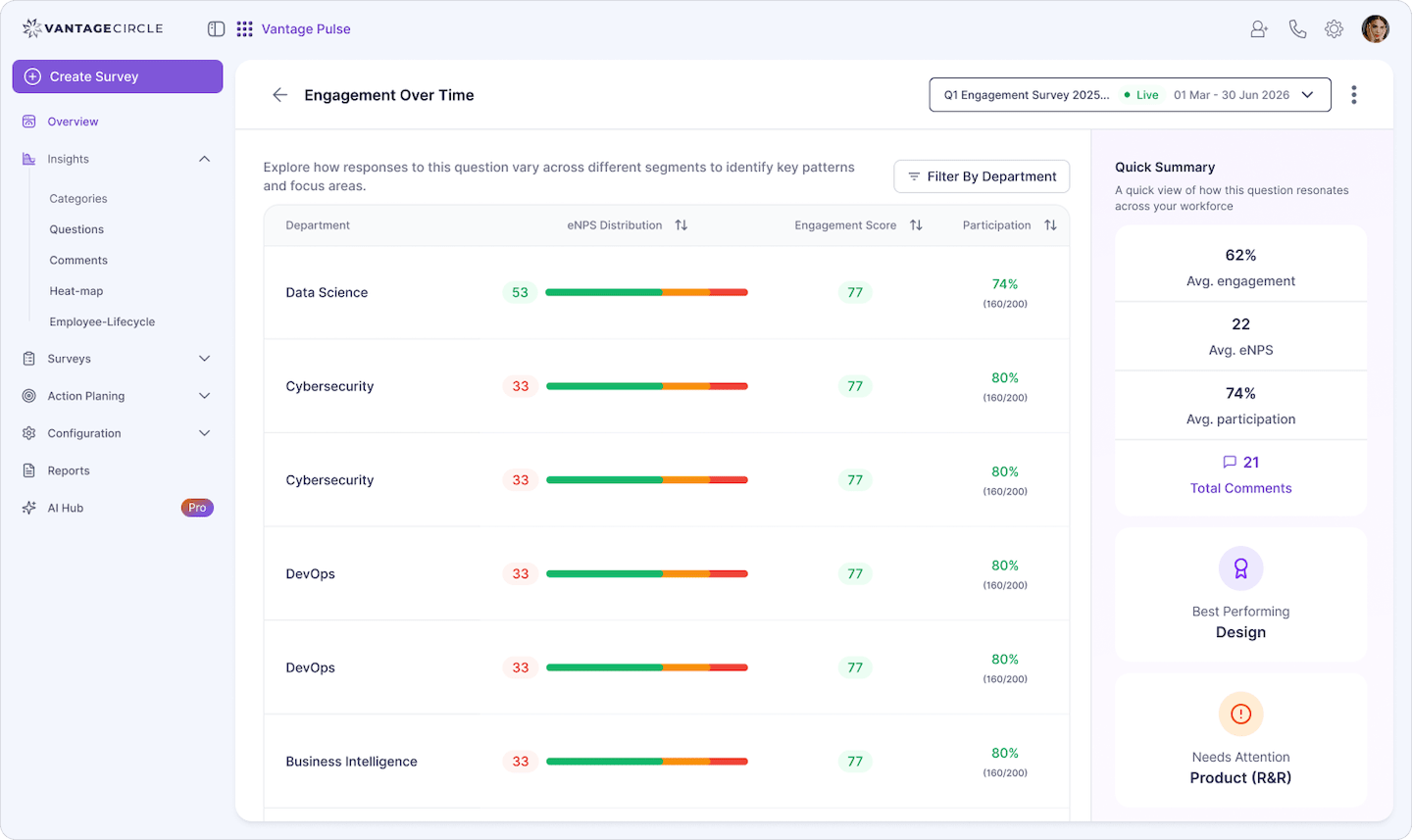
Pair people across teams. Put a quiet analyst with someone from sales on a two-week task. Vantage Pulse shows where to start. Its department-wise view flags teams that score low on statements like "People on my team help each other when it matters." Responses are anonymous. Nobody's pointing fingers at a coworker by name.
Source: Vantage Pulse
Coach with one specific moment. Something like "You calmed that argument by asking what each side needed." Now they know what to do again.
Name the help behind the win. Most recognition rewards the outcome. The launch ships and the launch team gets a shout-out. The analyst who stayed late fixing a teammate's data rarely gets named. Our own research points the same way.
51% of companies rated their R&R programs highly effective or effective at embedding values and behaviors such as collaboration and innovation; 48% rated them effective on engagement and productivity outcomes, according to The State of Recognition & Rewards 2025 (Vantage Circle).
Those are HR leaders rating their own programmes.
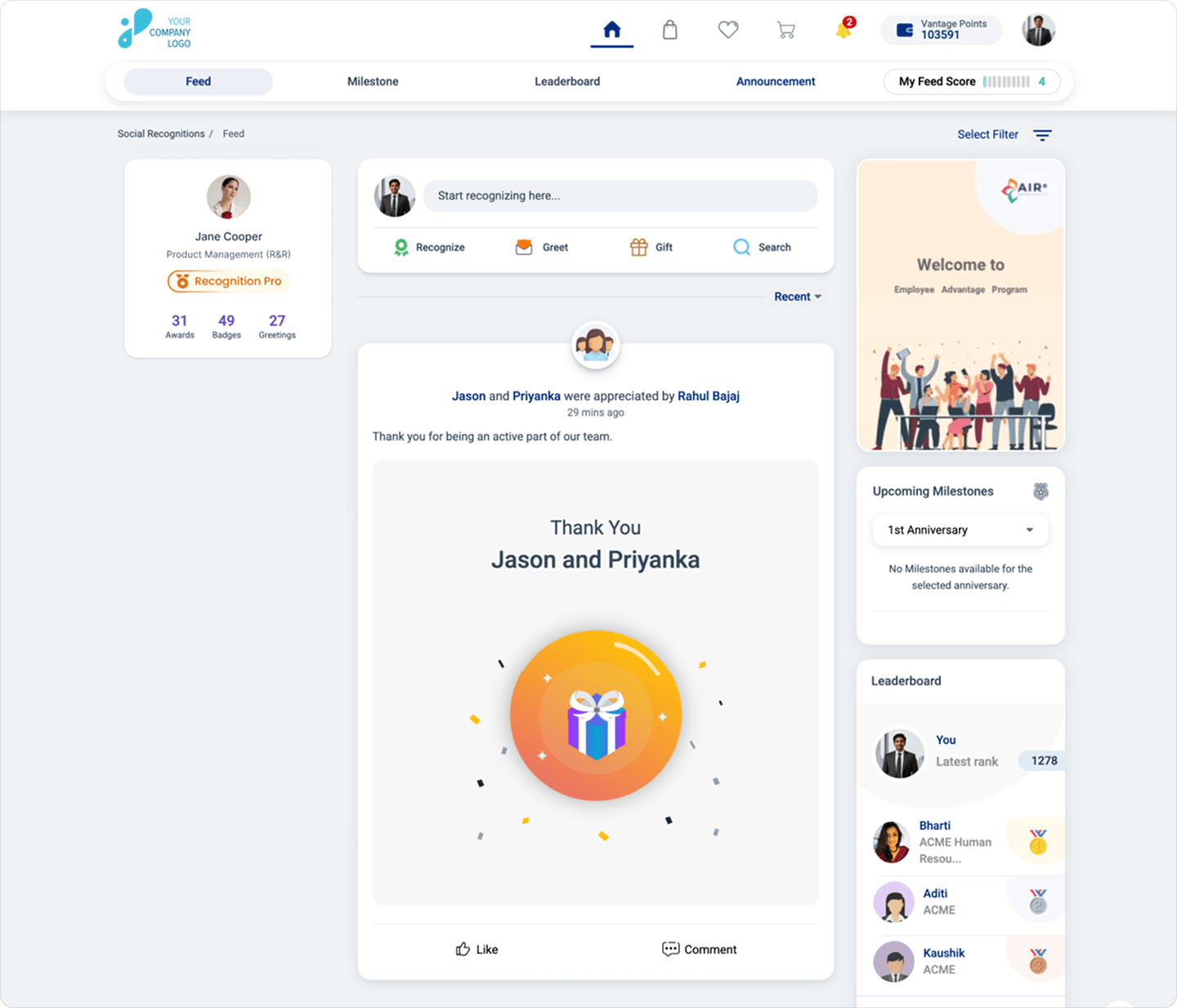
A simple fix is to tag recognition to a "Collaboration" value. In Vantage Rewards, each shout-out can carry a value badge. After a quarter, the tags show which behaviours your team actually rewards. Gaps stand out fast.
The shared feed helps new joiners as well. Scrolling it shows them how people here help each other.
Source: Vantage Rewards
Recognition analytics adds one more check. Look for the people who never give recognition. They're often capable people working in isolation. A cross-team pairing is a decent first move for them.
Interpersonal Skills on a Resume and in Interviews
Show the skill through a result and leave the label out. NACE's 2026 employer survey says as much. Recruiters want an example for every skill you claim.
| Weak line | Strong line |
|---|---|
| Excellent communication skills | Wrote the weekly client update read by 40 account managers |
| Strong team player | Covered two colleagues' accounts during a hiring freeze with no missed renewals |
| Good at resolving conflict | Settled a scope dispute between design and engineering that had stalled a launch for three weeks |
| Empathetic leader | Set up a rotating on-call schedule after two engineers flagged burnout |
| Great listener | Ran 12 customer interviews and turned them into four product changes |
Expect behaviour-based questions. Three come up often.
- "Tell me about a time you disagreed with a colleague." Good answers name the actual disagreement. And how it ended.
- "Describe feedback you didn't like." What did they change afterward? That's the bit to listen for.
- "Tell me about a project that needed people outside your team." Strong answers mention specific people by role.
Conclusion
Interpersonal skills improve like any other skill. Except the practice happens with your colleagues watching.
So pick one. Try it at your next recurring meeting. Managers, one extra bit. When you thank someone, say what they helped with, too.
FAQs About Interpersonal Skills
Q. What are basic interpersonal skills?
A. Listening and clear communication come first. Most other people skills build on those two.
Q. What are the 7 types of interpersonal skills?
A. There's no official list of seven. Most versions match skills one to seven above, give or take a swap for leadership.
Q. Which interpersonal skill is most important?
A. Listening. It's hard to disagree well with someone you haven't understood.
Q. What are some examples of good interpersonal skills?
A. Summarising someone's point before you reply is a good everyday example. Each of the 10 sections above includes a few more.
Q. How to have better people skills?
A. One skill at a time, in a meeting you're in every week. A month later, ask someone what they noticed.
Q. Can you give me some examples of interpersonal goals?
A. Sure. "Thank one colleague from another team by name each Friday" is a good start. The goals box above has four more.
Q. What causes poor social skills?
A. Sometimes it's limited practice, like years of mostly remote work. For plenty of people, anxiety is part of it. A counsellor is worth talking to once it starts getting in the way of daily life.

He has worked in the human resources environment and has elevated recognition and rewards through his insightful and detailed writing. He aims to enhance the practice of Recognition in the workplace with new ideas and innovation that will help shape the work culture. For any related queries, contact editor@vantagecircle.com