Millennials are the most analyzed generation in workforce history. Organizations have built playbooks, run engagement surveys, and redesigned entire programs around them. Turnover among them remains stubbornly high.
That says something. Not about millennials. About how most organizations are still approaching them.
Born between 1981 and 1996, they are now the dominant managerial cohort in the American workforce. The generation HR spent two decades trying to decode is now the one writing performance frameworks, setting culture, and deciding what the employee experience looks like for everyone who comes after them. They are not changing the workplace by demanding more. They are changing it because they are now the ones designing it.
This post covers what they actually want at work, the benefits that move the needle, and 7 proven strategies to engage and retain them, including how their approach diverges from Gen Z.
91%
want rapid career progression
Robert Walters ↗
73%
live paycheck to paycheck
LendingClub ↗
94%
would stay longer if their company invests in their growth
LinkedIn Learning ↗
49%
have taken time off for mental health reasons
Deloitte ↗
Who Are Millennials in the Workplace? Traits and Characteristics
As of mid-2025, millennials became the dominant managerial cohort in the American workforce, overtaking Gen X for the first time in two decades (Glassdoor Worklife Trends Report, 2025). The generation once called "difficult to manage" is now doing the managing, and increasingly deciding what the workplace looks like for everyone who comes after them.
They built careers through a recession, adapted to remote work overnight, and navigated an economy that rarely moved in their favor. Through that, they developed an unusually clear picture of what they need from work, and an equally low tolerance for organizations that ignore it.
7 Defining Traits of Millennials at Work
| Trait | What It Means at Work |
|---|---|
| 1. Purpose-driven | They want work that connects to something larger. A paycheck alone does not hold them, and it never really did. |
| 2. Digital natives | They expect modern tools and digital-first communication as standard. Outdated systems feel like a cultural signal, not just an inconvenience. |
| 3. Collaboration-focused | Millennials prefer working in teams and making decisions collaboratively, consistently outperforming in shared-ownership environments over competitive ones (Gallup). When collaborative conditions are present, engagement rises significantly. |
| 4. Career-hungry | 91% want rapid career progression (Robert Walters Group). The moment growth stalls, their exit timeline starts quietly ticking. |
| 5. Feedback-oriented | Annual reviews do not work for them. They want real-time input that tells them where they stand and connects their effort to impact. |
| 6. Work-life balance seekers | They want control over when and where they work. Rigid 9-to-5 structures are evaluated at the offer stage and are increasingly a dealbreaker. |
| 7. Socially conscious | Values alignment around DEI and sustainability is a genuine filter, not a stated preference. They research what companies actually do, not just what they say. |
Key Insight
Millennials are no longer the workforce you are trying to engage. They are now the managers deciding how engagement works, for everyone who comes after them.
What Millennials Want at Work (Backed by Data)
If your retention efforts are not landing, the answer is usually hiding in plain sight: what millennials need and what organizations offer are still not well aligned. 46% of millennials say their job is central to their identity (Deloitte, 2024). Yet nearly half have also taken time off for mental health reasons (Deloitte, 2023). Ambition without the right environment does not hold.
Flexible work arrangements. Over 58% of U.S. employees prefer hybrid or remote options, with millennials leading that preference (McKinsey, 2023). This is not a perk request. Autonomy over how and where work gets done is a baseline expectation now.
Career growth and skill development. Roughly two-thirds of millennials say the opportunity to learn new skills is a major factor when choosing a job (CBRE, 2024). Access to real development, not hand-holding, is what keeps them competitive and invested.
Purposeful work. 44% of millennials choose employers based on values alignment around DEI and sustainability (Deloitte, 2024). If your stated values and your daily decisions diverge, they will notice before you do.
Financial stability across total rewards. Seventy-three percent of millennials live paycheck to paycheck (LendingClub, 2023). That pressure does not stay at home. Base salary, bonuses, healthcare, and retirement plans carry far more weight than novelty perks for a generation still managing student debt.
Frequent and specific recognition. They need to feel their contribution is seen while it still matters, not acknowledged months later. That gap between effort and appreciation, when it persists, is one of the fastest routes to disengagement.
Company Benefits Millennials Actually Want
Millennials evaluate benefits as part of their overall employment experience, not as perks. The most valued benefits directly address flexibility, financial wellbeing, career development, and mental health.
| Benefit | Why Millennials Value It |
|---|---|
| Flexible schedules and remote work | Control over how and where they work directly supports the work-life balance they prioritize above almost everything else. Rigid 9-to-5 structures are a fast disqualifier at the offer stage. |
| Student loan repayment assistance | Millennials carry more student debt than any prior generation. Companies now offering up to $1,200 per year in loan repayment assistance (CNBC, 2022) signal they understand the financial reality their employees are navigating. |
| Mental health support | 49% of millennials have taken time off for mental health reasons (Deloitte, 2023). Counseling access and destigmatized mental health culture are no longer differentiators. They are table stakes. |
| Financial wellness tools | Budgeting tools, financial planning workshops, and employee discount programs address the financial stress that follows employees into work every day. The impact is tangible and immediate. |
| Learning and development programs | 94% of employees say they would stay longer at a company that invests in their development (LinkedIn Workplace Learning Report). For millennials, L&D is one of the top three retention levers available to any employer. |
| Comprehensive health coverage | Health insurance, wellness stipends, and mental health resources address both physical and emotional wellbeing, two areas millennials actively monitor and weigh when evaluating whether to stay. |
| Paid time off and sabbaticals | Generous PTO and the option to take extended leave signal that the company respects work-life balance in practice, not just in policy. That signal matters more than most HR leaders realize. |
| Modern workplace technology | For digital natives, the quality of workplace tools correlates directly with perceived investment in its people. Modern technology improves productivity and signals that leadership is paying attention. |
Related: Employee Benefits: The Complete Guide for HR Leaders
How to Engage Millennials in the Workplace
The pattern is consistent: companies invest in engagement programs and still lose people. Scores look reasonable, benefits are competitive, but exits keep coming. The root cause is almost always management practice: systems built for a workforce that operated very differently. Annual reviews. Top-down feedback. Control-based management. These structures work against everything this generation is wired for.
7 Proven Strategies to Engage Millennials
1. Replace annual reviews with continuous feedback. Adobe, Deloitte, General Electric, and Accenture are among the major organizations that have moved away from annual reviews entirely. The reason is straightforward: continuous feedback creates clarity, removes anxiety, and ensures that course corrections happen while they can still make a difference. A millennial employee who does not know how they are doing for twelve months is not staying for twelve months.
2. Build a culture of real-time recognition. The emotional half-life of appreciation is short. What lands is recognition that is specific, timely, and connects a particular action to a real outcome: the client relationship saved, the process that cut turnaround by a day. Not everyone wants the same format: some want a public shoutout, others a direct note. Building the habit of asking rather than assuming is one of the smallest interventions with the most consistent payoff.
3. Design visible career paths and internal mobility programs. Millennials do not expect to stay at one company forever, but they do expect progress. When you can show an employee exactly what skills are needed to advance, which lateral moves are available, and what a realistic timeline looks like, you give them a reason to stay and work toward something. When that visibility is absent, they will find the next step elsewhere. It is rarely personal. It is structural.
4. Support financial wellbeing beyond salary. Financial stress does not clock out when work begins. For a generation navigating student debt and rising costs, money pressure is a background tax on concentration and engagement that never fully switches off. Practical tools like budgeting resources, financial planning access, performance-based incentives, and discount programs address the underlying condition rather than just the surface symptom.
5. Offer flexibility without sacrificing accountability. Flexibility for millennials is about autonomy, not avoidance. They want to manage their schedules around their peak performance, choose environments that support their best work, and be measured on outcomes rather than hours logged. The organizations that handle this well are not loose on standards. They are precise about expectations and trusting about method. That combination works.
6. Train managers to coach, not control. Managers determine the daily quality of the employee experience more directly than any policy or benefit you can offer. Millennials disengage quickly under micromanagement and thrive under leaders who remove obstacles rather than create them. Moving from authority figure to growth partner is not a small shift, and it does not happen without deliberate training and ongoing reinforcement. But it is probably the highest-return investment HR can make in millennial engagement.
7. Create psychologically safe teams. Google's Project Aristotle found psychological safety to be the single most important factor in team effectiveness. For millennials, this translates directly: they need to know they can challenge a decision, raise an uncomfortable truth, or admit a mistake without it being held against them. Organizations that build that safety unlock genuine contribution. Those that do not get compliance, which looks like engagement from the outside and is nothing like it in practice.
Related: Employee Engagement Strategies That Actually Work
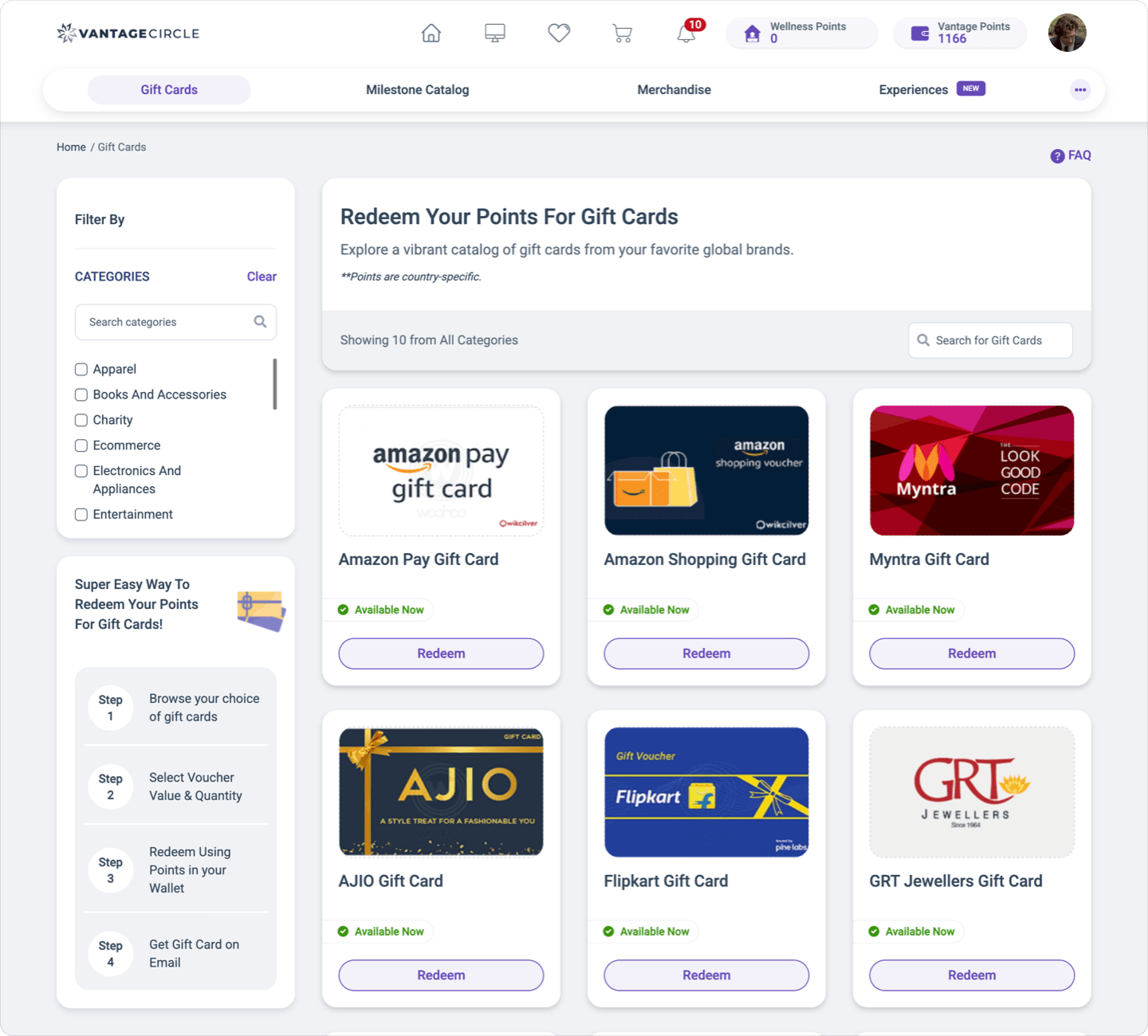
Peer-to-peer recognition platforms like Vantage Rewards make real-time appreciation part of daily work rather than a quarterly event. Through integrations with Microsoft Teams and Slack, managers and peers can recognize contributions in the moment. For distributed U.S. teams, that consistent recognition culture holds even when people are never in the same room.
How to Retain Millennials
The right retention question is not "how do we stop them from leaving?" It is "what are we not delivering that they have clearly told us they need?"
Twenty-five percent of millennials change jobs specifically to find more fulfilling work (Robert Walters Group). That is not impulsive movement. It is a rational calculation. And as millennials move into leadership, the cost compounds. You are not just losing a headcount. You are losing someone who was actively rebuilding your culture from the inside.
Why Millennials Leave
The exit triggers for this generation are well-documented and remarkably consistent across organizations and industries:
No visible career progression
There is no clear next step, no investment in getting them there, and no honest conversation about what advancement looks like. When growth stalls, the most capable employees are also the most likely to go look for it somewhere else.
Poor management
Micromanagement, infrequent feedback, and cultures of control push millennials out faster than almost any compensation gap. The manager relationship is the single most direct driver of daily engagement. When it is broken, no benefit or perk compensates for it.
Burnout
Forty-nine percent of millennials report increased burnout levels due to work pressure (Deloitte, 2023). Organizations that normalize chronic overwork will lose people to exhaustion before they lose them to a competitor.
Values misalignment
Millennials pay close attention to the gap between what a company says and what it actually does. When organizational behavior on DEI, sustainability, or ethics contradicts the stated values, trust erodes quickly and the exit decision accelerates.
Financial frustration
Compensation that does not keep pace with rising costs, opaque pay structures, and benefits packages that have aged out of relevance all chip away at loyalty over time. And then all at once.
Related: Employee Retention Strategies That Reduce Turnover
Developing Millennials into Future Leaders
Retention is not the end goal. For high-performing millennials, the next challenge is leadership. Organizations that retain millennials without developing them eventually lose them to companies that will.
The most reliable retention strategy for high-potential millennials is also the most obvious one: invest in their leadership development before someone else does. Here are five approaches that work in practice, not just in theory.
Mentorship programs
Pair high-potential millennials with senior leaders for year-long programs built around real leadership challenges. The relationship builds capability and organizational attachment simultaneously.
Reverse mentoring
Millennials teach senior leaders on digital literacy, DEI strategy, and purpose-driven culture — repositioning them as contributors to organizational intelligence rather than recipients of development.
Leadership labs
Interactive simulations let millennials practice decision-making without operational risk. Leadership experience before the stakes are real — and that preparation shows when they become real.
Micro-development
Micro-certifications, short courses, and lunch-and-learns with outside practitioners. Focused development that matches how millennials prefer to learn and scales without large program investment.
Social impact leadership
Integrate volunteering and social impact projects into leadership programs. For purpose-driven millennials, leading through community impact builds both skills and organizational loyalty.

Millennials vs Gen Z: How Your Approach Should Differ
| Dimension | Millennials (born 1981-1996) | Gen Z (born 1997-2012) |
|---|---|---|
| Communication style | Email, Slack threads, structured meetings. They value transparency through town halls and open leadership dialogue. | Short video, instant messaging, bite-sized real-time updates. They prefer on-demand communication over scheduled touchpoints. |
| Primary motivator | Purpose and values alignment. Work needs to connect to something bigger than the company's revenue goals. | Skill-building and visible career growth. They want fast, practical progress that translates directly to market value. |
| Feedback preference | Structured coaching conversations with development-focused depth. They want the "why" behind feedback, not just the rating. | Frequent, short, action-oriented feedback. Direct and tied to immediate next steps rather than longer development arcs. |
| Career progression | Structured ladders with clear promotion criteria and formal mentorship. A defined path, even if it is not always followed linearly. | Flexible, skill-based models. Microlearning, certifications, and lateral moves that build breadth rather than climb a hierarchy. |
| Flexibility expectation | Hybrid work as the established norm. Autonomy in scheduling and location, based on lived experience of what that autonomy produces. | Structured flexibility with stability. They want remote options but entered the workforce during peak hybrid uncertainty and value consistency. |
| Recognition format | Specific and public recognition that connects effort to a meaningful outcome. They respond to appreciation that explains why the work mattered. | Immediate digital acknowledgment. Badges, points, and real-time feedback loops that match the environments they grew up in. |
The practical implication is straightforward: a single recognition program, feedback cadence, or career development track will not serve both generations equally. Build systems flexible enough to accommodate different communication styles and motivators. A platform that enables peer-to-peer recognition, manager-led coaching, and choice-based rewards covers the needs of both without requiring entirely separate programs for each generation.
Related: Gen Z in the Workplace: What HR Leaders Need to Know
Build the recognition culture millennials are designing around you
Vantage Rewards embeds peer recognition, milestone awards, and manager appreciation into the tools your team already uses: Teams, Slack, and beyond.
Book a Free Demo →Frequently Asked Questions
What are millennials like in the workplace?
Millennials are purpose-driven, collaborative, and digitally fluent. They prioritize flexibility, career growth, and meaningful work, and expect specific feedback rather than annual reviews. As of 2025, they are the dominant managerial cohort in the American workforce.
What is a typical millennial behavior?
Seeking regular feedback, advocating for flexible arrangements, and moving on when career growth stalls. They perform better in collaborative environments and expect digital tools that make communication and recognition fast and visible.
How do you deal with a millennial at work?
Offer clear career paths, give frequent specific feedback, and recognize contributions in real time. Coaching-based management consistently outperforms control-based management with this generation.
Which generation is hardest to work with?
No research supports the idea that any single generation is inherently harder to work with. Friction between generations typically comes from mismatched expectations, not fixed character traits, and closes quickly when teams establish shared norms.
Conclusion
Millennials survived recessions, adapted to remote work overnight, and rebuilt their careers through sustained economic uncertainty. Through all of it, they did not just develop a clear picture of what they need from work. They developed the conviction to build it themselves. Now they have the authority to do so.
The organizations still asking "how do we manage millennials?" are asking the wrong question a decade too late. The better question is: how do we work alongside the generation that is now designing the systems, setting the culture, and deciding what work should feel like for everyone who comes after them? Align with that project, and you keep your best people. Resist it, and you will keep paying the 30% to 200% cost of replacing them, not because they are demanding too much, but because they are building something you have not caught up to yet.

Supriya is a Content Marketing Lead at Vantage Circle, where she writes on employee engagement, recognition, workplace communication, and culture. Her work on remote team recognition draws on primary research from Vantage Circle's platform data and customer deployments across distributed workforces. She spent the earlier part of her career in corporate communications at Burson, ESPN Star Sports, and CBRE, advising organizations on the messages employees actually hear.
Connect with Supriya on LinkedIn.