
A new hire who's struggling doesn't always say so. Some nod along in orientation, call the training "fine," and save the honest version of the story for an exit interview nobody thought to have earlier. Not because they're being difficult. Because nobody built them a way to say it sooner. Most advice on this topic only covers half of that problem: a stack of onboarding survey questions for the collecting side, nothing on the giving side. This guide covers both, plus the 3-step process that turns what you collect into something that actually changes.
Employee feedback during onboarding runs in two directions: managers give new hires clear, early feedback on performance and fit, and new hires give the organization feedback on the onboarding experience itself. Both streams run on a Day 7, 30, 60, and 90 cadence, and both only work when someone closes the loop.
What Is Onboarding Feedback?
Onboarding feedback is the two-way exchange of input during a new hire's first 90 days: managers give feedback on early performance and fit, and new hires give feedback on the onboarding process itself. Both run on the same milestone cadence, and each has a different job. Feedback from the manager tells a new hire whether they're doing well and where to adjust. Feedback from the new hire tells the organization whether onboarding is actually working, or just running.
The stakes are real on both sides. New hires with a manager actively involved in onboarding are 3.4 times as likely to say the process succeeded, and those who describe their onboarding as exceptional are 2.6 times as likely to be extremely satisfied with their job overall (Gallup, "8 Practical Tips for Leaders for a Better Onboarding Process," 2021). Manager feedback is a large part of what makes an onboarding "exceptional" instead of just present.
A workplace orientation session and a well-planned employee welcome kit set the baseline for a new hire's first day. Feedback is what tells you whether that baseline actually held once the welcome banners came down and the real work started, and whether the new hire is landing the way the role actually needs them to.
The 4 Focus Areas of an Onboarding Feedback Loop
A working onboarding feedback loop covers 4 areas: first impressions, role and resource clarity, manager and team support, and early performance signals.
- First impressions. Whether the logistics, welcome, and first-week setup worked, or whether the new hire spent day one chasing down a laptop and a login that should have been waiting.
- Role and resource clarity. Whether the new hire has what they need and understands what's expected, or whether the job they're doing already looks different from the one they were pitched.
- Manager and team support. Whether the new hire feels backed, included, and able to ask questions without it counting against them.
- Early performance signals. What the new hire is doing well and where they need to adjust, given back to them directly instead of held until a formal review three months in.
The first three focus areas are what most onboarding advice already covers, on the collecting side. The fourth, giving a new hire feedback on their own early performance, is the part nobody writes about, and it's the whole point of the next two sections.
The Two-Way Cadence: What to Give and Gather at Each Milestone
Four checkpoints anchor the two-way feedback loop: Day 7, Day 30, Day 60, and Day 90, and at each one a manager gives feedback while HR gathers it.
| Milestone | Manager gives | HR gathers |
|---|---|---|
| Day 7 | A specific comment on one thing the new hire did well this week | A short pulse on setup, welcome, and first impressions |
| Day 30 | Direct feedback on role clarity and one early performance observation | A pulse on training, resources, and manager support |
| Day 60 | A course-correction conversation if one is needed, before it becomes a pattern | A pulse on team integration and belonging |
| Day 90 | A formal performance check-in that references the earlier feedback given | A retention-read pulse on alignment and intent to stay |
Notice what each column is not: it's not a list of questions to ask. The giving column is a manager habit, and the gathering column is a short pulse, not a milestone-by-milestone survey bank. If you need the actual question sets for each of these HR pulses, the employee onboarding survey questions guide has 60 of them organized by exactly these four days.
How to Give Feedback to New Hires: 5 Practices With Example Comments
Giving feedback to a new hire well comes down to 5 practices: be specific, be early, separate praise from correction, tie feedback to the role's real expectations, and put some of it in public.
- Be specific, not general. "Good job" tells a new hire nothing repeatable, because it doesn't say which part of the work to do again. Name the exact behavior instead, so the new hire knows precisely what earned the comment.
- Give it early, not at the 90-day review. A new hire who first hears about a problem at their formal review has had it for weeks with no chance to fix it, and no idea it was even a problem until it was already on paper.
- Separate praise from correction. Sandwiching a real issue between two compliments teaches new hires to distrust the praise, since they learn to wait for the "but" instead of hearing the compliment on its own terms.
- Tie feedback to what the role actually needs. Vague encouragement doesn't help a new hire calibrate against anything real. A specific tie to an actual expectation of the role does, and it also signals you've been paying attention to their work specifically.
- Put some of it in public. A private comment teaches one person what's valued. A public one, through a channel like a recognition feed, teaches the whole team at once.
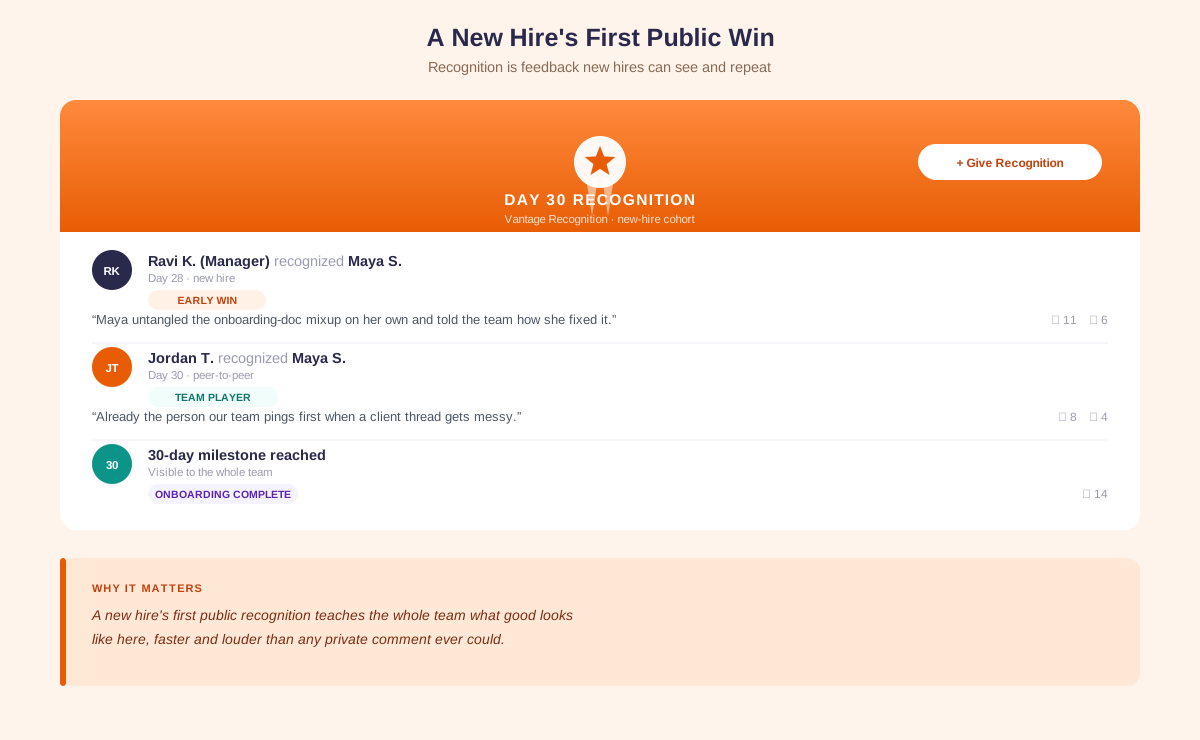
Recognition is feedback with a spotlight on it. The words might be identical to a private comment, but saying them in front of the team, through a channel like Vantage Recognition, turns "you did well" into "you already belong here." A new hire needs the second message as much as the first.
10 Onboarding Feedback Examples Managers Can Use
Here are 10 ready-to-use onboarding feedback examples, paired as early-win comments and course-correction comments, so you have both sides covered at each stage. For a deeper bank of correction-specific language beyond onboarding, constructive feedback examples has 45 more, organized by scenario.
Early-win comments:
- "You caught the scheduling conflict before it reached the client. That's exactly the kind of ownership we need in this role."
- "Your questions in today's stand-up were sharp, they showed you're already thinking two steps ahead of the task in front of you."
- "The way you documented that process for the next person to onboard? That's the habit that makes a team faster, not just you."
- "You asked for help before the deadline slipped instead of after. That's the right instinct, keep it."
- "Your first client call went well because you'd clearly prepared. Bring that same prep to next week's harder one."
Course-correction comments:
- "Your last two updates came in after the deadline. Let's figure out together whether the timeline or the workload is the real issue."
- "You're doing strong individual work, but the team doesn't know about it yet. Start sharing progress in the channel, not just with me."
- "I noticed you're double-checking every decision with me before acting. That's normal at 30 days, but by 60 I want you making the small calls yourself."
- "The client feedback was more direct than what you shared with the team. Let's talk about how to relay tough notes without softening the parts that matter."
- "You've been heads-down on the task and skipped two team syncs. Visibility matters here as much as output, let's fix that starting this week."
A new hire scrolling a public recognition feed sees what gets celebrated on this team, which answers the question every new hire is silently asking in their first month: what does good actually look like here?
How to Write Onboarding Feedback: A 3-Part Formula
Good onboarding feedback follows a 3-part formula: observation, impact, next step. Name what you saw, say what it affected, and tell them what to do with it.
- Observation: state the specific thing you saw, not a general impression.
- Impact: connect it to a real effect, on the client, the team, or the work itself.
- Next step: tell them what to keep doing or what to change, in one concrete sentence.
Worked example, positive: "You flagged the invoice error before it went to the client (observation). That saved us an awkward correction call and kept the account's trust intact (impact). Keep flagging anything that looks off, even if you're not sure it's actually a problem (next step)."
Worked example, corrective: "Your status updates have been arriving a day after the deadline for two weeks straight (observation). That's forcing the rest of the team to plan around uncertainty instead of your actual progress (impact). Send a two-line update by end of day even if the task isn't finished, partial information beats none (next step)."
The formula works because it removes the guesswork feedback usually leaves behind. A new hire who only hears "communication needs work" doesn't know what to change tomorrow. One who hears the three parts does. Effective feedback covers the same principle for feedback generally, this formula is the onboarding-specific version of it.
How to Gather Feedback From New Hires
Gathering feedback from new hires means running a short, anonymous pulse at Day 7, 30, 60, and 90, each covering a different risk. A Day 7 pulse might rate how ready the workstation and system access felt on the very first login. A Day 30 pulse might ask, in the new hire's own words, where the job they're doing differs from the job they were pitched. A Day 60 pulse might ask who on the team they'd go to first if they hit a wall today. A Day 90 pulse might ask what they'd honestly tell a friend about working here. That's the shape of it, four prompts out of a possible 60. For the full milestone-by-milestone question bank, use the onboarding survey questions guide as the companion to this one.
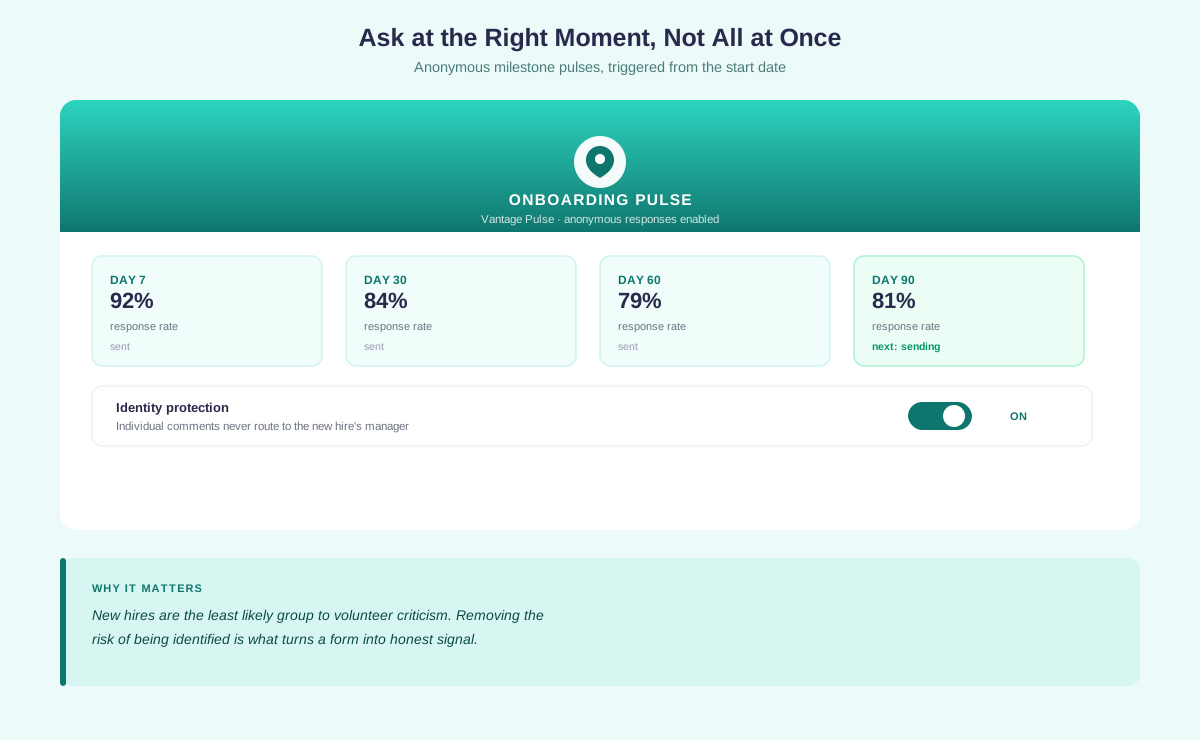
New hires are the employees least likely to volunteer criticism. They're still proving themselves, and a critical comment feels riskier in month one than it will in year three, when a manager barely knows them well enough to separate the feedback from the person giving it. Anonymous responses take that calculation off the table entirely.
Closing the Loop: Turning New-Hire Feedback Into Change
Closing the loop on new-hire feedback takes 3 steps: triage what came in, act on the pattern behind it, and report back what changed.
- Triage. Read the open-text responses for the pattern, not the individual comment. One person mentioning slow laptop provisioning is an anecdote. Five people in the same cohort mentioning it is a process problem worth fixing before the next intake.
- Act. Fix the process, not the instance. Reissuing one laptop faster helps one person. Changing the provisioning trigger date, so IT gets the request before day one instead of after it, helps every future cohort that comes through the same pipeline.
- Report back. Tell the new-hire group what you heard and what changed because of it, within two weeks of the pulse. A short note is enough: what came up, what you're changing, when it takes effect. This step is the easiest to drop under deadline pressure, and it's the one that decides whether the next cohort bothers answering honestly.
If a new hire can't name one thing that changed because of their feedback, the loop is open, not closed. That's a lower bar than it sounds, and most onboarding programs still miss it.
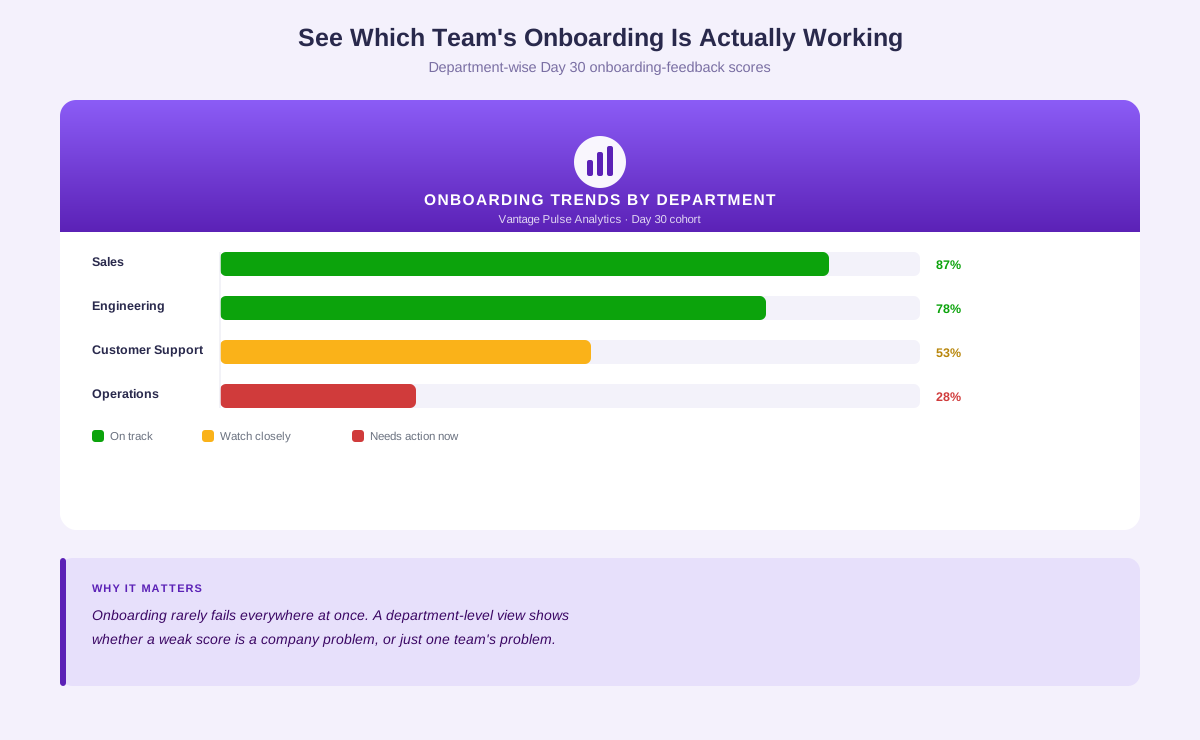
Reading forty open-ended responses per cohort by hand doesn't scale past a handful of hires. Pulse analytics reads the theme behind hundreds of comments at once, so a recurring blocker, like unclear access requests or a role-scope mismatch, surfaces in minutes instead of a full afternoon of manual reading. Department-wise views matter here too: onboarding rarely breaks everywhere at once, and knowing whether a weak Day-30 score belongs to the whole company or to one team changes who actually owns the fix.
Onboarding Feedback in Small Teams: When Anonymity Is Not Realistic
In a small team, a manager can often guess who wrote a comment. Promising anonymity you can't keep does more damage than not promising it at all. The onboarding survey questions guide covers this for the collecting side, and the same honesty applies to the giving side of a two-way feedback conversation.
If your new hire is one of two or three people joining that quarter, don't run a formal anonymous survey and call it done. Promise confidentiality instead: route the feedback to HR rather than the direct manager, and don't report team-level results until you've pooled enough responses that no single comment stands out. On the giving side, the same intimacy that breaks anonymity works in your favor: a manager who talks to a team of three can give feedback in a real conversation, not a form, and that conversation can go both ways in the same sitting, with the new hire raising a concern right after the manager raises one of their own. When numbers are genuinely tiny, a structured 30-minute check-in beats a survey of one every time.
FAQs
How to write onboarding feedback?
Write onboarding feedback using a 3-part formula: observation, impact, next step. State the specific thing you saw, connect it to a real effect on the work or the team, and tell the new hire exactly what to keep doing or change. Skipping the impact or next-step parts is what turns clear feedback into a vague impression nobody can act on.
What are the 5 C's of onboarding?
The 5 C's of onboarding are compliance, clarification, confidence, connection, and culture. The first four come from Dr. Talya Bauer's original 2010 SHRM Foundation whitepaper; confidence was added later as the framework expanded to a fifth C. Compliance covers paperwork and policy, clarification covers role expectations, confidence covers a new hire's belief they can do the job, connection covers relationships and belonging, and culture covers the organization's mission and values.
What are some examples of positive feedback for employees?
Strong positive feedback names a specific action and its effect, such as "You caught the scheduling conflict before it reached the client, that's exactly the ownership this role needs." Positive feedback examples has 30 more, organized by the situation they fit.
What are some good feedback questions?
Good feedback questions ask about the process, not the person: "What's one thing that would have made your first week easier?" or "Where do you still feel unclear about what's expected of you?" Process questions invite an honest answer, while person-focused questions like "are you struggling?" tend to invite a defensive one instead.
Conclusion
Onboarding feedback isn't one form sent at day 90. It's a habit of giving new hires specific, early comments on their work, paired with a short, honest pulse on how the process is landing for them, closed out by telling them what changed because they spoke up. Managers who do the giving side well raise the odds their new hire calls the onboarding a success. HR teams who do the gathering side well catch the process problem before it costs a resignation. Do both, close the loop between them, and onboarding feedback stops being a compliance step and starts being retention work.

Lupamudra is a content marketing specialist at Vantage Circle, where she has written 50+ articles on employee recognition, rewards, and workplace culture, alongside employee engagement, diversity and inclusion, and HR compliance topics, including how India's tax rules apply to recognition and rewards programs.
Connect with Lupamudra on LinkedIn.