
Positive feedback is specific recognition of a behavior and its impact, not a generic "good job." The strongest positive feedback follows the SBI formula: name the Situation, the Behavior, and the Impact. Done that way, praise tells someone exactly what to repeat, which is what turns a nice moment into better work.
Most of us are worse at this than we think. We notice good work all the time and say almost none of it out loud, or we flatten it into "nice job" on the way to the next thing. The person hears the words but learns nothing from them.
This guide gives you 50+ ready-to-use positive feedback examples grouped by the workplace scenario you are in and the channel you deliver them in, plus 5 rules for making praise land. To step back and see how positive feedback fits the wider practice of employee feedback, we cover the full picture separately. And for the redirecting side, see our constructive feedback examples.
So, let's get into it.
What Makes Positive Feedback Effective? The SBI Formula
Effective positive feedback names a specific behavior and the impact it had, so the person knows exactly what to keep doing. The generic "great work" feels nice for a second and teaches nothing. Specific praise sticks.
The cleanest way to get specific is the SBI formula from the Center for Creative Leadership: name the Situation, the Behavior, and the Impact. Situation anchors when and where it happened. Behavior is the observable thing the person actually did. Impact is what it changed for the team, the customer, or the work.
Here is the difference in one rewrite.
- Vague: "Great job on the presentation!"
- SBI-specific: "In this morning's client pitch (situation), you opened with the customer's own numbers instead of our standard slides (behavior). You could see the room lean in, and it is why they asked for a follow-up call (impact)."
Same sentiment. The second one tells the person precisely what worked, so they do it again next time. That is the whole game with positive feedback: make the good behavior repeatable.
50+ Positive Feedback Examples by Scenario
The examples below are grouped into 8 workplace scenarios, from hitting a goal to a new hire's first win. Each one follows the SBI pattern and is tagged with the relationship it fits, whether you are a manager, a peer, or giving feedback upward to your own boss. Treat the wording as a starting point and adapt it to your voice.
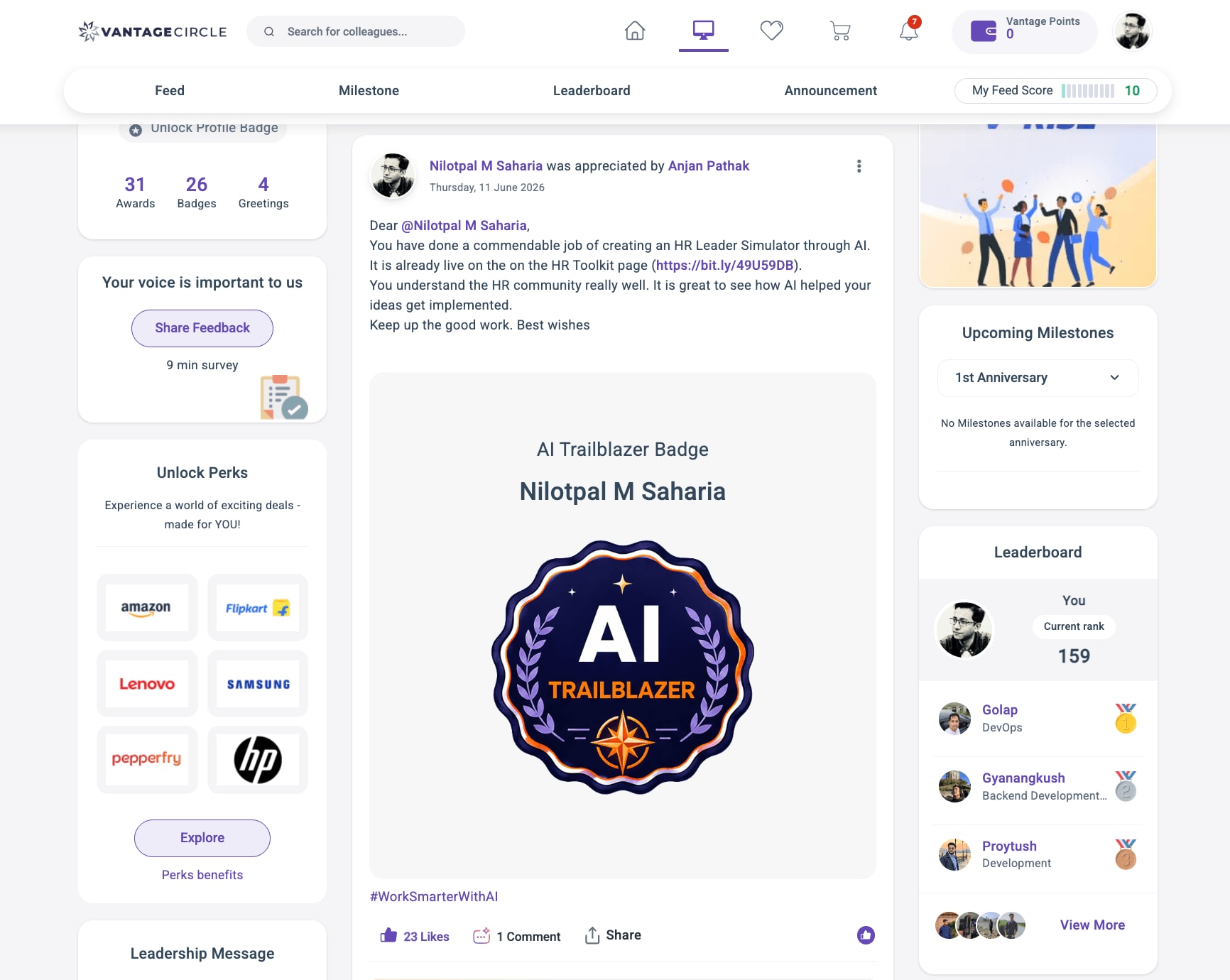
For Great Results and Hitting Goals
Use these when someone delivers on a target or ships a result worth naming.
- Beat a quarterly target (manager to employee): "Priya, you closed the quarter at 118% of target when the pipeline looked thin. Reworking the outreach sequence in week two is what turned it around, and it is now the template the rest of the team is using."
- Delivered a clean launch (manager to employee): "Dan, the release shipped on the date we committed to, with no rollback. Your pre-launch checklist caught two issues before they reached customers and saved us a support fire drill."
- Set a personal best (peer to peer): "Sam, you handled 40% more tickets this sprint and your customer scores still went up. That mix of speed and care took real pressure off the rest of us during the crunch."
- Rescued a slipping deal (employee to manager): "Thanks for jumping into the Norded account with me. Leading with the renewal data reset the whole conversation, and the client signed a week early."
- Finished ahead of a stretch goal (manager to employee): "Aisha, the migration wrapped two days ahead of a schedule most of us thought was optimistic. Documenting each step as you went means the next team will not have to reverse-engineer it."
- Recovered a stalled project (manager to employee): "Ken, the redesign had been stuck for a month, and you shipped it in two weeks by trimming the review cycle to one round. Fast and clean, exactly what it needed."
- Landed a make-or-break demo (peer to peer): "Yuki, that investor demo could have gone sideways, and you kept it crisp and on message the whole way. We got the follow-up meeting because of how you ran it."
For Strong Teamwork and Collaboration
Use these to reinforce the behaviors that make a team more than the sum of its people.
- Unblocked a teammate (peer to peer): "Leo, you set aside your own task to help me debug the export on Friday. We shipped because of it, and I did not want that to go unsaid."
- Aligned two departments (manager to employee): "Nina, you got design and engineering agreeing on a handoff format after months of friction. Standups are shorter now and rework has dropped, which is exactly what we needed."
- Shared the credit (peer to peer): "Marcus, your launch recap named everyone who touched the project, including the QA folks who usually go unmentioned. People noticed, and it makes them want to work with you again."
- Covered during a crunch (manager to employee): "Grace, you picked up Ravi's reviews while he was out, without anyone asking. The queue never backed up, and that quiet reliability is what holds a team together."
- Drew out a quieter voice (employee to manager): "I appreciated you pausing the meeting to ask the interns what they thought. It surfaced the caching idea we ended up using, and it signaled that everyone's input counts."
- Defused a tense disagreement (peer to peer): "Malik, when the design debate got heated, you reframed it around what the user needs instead of who was right. The room reset, and we left with a decision instead of a standoff."
- Shared what only they knew (manager to employee): "Ivy, you wrote up how the billing integration works so it stopped living only in your head. The team handled billing questions without you last week, which is exactly the point."
For Leadership and Ownership
Use these when someone steps up, owns an outcome, or leads without being asked.
- Owned a mistake early (manager to employee): "Tom, you flagged the pricing error to the client before they found it and laid out the fix in the same email. That is what builds trust, and it protected the relationship."
- Steadied the team in uncertainty (employee to manager): "During the reorg you were honest about what you knew and what you did not. That kept us calm when rumors could easily have taken over."
- Made a hard call (manager to employee): "Dana, cutting the third feature to protect the launch date was not the popular choice, but it was the right one. We shipped something solid instead of everything late."
- Mentored without being asked (peer to peer): "Kevin, you spent an hour walking the new analyst through our data model with zero prompting. She is contributing already, and that is on you."
- Backed the team publicly (employee to manager): "When the client blamed us in that meeting, you took the heat and defended the team's call. We noticed, and it is why people go the extra mile for you."
- Handed off ownership well (manager to employee): "Raj, you gave the intern the client update to run and coached from the side instead of taking over. That is how you grow people, and it worked."
- Modeled the standard on values (manager to employee): "Imran, you rewrote the vendor terms so the smaller partners were not squeezed. That is our fairness value in action, not just on a poster."
Tying praise like example 21 to a named company value is where feedback starts building culture rather than just morale. Vantage Recognition lets managers tag recognition to a specific value, so a single thank-you also reinforces what the company stands for.
For Going Above and Beyond
Use these when someone does more than the role asked for.
- Stayed late for a customer (manager to employee): "Rosa, you stayed on the incident bridge past midnight until the customer was fully back up. They emailed to say it changed how they see us, and I agree."
- Fixed a problem nobody owned (peer to peer): "Ben, the flaky test everyone just kept re-running had been costing the team hours a week. You tracked down the root cause and killed it for good."
- Volunteered for the hard part (manager to employee): "Sana, you took the legacy data cleanup nobody wanted and made it boring, in the best way. A boring cleanup is the sign of someone who planned it well."
- Went out of scope to help (employee to manager): "Thanks for personally sitting with me on the budget model. You had a full week, and that hour saved me two days of guessing."
- Anticipated a need (peer to peer): "Omar, you prepped the FAQ before the client even asked. When the questions came, we already had the answers, and it made us look sharp."
- Delivered more than the brief (manager to employee): "Farah, the ask was a simple competitor list, and you came back with the list plus a one-page read on where we can win. Nobody asked for the analysis, and it shaped the whole strategy."
- Built something the team kept using (peer to peer): "Noah, the template you put together on the side now saves all of us an hour a day. You did not have to make it, and it changed how the team works."
For Growth and Improvement Over Time
Use these to reinforce progress, so people keep stretching.
- Turned around a weak spot (manager to employee): "Jamie, your presentations six months ago ran long and buried the point. Yesterday you opened with the recommendation and finished early. That is real growth."
- Acted on past feedback (manager to employee): "Lena, you asked for the lead role, took the note about delegating, and actually let the team own their pieces. The difference in the last sprint was obvious."
- Kept learning (peer to peer): "Chris, you have gone from asking how the pipeline works to explaining it to new folks in one quarter. Watching that has honestly pushed me to level up too."
- Bounced back from a setback (manager to employee): "Ravi, the first pitch lost the deal. Instead of going quiet, you reworked the approach around their objections and won the next one. That resilience is the real skill."
- Grew into a bigger role (manager to employee): "Maya, you stepped into the coordination work while I was out and nothing slipped. You are ready for more of this, and I want to talk about what that looks like."
- Rebuilt a client relationship (manager to employee): "Elena, the account that nearly churned last year just renewed for two more years, and it comes down to how consistently you showed up for them. That is a real turnaround."
- Found their voice in reviews (manager to employee): "Sang, six months ago you stayed quiet in reviews. Today you pushed back on my estimate, and you were right. Keep doing exactly that."
For Problem-Solving Under Pressure
Use these when someone keeps a clear head and finds a way through.
- Diagnosed a live outage (manager to employee): "Alex, you isolated the failing service in under ten minutes while everyone else was still refreshing dashboards. That calm is exactly what an incident needs."
- Found a workaround (peer to peer): "Deepa, when the vendor API went down you rerouted us through the cache instead of stalling the release. Nobody downstream even noticed."
- Made a fast, sound call (employee to manager): "Thanks for deciding quickly on the rollback yesterday. Waiting for a full post-mortem would have cost us the evening. You made the right trade in the moment."
- Kept a client calm (manager to employee): "Nora, the client was heated and you stayed factual and warm at the same time. By the end of the call they were thanking us. That is a rare skill under fire."
- Simplified a mess (peer to peer): "Paul, you took a tangled spreadsheet three of us had given up on and turned it into a plan in an afternoon. I do not know how, but thank you."
- Held the line on a risky shortcut (peer to peer): "Wei, when the vendor pushed for a shortcut, you calmly laid out why it would cost us later. You steered us away from a call we would have regretted."
- Coordinated the room in a crisis (peer to peer): "Bianca, during the outage you assigned who checked what and posted a clear update every ten minutes. People stopped spinning because someone was steering, and that coordination was half the fix."
For Reliability and Consistency
Use these to recognize the steady work that rarely gets noticed.
- Never misses a deadline (manager to employee): "Sofia, I realized I have never once had to chase you for a deliverable. That reliability is easy to take for granted, so I want to name it: it makes my job possible."
- Handles the unglamorous work (manager to employee): "Hasan, the weekly compliance report is nobody's favorite job, and you have filed it on time every week without a single reminder. The boring, essential work runs because of people like you."
- Consistent quality (manager to employee): "Emma, your reports have not needed a correction in months. Consistency like that is what lets leadership trust the numbers without double-checking."
- Shows up for the team (manager to employee): "Diego, you are the first to jump on the messy problem no one else wants and the last to make it about yourself. The team feels that steadiness even when no one says it."
- Keeps commitments small and large (employee to manager): "You said you would protect our focus time and you actually held the line on meetings. It is a small thing that changed my whole week."
- Steady through a rough stretch (manager to employee): "Cole, this quarter threw a lot at the team, and your output never wobbled. That steadiness is what everyone else quietly leans on."
- Always leaves it better (peer to peer): "Devi, every doc you touch comes back cleaner than you found it. Small habit, big effect on the rest of us."
For a New Hire's First Wins
Use these early. A new hire's first weeks set their expectation for whether good work gets seen.
- First solo task (manager to employee): "Tara, your first ticket closed clean and your notes were clearer than some of our veterans'. Great start, and exactly the standard we want."
- Asked a sharp question (peer to peer): "Welcome aboard, Sean. That question in standup about our retry logic was one nobody had asked in a year. Keep bringing the fresh eyes."
- Ramped up fast (manager to employee): "Aditi, you were contributing to code review by week two. That is quick, and it tells me you are not waiting for permission to add value."
- Fit the culture early (peer to peer): "Nadia, you jumped into the team channel and started helping others before anyone helped you. That is how we like to work here."
- First small improvement (manager to employee): "Jordan, you spotted a gap in the onboarding checklist in your first month and fixed it. New folks after you will have it easier because you spoke up."
- Flagged their own error (manager to employee): "Amir, you raised your own bug in week three instead of hoping no one would notice. That honesty this early tells me the kind of teammate you will be."
- Built connections fast (peer to peer): "Hugo, you set up intro chats across three teams in your first two weeks. You already know who to ask for what, which most people take months to figure out."
A new hire's first week of praise should not wait for a manager to notice. Peer-to-peer recognition lets teammates welcome and reinforce those early wins in the moment, which is when they matter most. That is also a practical way to keep employee recognition flowing without it all routing through one busy inbox.
Positive Feedback Examples by Channel
Where you say it matters as much as what you say. Positive feedback runs through 3 channels: a private 1:1, a written message, and public recognition. The same praise lands differently in each one, so match the channel to the moment.
| Channel | When to use it | Example |
|---|---|---|
| In a 1:1 conversation | The praise is personal, detailed, or tied to someone's growth | "I've watched you grow into the lead role this quarter, and it shows in how the team runs." |
| In a written message | The person is remote, or you want the praise on the record | "Just reread your incident write-up. Clearest one I've seen here. Sharing it as the template." |
| In public recognition | The behavior models something you want the whole team to repeat | "Shipping the accessibility fixes moved our compliance score from amber to green. Everyone should see this." |
In a 1:1 Conversation
A 1:1 is the place for praise that carries weight or gets personal. Eye contact and a pause let the person actually absorb it instead of skimming past. Use it when the feedback is about growth ("Six months ago you would not have run that meeting the way you just did") or when the win is theirs alone and deserves your full attention.
In a Written Message (Slack, Teams, or Email)
Written praise works when your team lives in chat tools like Slack or Microsoft Teams, or when the person is remote and a hallway moment is not an option. It also creates a record the person can revisit, and that a manager can point to at review time. Keep it specific so it does not read as a throwaway reaction: "The way you structured the migration doc saved me an hour today. Thank you." A message like that carries.
In Public Recognition
Public recognition is for behavior you want the whole team to copy. Said in a hallway, praise disappears. Posted where everyone can see it, praise becomes a standard: this is what good looks like here.
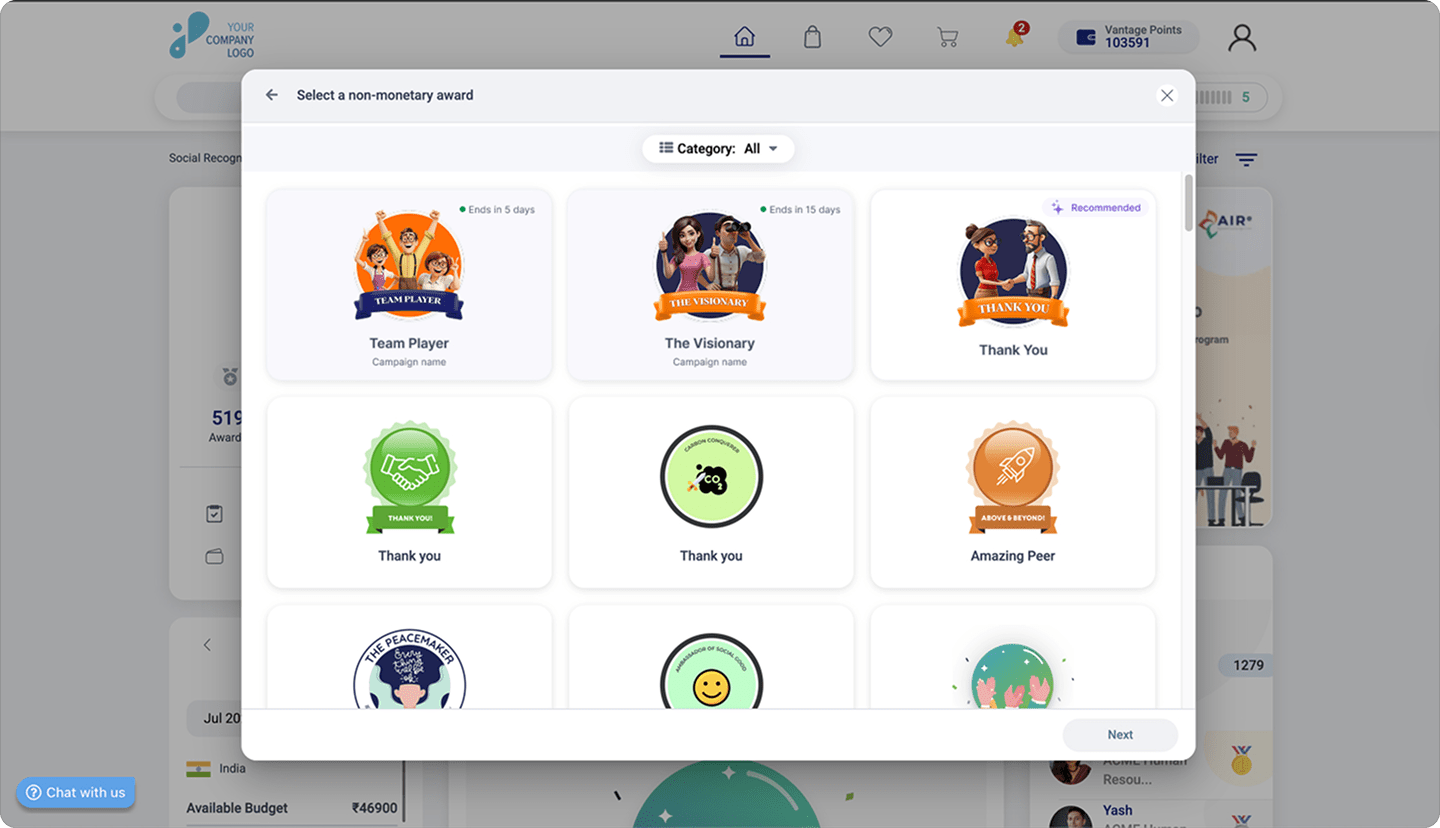
A social recognition feed turns one thank-you into something visible and lasting, and recognition analytics show whether praise is actually frequent, specific, and evenly spread, or pooling around the same few names.
Why public praise hits harder. Private praise makes one person feel good. Public praise does that and teaches everyone watching what earns recognition here. In the recognition programs I have seen up close, the teams with the healthiest cultures are not the ones with the most generous managers. They are the ones where praise is visible, so a good behavior gets copied instead of staying a secret between two people.
Positive Feedback by Relationship
The relationship shapes the tone. Feedback to a colleague, to your manager, and to someone who reports to you each needs a slightly different register, even when the behavior is the same.
Positive Feedback for a Colleague
Keep it warm and peer-level, with no hint of a manager grading them. Name the specific help and what it did for you.
- "You caught the flaw in my logic before the client did. I owe you one."
- "Working with you makes the hard projects feel lighter. Thanks for being that person."
- "Your half of the research was so clean I barely had to edit the merge. That saved my weekend."
Positive Feedback to Your Manager
Upward praise is easy to skip because it can feel like flattery. Done specifically, it is just honest feedback that happens to go up the chain, and good managers rarely hear it.
- "The way you shielded the team from the last-minute scope change let us finish something we are proud of."
- "You gave me the hard project and then got out of the way. That trust is why I stayed."
- "Your feedback in our last 1:1 was blunt and exactly what I needed. It changed how I run my reviews."
Positive Feedback for an Employee
As a manager, your praise carries extra weight, so spend it on the behaviors you want to see more of. Be specific enough that they can repeat it.
- "You turned a frustrated customer into a reference call. That is a skill, not luck."
- "Your documentation is the reason the handoff went smoothly. I noticed, and so did the next team."
- "You asked for more responsibility and then earned it. Let's talk about what's next."
Short Positive Feedback Examples (Quick One-Liners)
Sometimes you need a quick, sincere line, not a paragraph. These 12 short positive feedback examples are ready to send in a chat, a comment, or on your way past someone's desk.
- "That was exactly what the meeting needed. Thank you."
- "Your fingerprints are all over how smoothly this went."
- "You made a hard thing look easy today."
- "I learned something from the way you handled that."
- "Best version of this report we have shipped."
- "You caught what the rest of us missed. Good eye."
- "The client called out your work by name."
- "You showed up for the team when it counted."
- "That question changed the whole decision."
- "Reliable as always, and it does not go unnoticed."
- "You turned a mess into a plan. Nicely done."
- "Thanks for making the new folks feel welcome."
For more ready-to-send lines, see our words of appreciation for employees.
How to Give Positive Feedback That Lands
Good positive feedback does five things: it names a specific behavior, ties that behavior to its impact, arrives soon after the moment, uses the right channel, and sounds like you mean it. Miss one and even sincere praise can fall flat. For the full method, including the science of why praise works and the mistakes that make it backfire, see our guide on how to give positive feedback. For the wider principles behind any feedback, our guide to effective feedback goes deeper.
Why Positive Feedback Matters: 4 Measurable Benefits
Positive feedback is one of the cheapest performance levers a manager has, and the research backs that up across motivation, performance, retention, and productivity.
- It fuels motivation. Employees are 3.6 times more likely to be motivated to do outstanding work when their manager gives daily rather than annual feedback (Gallup, 2022).
- It drives performance. The highest-performing teams average 5.6 positive comments for every negative one, while the lowest-performing teams run nearly three negatives per positive (Zenger and Folkman, Harvard Business Review, 2013).
- It protects retention. Organizations with recognition-driven cultures hold 92% retention versus 76% in low-recognition cultures, according to The Recognition Effect (Great Place to Work and Vantage Circle, 2025, 5.7 million employees).
- It lifts productivity. Continuous reinforcement is linked to a 12% gain in productivity compared with relying on annual feedback cycles, from Vantage Circle's research with Mercer, The Future of Total Rewards (2025).
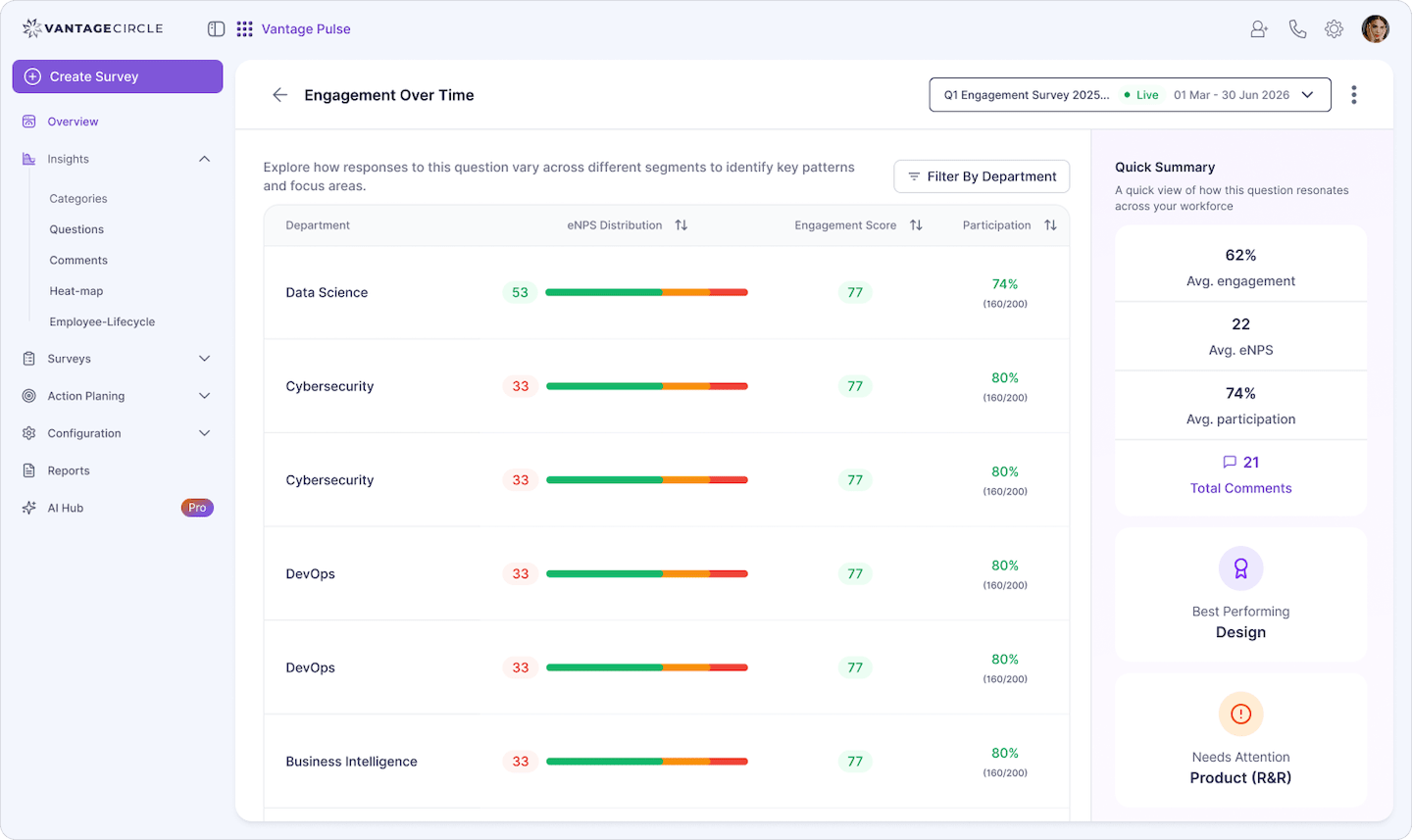
The catch is that most managers think they praise often, and the data usually says otherwise. Engagement analytics that link recognition frequency to engagement trends show whether praise is actually translating into the outcomes leaders care about. If you want to see how continuous employee listening works in practice, book a demo with Vantage Circle.
Conclusion
Positive feedback is a skill, not a personality trait. The 50+ examples here give you a starting point for the moments that come up most, from a hit target to a new hire's first win, across every channel you might use to say it.
Adapt them to your voice, structure them with SBI, and deliver them close to the moment. Do that consistently and praise stops being an afterthought. It becomes how your team learns what good looks like, one specific thank-you at a time.
Frequently Asked Questions
What are some examples of positive feedback?
Positive feedback examples include praise for hitting a goal, strong teamwork, leadership under pressure, or quiet reliability. A good one names the behavior and its impact, such as "Your prep made the client pitch land, and they asked for a follow-up call." Grouping examples by scenario makes it easy to find the right one for the moment.
How to give a good feedback example?
Give good feedback by naming the situation, the specific behavior, and the impact it had, then delivering it soon after the moment. Skip the generic "good job." Say what the person actually did and why it mattered, so they know exactly which behavior to repeat next time. Specific praise teaches; vague praise fades.
What are the examples that give positive remarks or comments?
Positive remarks work best when they point to a concrete action, like "You unblocked the team fast when the deploy failed, and it saved us hours." A comment tied to a real behavior and its result feels earned and useful. Generic remarks such as "nice work" feel pleasant but teach nothing and are forgotten quickly.
How to give positive feedback examples?
Give positive feedback by adapting a scenario-based example to the person and the moment, keeping the situation, behavior, and impact intact. Choose the channel that fits, whether a quiet 1:1, a written note, or public recognition, and deliver it while the work is still fresh. The wording is a starting point, not a script to read aloud.

Nilotpal M Saharia is an Assistant Manager, Content Marketing at Vantage Circle and a recognition-and-rewards (R&R) strategist with 9 years of experience spanning Marketing, HR, and content strategy. He helps HR leaders turn employee recognition and leadership research into practical workplace programs.
Connect with Nilotpal on LinkedIn.