
It's Monday morning. Your team is online, the standups are done, and the work is getting done. Everything looks fine.
Until you actually pay attention.
Nobody's raising their hand for the stretch project. The same two people are carrying the team. And the two solid performers you lost last quarter? Their exit interviews said the same thing: "I JUST DIDN'T FEEL VALUED!"
That's not a performance problem. That's a motivation problem.
Gallup's research puts a number to it. 77% of employees are disengaged at work. Not burned out, not quitting, just coasting. And that collective coast is draining $8.9 trillion from the global economy every year.
The frustrating part?
Most companies are trying. Bonuses, perks, team events, recognition tools, the investment is real. But the impact rarely survives 90 days. Because these tactics treat motivation like a one-time fix, when it's actually something you build into the culture itself.
That's the shift this guide is about. Recognition, done right and done consistently is the one lever that actually holds. Here's how to build a workplace culture where motivation doesn't need to be manufactured. It just exists.
What Drives Employee Motivation?
Understanding what motivates employees is the first step toward building a culture where motivation sustains itself. Most HR strategies chase symptoms,
- Low scores on engagement surveys
- Quiet quitting
- High attrition (without addressing the root drivers.)
Research consistently points to a cluster of five core drivers:
Sense of Purpose
Connect your role to something bigger than the task at hand.
Opportunities for Growth
Learning paths and stretch assignments that keep people moving forward.
Recognition for Contributions
Timely, specific acknowledgment that makes people feel seen and valued.
Autonomy Over Work
Trust employees to decide how they get their best work done.
Feeling of Belonging
An inclusive culture where everyone feels part of the team.
These aren't abstract ideals. Each one maps directly to something HR teams can influence. And when even two or three are present consistently, discretionary effort follows naturally.
The challenge is that most organizations treat these drivers as independent programs.
A purpose workshop here, a learning budget there, a recognition platform that gets used twice a year. What motivates employees isn't any one initiative,it's the daily experience of feeling seen, trusted, and valued. That requires a system, not a series of one-offs.
Do Give A Read → Unlocking Employee Motivation: A Comprehensive Guide
Intrinsic vs. Extrinsic Drivers
Employee motivation broadly falls into two categories: intrinsic and extrinsic.
Intrinsic Motivation is motivation that comes from within the individual. It's driven by personal satisfaction, curiosity, mastery, or a sense of meaning. When someone is intrinsically motivated, they do the work because it's fulfilling in itself.
Extrinsic Motivation is motivation that comes from outside the individual. It's driven by external rewards or consequences. Salaries, bonuses, promotions, and perks all fall into this category. People act to earn a reward or avoid a penalty, rather than for the inherent value of the activity itself.
Both matter, but they don't age the same way.
Extrinsic rewards create spikes. A bonus drives effort in the short window around performance reviews, then flatlines. Intrinsic motivation, by contrast, compounds. People who genuinely care about their work, don't need their engagement topped up every quarter. It simply sustains itself.
The Role of Recognition in Sustaining Motivation
Of all the levers HR has access to, recognition is the most underutilized and the most leveraged at scale. It costs little, operates in real time, and directly addresses the most common reason employees disengage: feeling invisible.
What makes recognition effective isn't the size of the gesture. It's the consistency and specificity of it.
A generic "great job" from a manager lands differently than a peer calling out exactly what you did and why it mattered to the team. That specificity signals that someone was actually paying attention, which is what people mean when they say they want to feel valued.
Peer-to-peer recognition is particularly powerful because it doesn't depend on a manager's bandwidth or memory. Employees can directly appreciate each other, in the moment, for the specific thing that actually happened. Without waiting for a one-on-one or a quarterly review.
That's the model Vantage Circle's recognition feed is also built on. Social, values-aligned, and woven into the daily flow of work rather than saved for review season.
Recognition That Actually Works
Build a culture where every contribution gets seen — not just the loudest ones.
Discover how peer-to-peer recognition drives engagement, retention, and a stronger team culture.
Why Employees Lose Motivation

You can hire the right people. Give them the right tools. Build the right team. And still watch motivation quietly drain out of the room.
That's because demotivation rarely announces itself. It creeps in through,
- Missed feedback
- Invisible contributions
- The slow accumulation of feeling like your effort just doesn't register
And, by the time it shows up in an engagement score, you've already lost ground.
Here's what's actually happening underneath.
1. The 90-Day Cliff
There's a pattern most HR leaders recognize but rarely name out loud: the post-onboarding drop-off. New hires arrive energized. They're learning fast, eager to prove themselves, and genuinely invested. Then somewhere around the 90-day mark, the energy starts to flatten.
Why? Because the feedback dries up.
The onboarding structure is gone, the manager check-ins get less frequent, and the day-to-day work becomes invisible. Nobody's telling them what's working.
Now, this is what lack of motivation looks like in its earliest stage. Not disengagement, just a quiet question: Does any of this actually matter? Left unanswered long enough, it becomes a decision to stop trying.
2. Burnout and Disengagement Cycles
Here's the thing about burnout that most organizations get wrong. It's not primarily caused by too much work. It's caused by unrecognized effort. People can sustain extraordinary output when they feel seen for it. What they can't sustain is pouring energy into work that disappears into a void.
The cycle is predictable.
An employee goes above and beyond. Covers for a teammate, delivers ahead of deadline, solves a problem no one asked them to solve.
Nothing happens. No acknowledgment, no visibility, no signal that it mattered. So they recalibrate. They do less. And what looks like disengagement from the outside is actually a rational response to a system that doesn't reward effort.
Gallup's research found that burned-out employees are 74% more likely to be actively seeking another job.
3. Toxic Cultures That Demotivate
Nothing kills motivation faster than unfair recognition. When the same names always appear in the spotlight, regardless of who actually did the work the message to the rest of the team is loud and clear: Trying harder won't change anything!
The fix isn't more recognition events. It's a system where recognition is broad, frequent, and tied to behavior, not politics.
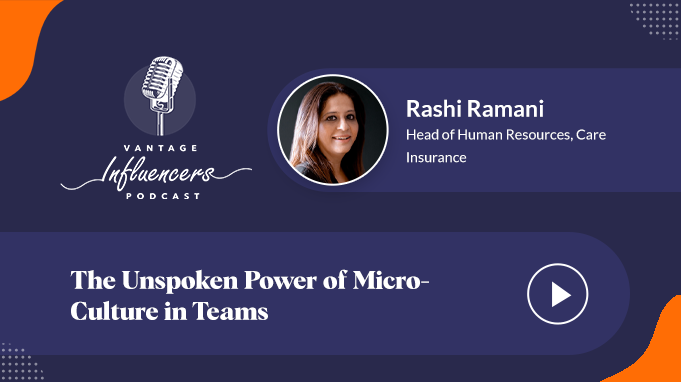
Vantage Influencers Podcast
"What you feel in one team can be completely different from what you experience in another, even within the same company. That gap is where toxic micro-cultures quietly take root, and where leaders need to pay close attention."
— Rashi Ramani, Head of Human Resources at Care Insurance
Listen to the EpisodeHere are the 7 tips to boost your lost motivation at work
1. Plan your Day
Creating a to-do list or planning your day in the early morning can set your day. Keeping the priorities straight gives you a push, and the motivation that you need. Most of the successful leaders start their day early and plan it accordingly. It gives them more time in the day and, at the same time, promotes discipline. And most importantly, it provides a structure to your day. One of the primary reasons behind our lost motivation is that we do not have structure and discipline; we jump from one task to another based on urgency.
When you plan your day, you unlock your priorities, value your time and energy. And it gives you a purpose to keep going.
2. Review your Goals and Objectives
Lack of motivation also seeds from not knowing what to do. It is, therefore, essential to review the goals and objectives that you want to accomplish. As working professionals, we all have our targets to fulfill, but we often lose track and become distracted. Knowing what you are expected from your employer and making the priorities straight can keep you alert and motivated. Often people do not know what to do, and even the managers sometimes fail to brief their team members. Being clueless at your job is demotivating and depressing.
Talk to your managers in doubt and review your goals and objectives and build your sense of purpose and motivation.
3. Practice Mindfulness
Be aware of your current state of mind and what is driving you towards de-motivation. Mindfulness is understanding and accepting one’s feelings and thoughts. It is in seeing within us without being judgmental. We are our worst critics. We often judge ourselves and develop a mindset that diminishes our energy and motivation. And in the **workplace environment**, we experience that from time to time. Either is an internal conflict with the team members or struggling with our work; we tend to be harsh on ourselves. Practicing mindfulness can give us perspectives to see and visualize the events in reality and act on it effectively.
Being mindful means that we suspend judgment for a time, set aside our immediate goals for the future, and take in the present moment as it is rather than as we would like it to be.
~ Mark Williams
4. Often Doing Less is Enough
We, as individuals, have a habit of chewing more than we could. Learning is a never-ending process and demands patience. We often try to achieve more without giving any credits to what we have achieved so far. Take a break and keep your perspectives straight. You cannot always beat yourself up by keeping unrealistic goals. Often doing less is enough. What matters is the consistency and quality of your work. Keep calm and not get demotivated if you fail to accomplish your desired goals.
5. Take Small Steps
Worklife can be hectic, busy schedules, deadlines, meetings, and whatnot. Amidst everything, we are assigned tasks by our managers that we no clue about. All these can be a lot to handle and also a major reason for our lost motivation. The sensible approach is to keep calm and take small steps. Even if you are struggling at a particular task, taking the first smaller steps can boost motivation. One of the major reasons why people procrastinate is that they get confused and not make correct judgments. In such a situation, it is wiser to build confidence by taking smaller steps and regain back the lost motivation.
6. Declutter your Working Space
Even if you are working from home or in an office environment keeping your surroundings clean is vital. They say organized space clutters your mind. Clutter workspace can kill your productivity and motivation to work. You would not like searching for your meeting notes, project, and other necessities when you have important work at hand. Also, keep the essential things at your reach and toss the unnecessary items in your trash can. Often a little effort and change in perspective are all you need to **boost your productivity** and uplift motivation.
7. Lastly, Be Grateful!
There is something very profound and beautiful in being grateful. We tend to get so immersed in our day to day activities and work that we forget to be grateful. When you are grateful for all that you have and achieved, you allow yourself to bring positive energy. You not only see and acknowledge yourself but also build a sense of purpose and motivation.
As Brian Tracy rightfully said-
Develop an attitude of gratitude, and give thanks for everything that happens to you, knowing that every step forward is a step toward achieving something bigger and better than your current situation.
How engaged is your team, really?
Engagement radar
Strength & gap
All pillars
Insights
Your badge
Turn insights into action
See how Vantage Circle helps teams close engagement gaps with recognition, wellness, and growth programmes.
How to Improve Employee Motivation: 5-Step Action Plan
Talking about motivation is easy. Building a system that sustains it is the hard part. Here's a five-step sequence HR teams can actually execute. Not a theory, but a real roadmap with clear ownership, product tools, and timelines.
Step 1: Diagnose Before You Prescribe
You can't fix what you haven't measured. Most motivation initiatives fail because they're built on assumptions. Leadership thinks the issue is compensation whereas the team actually wants flexibility, clarity, or simply to feel seen.
You can start with a targeted pulse survey across your teams. Ask specific questions:
- Do employees feel their work is meaningful?
- Do they know how their role connects to company goals?
- Have they felt appreciated in the last 30 days?
You can deploy these as quick, anonymous check-ins, under three minutes to complete. Segmented reports show you where motivation is breaking down by team, tenure, or function, so you're responding to data, not guessing.
There are tools like Vantage Pulse that can assist you in conducting these surveys and give you real-time feedback on what your employees are thinking.
Do Give A Read → Pulse Surveys: The Complete Guide to Real-Time Employee Feedback
Step 2: Build a Consistent Recognition Rhythm
Recognition is the fastest lever to pull. It costs the least and has the most immediate impact on how people feel about coming to work. But it only works when it's consistent, not a once-a-quarter shoutout in an all-hands.
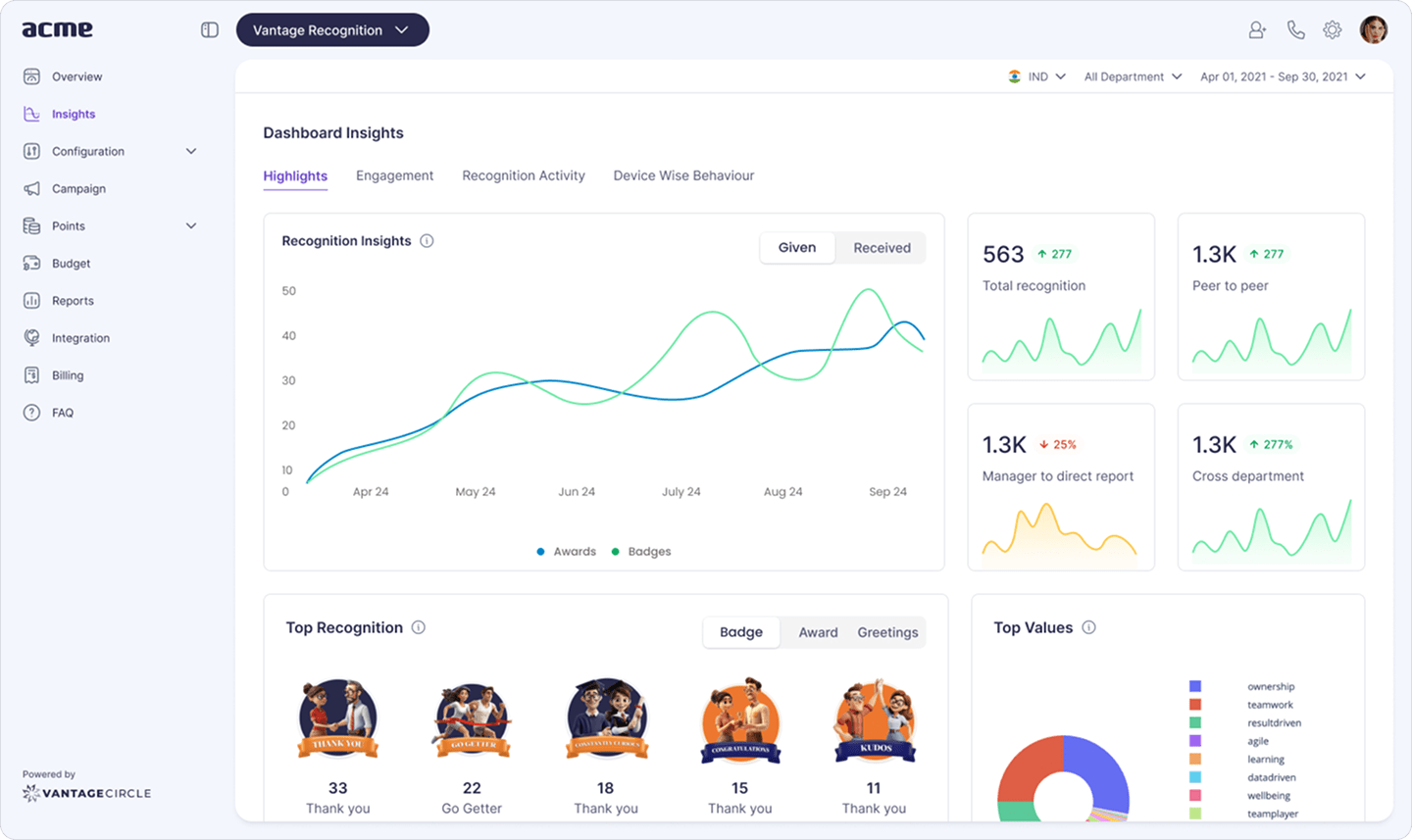
Vantage Recognition gives managers and peers a structured way to recognize contributions in real time, tagged to company values. A quick note like "you nailed that client presentation" tied to #OwnershipMatters lands harder than a generic "great job."
Set a team target: at least three meaningful recognitions per manager per week in the first month. Track it. You'll see mood shift before the data does.
Step 3: Connect Work to a Growth Path
People lose motivation when they can't see where they're headed. Career conversations (real ones, not annual performance reviews) are what close that gap.
So, you must assign every team member a quarterly stretch goal. Have managers document it and check in monthly on progress, not just output.
Publicly mark career moments: work anniversaries, project completions, new certifications, so employees know their growth is being noticed, not just their output.
Step 4: Make Benefits Feel Personal
Most benefits programmes are designed around averages. The company picks a set of perks that seem broadly appealing, rolls them out, and moves on. The problem is that “broadly appealing” often means “specifically useful to almost no one.”
When an employee can choose what they actually want. Be it a gym membership, a learning subscription, or a childcare voucher, two things happen.
- They get something useful.
- They receive a signal that the company treats them as adults with their own priorities.
For teams that want to offer broad coverage without managing multiple vendor relationships, Vantage Perks provides a single platform across dining, travel, wellness, learning, entertainment, and shopping. Employees browse and choose what fits their life; the company sets the budget and steps back. What makes it practically useful is the redemption experience. It’s designed for everyday use, not just annual enrolment.
Step 5: Track, Adjust, and Keep Going
Motivation isn't a project you close. It's a metric you monitor.
Run a Vantage Pulse check-in every four to six weeks. Compare scores against your Week 1 baseline. Share progress with the team, not just with leadership. When employees see the needle move, they start believing the effort is real.
Don't stop investing in your people just because the scores improved. That's exactly the moment the culture you've built begins to sustain itself.
Frequently Asked Questions
1. Why do employees lose motivation at work?
Employees lose motivation when they feel unseen, undervalued, or disconnected from meaningful work. The most common triggers are inconsistent recognition, limited visibility into career growth, and chronic overload. When these combine, especially after the initial 90-day engagement period, discretionary effort quietly drops. The team keeps showing up, but their investment in the work fades.
2. What role does recognition play in employee motivation?
Recognition directly signals to employees that their effort matters. When it is specific, timely, and tied to company values, it reinforces the behaviours you want more of. Employees who feel recognised are more productive, less likely to quit, and more willing to go beyond minimum responsibilities. It is the most cost-effective motivation lever available to managers.
3. What is the difference between intrinsic and extrinsic motivation?
Intrinsic motivation comes from within, curiosity, mastery, or a sense of purpose that makes work fulfilling in itself. Extrinsic motivation is driven by external rewards like salaries, bonuses, or perks. Both matter, but intrinsic motivation is stickier. When employees find meaning in their work, engagement sustains itself rather than requiring constant external reinforcement to hold.
4. How can managers motivate a disengaged employee?
Start with a private, honest conversation — not a performance review, but a genuine check-in about what has changed. Identify the root cause: workload, lack of recognition, unclear growth path, or personal circumstances. Then act on what you hear. Even small gestures can meaningfully shift someone's relationship with their work.
5. What are the signs that an employee has lost motivation?
Watch for silence in meetings, a drop in discretionary effort, missed deadlines without explanation, and withdrawal from team channels. Motivated employees ask questions and raise ideas. Disengaged ones complete tasks and wait for instruction. If your strongest performers stop volunteering for stretch projects, that is the clearest early signal before it shows up in engagement survey data.
Conclusion
Everything in this guide points to the same answer: people re-engage when they feel genuinely seen. Recognised consistently for the right things, connected to a growth path they can actually see, and supported by an organisation that treats their wellbeing as a real priority rather than a line item.
None of that requires a large budget or a complete culture overhaul. It requires consistency. Recognition that shows up every week, not once a quarter. Career conversations that happen monthly, not at the annual review. Benefits that feel personal, not generic.
Pick one step from the action plan and execute it this week. The compounding effect of small, steady commitments is where real engagement culture gets built and where it stays.

Sanjeevani Saikia is a Senior Content Strategist at Vantage Circle, where she leads end-to-end content strategy across SEO, thought leadership, brand storytelling, podcasts, and video. She is also the host of the Vantage Influencers Podcast, where she brings conversations with HR and business leaders from top global organisations, including Fortune 500 companies.
Connect with Sanjeevani on LinkedIn.