Every manager has had that moment. Someone on the team handles a messy situation without drama, helps a colleague without being asked, and gets the work done without needing to be chased. And your first thought is: "I want more of that."
But when someone asks you to describe the qualities of a good employee, it turns out to be surprisingly hard to put into words. You know it when you see it. You just struggle to define it clearly enough to look for it, develop it, or recognize it on purpose.
This guide does exactly that. Here are the 15 defining qualities of a good employee, with a real workplace example for each, plus practical ways for managers to spot, develop, and recognize them.
What Makes a Good Employee?
A good employee combines reliability, strong communication, and a growth mindset with the soft skills that lift a whole team. The qualities that matter most are reliability, accountability, adaptability, initiative, communication, teamwork, integrity, and coachability. The best managers do not just look for these traits during hiring. They actively recognize and develop them, because the behaviors you acknowledge are the ones that grow.
Worth knowing: according to Gallup's 2024 State of the Global Workplace report, only 23% of employees worldwide are engaged at work. The people who carry these qualities tend to sit squarely in that 23%, and they are the first ones to leave when they do not feel seen. Employee engagement and recognition are not separate conversations from this list. They are what keep these qualities alive.
15 Defining Qualities of a Good Employee

1. Reliability and Accountability
Reliable employees follow through. When they say they will do something, it gets done. Accountable ones own the outcome whether it goes well or not, without looking for somewhere to point the blame.
2. Strong Work Ethic
Employees with strong work ethics are committed, not just busy. They care about quality and do not cut corners when nobody is watching.
Related read: Work Ethics in the Workplace: Why They Matter and How to Build Them
3. Adaptability
Adaptable employees stay effective when plans change. They adjust priorities, shift approaches, and do not spend three days mourning the old way of doing things.
4. Proactive Initiative
Employees who take initiative see what needs doing before being asked. They do not wait for permission to improve something that clearly needs improving.
5. Effective Communication
Good communicators say what they mean clearly, listen actively, and know when an email will do versus when a conversation is what is actually needed.
Related read: Good Communication Skills in the Workplace: What They Are and Why They Matter
6. Teamwork
Strong team players make the people around them better. They share credit, pitch in when a colleague is underwater, and care about the team's success at least as much as their own.
7. Integrity and Honesty
Employees with integrity do the right thing even when it costs them something. They are honest with colleagues, with customers, and with managers, including when they disagree.
8. Coachability
Coachable employees treat feedback as information rather than criticism. They listen, ask follow-up questions, and actually change what they do next time.
9. Emotional Intelligence (EQ)
Employees with high emotional intelligence understand their own reactions, stay calm under pressure, handle conflict constructively, and notice when a teammate is struggling before the teammate says anything.
10. Problem-Solving and Critical Thinking
Strong problem-solvers do not just flag issues. They bring options. They think through a problem from multiple angles before landing on a recommendation, and they can explain their reasoning.
11. Confidence
Confident employees speak up in meetings, push back when something is wrong, and take on new challenges without needing someone to hold their hand through every step.
12. Ambition and Growth Mindset
Ambitious employees want to grow and take active steps toward it. They seek out learning opportunities, ask for stretch assignments, and push themselves past what they can already do comfortably.
13. Positive Attitude
A positive attitude is not about being cheerful all the time. It is about approaching challenges with energy rather than dread, and lifting team morale rather than pulling it down.
14. Action Orientation
Action-oriented employees move. They make decisions with the information they have, course-correct as they go, and do not wait for perfect conditions that may never arrive.
Related read: Leadership Skills for Managers: What Separates Good from Great
15. Professionalism and Punctuality
Professional employees show up on time and prepared, and they treat everyone, regardless of seniority, with the same level of respect.
The 15 Qualities at a Glance
| Quality | What it looks like | How to recognize it |
|---|---|---|
| Reliability and Accountability | Follows through, owns outcomes | Completes stretch tasks without reminders; owns mistakes |
| Strong Work Ethic | Committed to quality, not just completion | Explains their process; cares about the how |
| Adaptability | Adjusts well when plans change | Handles ambiguous tasks without stalling |
| Proactive Initiative | Flags problems before they escalate | Sends "I noticed this" messages unprompted |
| Effective Communication | Clear, timely, and honest | Surfaces bad news early with context |
| Teamwork | Lifts the team, shares credit | Shows up consistently in peer feedback |
| Integrity and Honesty | Does the right thing unsupervised | Owns mistakes immediately and with full context |
| Coachability | Acts on feedback and closes the loop | Behavior visibly changes after a feedback conversation |
| Emotional Intelligence (EQ) | Reads the room, stays composed | Stays calm and reframes in high-stakes moments |
| Problem-Solving | Brings options, not just problems | Proposes reasoned paths under pressure |
| Confidence | Speaks up and holds a point of view | Contributes even when senior people are in the room |
| Ambition and Growth Mindset | Seeks stretch, asks for more | Arrives at reviews with a learning agenda |
| Positive Attitude | Approaches challenges with energy | Frames problems constructively even during stressful stretches |
| Action Orientation | Decides and moves, course-corrects | Starts tasks and checks in rather than waiting |
| Professionalism and Punctuality | On time, prepared, and consistent | Holds the same standard in difficult moments as in easy ones |
Why These Qualities Matter for Retention and Culture
These qualities are not just nice to have. They are directly tied to whether your best people stay.
The employees who carry the qualities above, the reliable, communicative, accountable ones, sit squarely in the engaged minority. And they are the first to leave when they do not feel recognized for it.
Gallup's research also shows that employees who feel consistently recognized are significantly less likely to leave within two years. A workplace that actively notices and calls out good behavior, through employee recognition programs, peer shoutouts, or manager-led acknowledgment, creates an environment where your best people want to stay rather than see what else is out there.
The modeling effect matters too. When employees with strong qualities are recognized publicly, it shows the rest of the team what "good" actually looks like in practice. That is one of the most underrated tools a manager has, and it costs nothing.
How Managers Can Develop and Recognize These Qualities
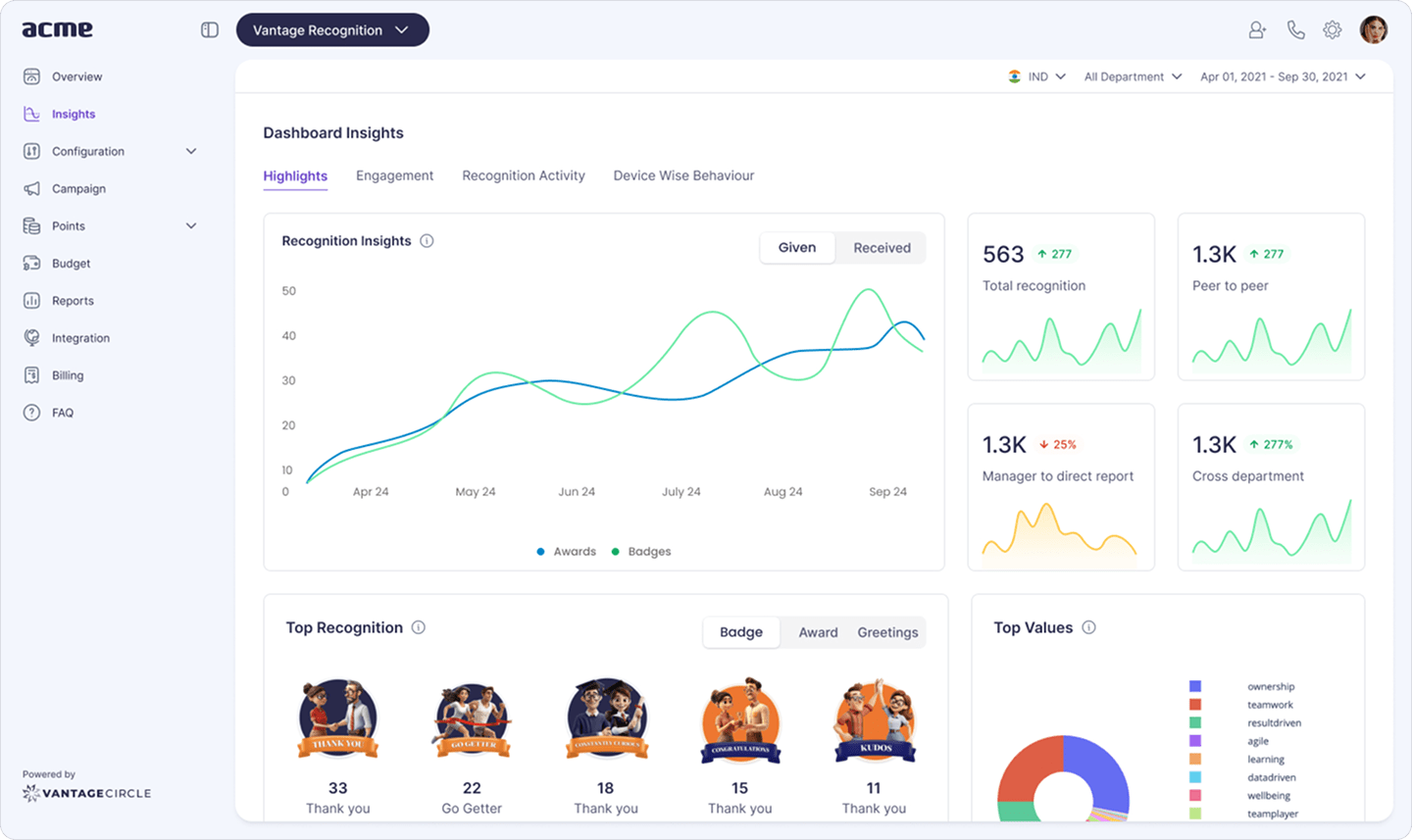
The most effective managers do three things with this list: they spot these qualities early, they develop them on purpose, and they name them out loud when they show up.
Manager checklist for every quality on this list: Have you defined what this quality looks like in practice for your team? Have you given feedback the last time you saw it? Have you recognized it publicly at least once in the past month?
Spot it: Most of these qualities surface during low-stakes moments rather than high-pressure ones. Pay attention to how your team handles a miscommunication, an ambiguous brief, or a slow week. That is when you see what someone is actually like, not when a big deadline is forcing everyone to their best behavior.
Develop it: Pair a team member who needs to build a specific quality with someone who already has it. Coachability grows through mentoring. Adaptability grows through stretch projects. Communication sharpens through cross-functional work. Learning benefits give employees the resources to develop at their own pace, at the moments when they are most ready.
Recognize it: Name the behavior specifically when you call it out. "Great job this week" does not land the same way as "The way you flagged the supplier issue before it became a crisis, that is exactly what proactive initiative looks like, and it saved the launch." Peer-to-peer recognition is especially powerful here because colleagues often notice qualities that managers miss entirely.
If you want to know how to put recognition into words, these appreciation examples for employees are a practical starting point.
How to Recognize Good Employees at Scale
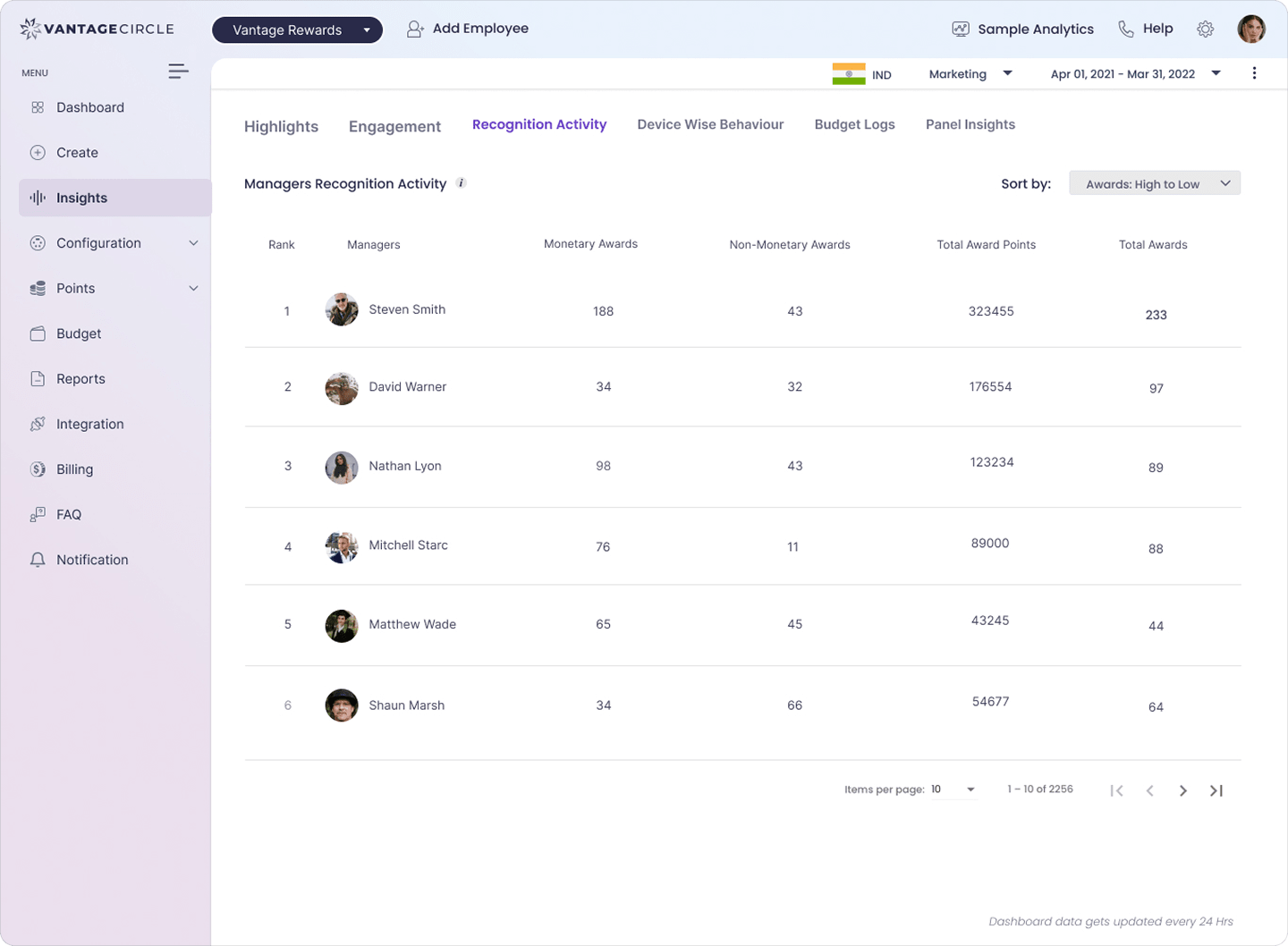
Noticing great qualities one-on-one is a good start. Building a system that makes recognition consistent, visible, and tied to your values is what turns it into culture.
Vantage Recognition lets managers and peers practice social recognition in real time — tagging specific behaviors to company values and making appreciation visible across the whole organization.
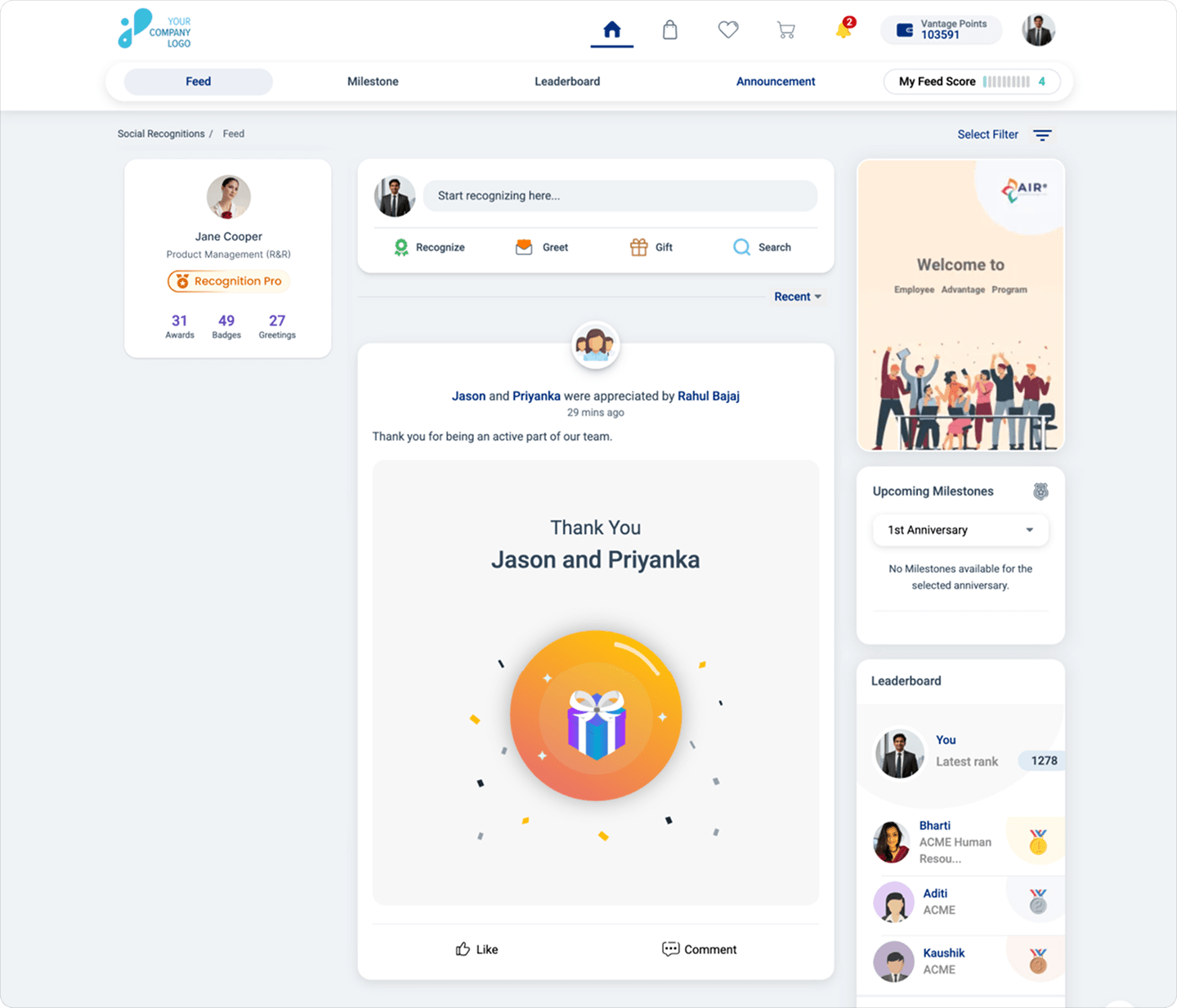
When you can see which qualities are being called out most often, you also get a live picture of where your culture is strong and where it needs attention.
See it in action: Book a Vantage Recognition demo
Frequently Asked Questions
1. What are the top 5 positive qualities of an employee?
The five qualities that show up most consistently across research and manager experience are: reliability, strong communication, adaptability, integrity, and a growth mindset. These five interact in useful ways: a reliable person who communicates clearly and adapts quickly is genuinely hard to replace, and most managers know it.
2. What are the qualities of a good coworker?
A good coworker is dependable, easy to communicate with, willing to pitch in without being asked, and positive to be around even during stressful stretches. Team players who share credit and acknowledge others' contributions tend to lift the whole team's performance, not just their own section of it.
3. What qualities make a good staff?
A strong staff as a group balances complementary strengths: some members are great executors, others are strong communicators, others are the ones who spot problems early. The common thread across high-performing teams is accountability and honest communication about what is working and what is not. Shared values and mutual respect are the foundation everything else is built on.
4. What are the top three strengths of an employee?
Ask most experienced managers and they will land on reliability, communication, and coachability. Reliability because work actually gets done. Communication because problems surface early rather than late. Coachability because the employee keeps getting better over time rather than plateauing at year two. Together, these three predict long-term performance more consistently than raw skill or experience alone.
Wrapping Up
The 15 qualities here are not a checklist to run through during interviews. They are a map for what to look for, develop, and recognize in the people already on your team. Most of these qualities are not fixed personality traits. They grow with the right feedback, the right environment, and a manager who notices when they show up and says something about it. Start with two or three qualities you most want to see more of, define what they look like in practice for your specific team, and start calling them out when you catch them in the wild.

Susmita Sarma is a Digital Marketer at Vantage Circle, making employee recognition less of a checkbox and more meaningful - helping organizations say we value our people and truly mean it.
Connect with Susmita on LinkedIn.