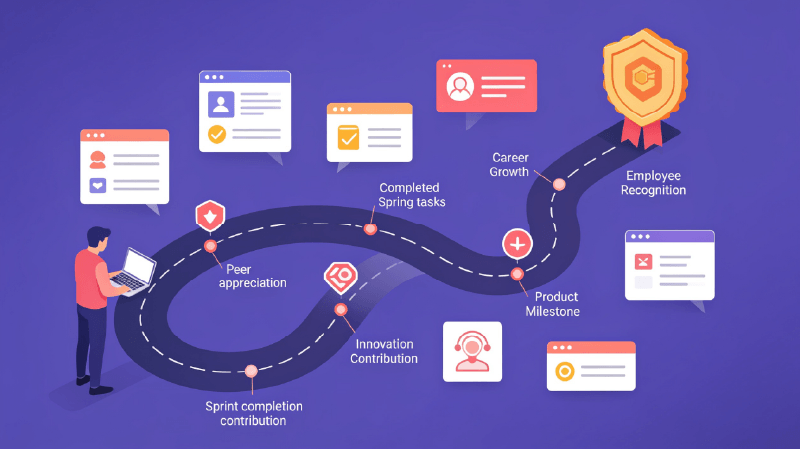
Picture a strategic plan with a vision slide, a priorities slide, and a timeline in three colors. Six weeks later, nobody on the team can say what the priorities were. That plan didn't fail on paper. It failed in the gap between the slide and the team.
Strategic planning skills are the analytical, people and execution abilities that let you set a long-term goal, decide where to focus resources, and turn that goal into a plan people can deliver. They aren't just for strategists. Every manager uses them. In a Harvard Business Review study by Michael Mankins and Richard Steele (2005), most companies' strategies delivered only 63% of their promised financial value, and that gap between plan and result is where these skills matter most.
Below are the 10 skills that matter, how they change by level, and a 90-day plan to build them.
Key takeaways
- The skills fall into three groups: thinking, people and execution.
- The same skill looks different for an individual contributor, a manager and a senior leader.
- A plan lands when people see the behaviors that move it forward being recognized.
- You can build all 10 skills in 90 days by practicing on real work.
What Are Strategic Planning Skills?
In short, they're the abilities that take you from "where do we want to be?" to a plan your team can actually deliver: working out the right goal, choosing what to focus on, and getting people to carry it through.
They fall into three groups.
- Thinking skills: analyzing the situation and looking ahead, so you pick the right goal.
- People skills: communicating the plan and getting others to commit, so the goal is shared.
- Execution skills: prioritizing, tracking and adapting, so the goal gets done.
Most lists stop at the first group, which is why plans look good and then stall. They sit alongside your other management skills.
10 Essential Strategic Planning Skills (With Examples)
Each skill has a common mistake and a workplace example (illustrative, not client data). The first six are the ones most guides agree on. The last four decide whether the plan survives contact with your team.
1. Analytical and critical thinking
This is questioning your assumptions and separating signal from noise. A SWOT analysis (strengths, weaknesses, opportunities, threats) looks at your own position, and a PESTLE analysis (political, economic, sociological, technological, legal and environmental factors, per the CIPD) looks at the outside world.
Where it trips people up: they use the framework to confirm what they already believe. Ask "what would change my mind?" while you fill it in.
Example: attrition data shows two teams drive most exits, so "hire 20" becomes "fix two teams first".
2. Big-picture vision and foresight
This is seeing where the team should be in three to five years, and being ready for more than one version of it.
Where it trips people up: vision becomes a slogan. If you can't name one decision it would change this quarter, it isn't doing any work yet.
Example: a support lead sees chat rising and calls falling, and plans training a year early.
3. Goal setting
Goal setting turns a direction into something you can check. A SMART goal is specific, measurable, assignable, realistic and time-bound, the wording in George Doran's original 1981 version (some teams now use "achievable" and "relevant"). An OKR (objectives and key results) pairs an ambitious objective with measurable key results, as in Google's re:Work guide.
Where it trips people up: too many goals. Three clear ones beat ten vague ones.
Example: "Improve onboarding" becomes "Cut time to first project from 30 days to 20 by the end of Q2".
4. Prioritization and trade-offs
Every plan is a set of things you chose not to do. Say no out loud, explain why, and agree what would bring a parked item back.
Where it trips people up: nobody wants to be the one who says no, so everything stays "in progress" and nothing gets finished.
Example: a manager with six good ideas picks two and tells the team what would revive the rest.
5. Resource and action planning
Match people, budget and time to goals, then break each goal into actions with one named owner and a date.
Where it trips people up: shared ownership. When two people own an action, neither does.
Example: a project needs two analysts for six weeks, so you pause a lower-priority report to free them up.
6. Communication and active listening
Explain the plan plainly, then listen for where it isn't landing. See good communication skills and active listening.
Where it trips people up: announcing the plan once and assuming it was heard.
Example: you ask each team lead to say the plan back in their own words, and fix whatever they get wrong.
7. Decision-making under uncertainty
You'll rarely have all the data. Decide anyway, name your assumptions, and set a point to revisit.
Where it trips people up: waiting for certainty that never arrives, while the window to act closes.
Example: you pick a vendor with 80% of the information and note the two facts that would reverse the call.
8. Stakeholder alignment and influence
Plans cross team lines, so the people they affect need a say first. List who is affected, what each group cares about and who can block it, then talk to them one by one.
Where it trips people up: surprising people in the big meeting. A "no" in a room is much harder to turn around than a concern raised in a one-to-one.
Example: you meet finance and legal separately before a new approvals process launches, and change one step because of it.
9. Adaptability and re-planning
Change the plan without treating the change as failure. Decide in advance what triggers a re-plan, such as a missed milestone two reviews in a row.
Where it trips people up: defending the plan because it took effort to write. That's the trap Paul Glover describes further down.
Example: a review shows a target is out of reach, so the team re-scopes it and moves the effort to a goal that is working.
10. Monitoring progress and reinforcing it
Good tracking notices whether the right behaviors are happening, not just whether milestones are hit. Recognition insights show whether managers are recognizing the behaviors your plan depends on.
Where it trips people up: measuring activity and never asking whether the program is working. Aon's summary of Vantage Circle's Annual Recognition and Rewards Report (India) 2024-25 found that fewer than 20% of companies conduct a detailed ROI evaluation of their programs, and those that do report 2 to 3 times higher impact against their stated objectives.
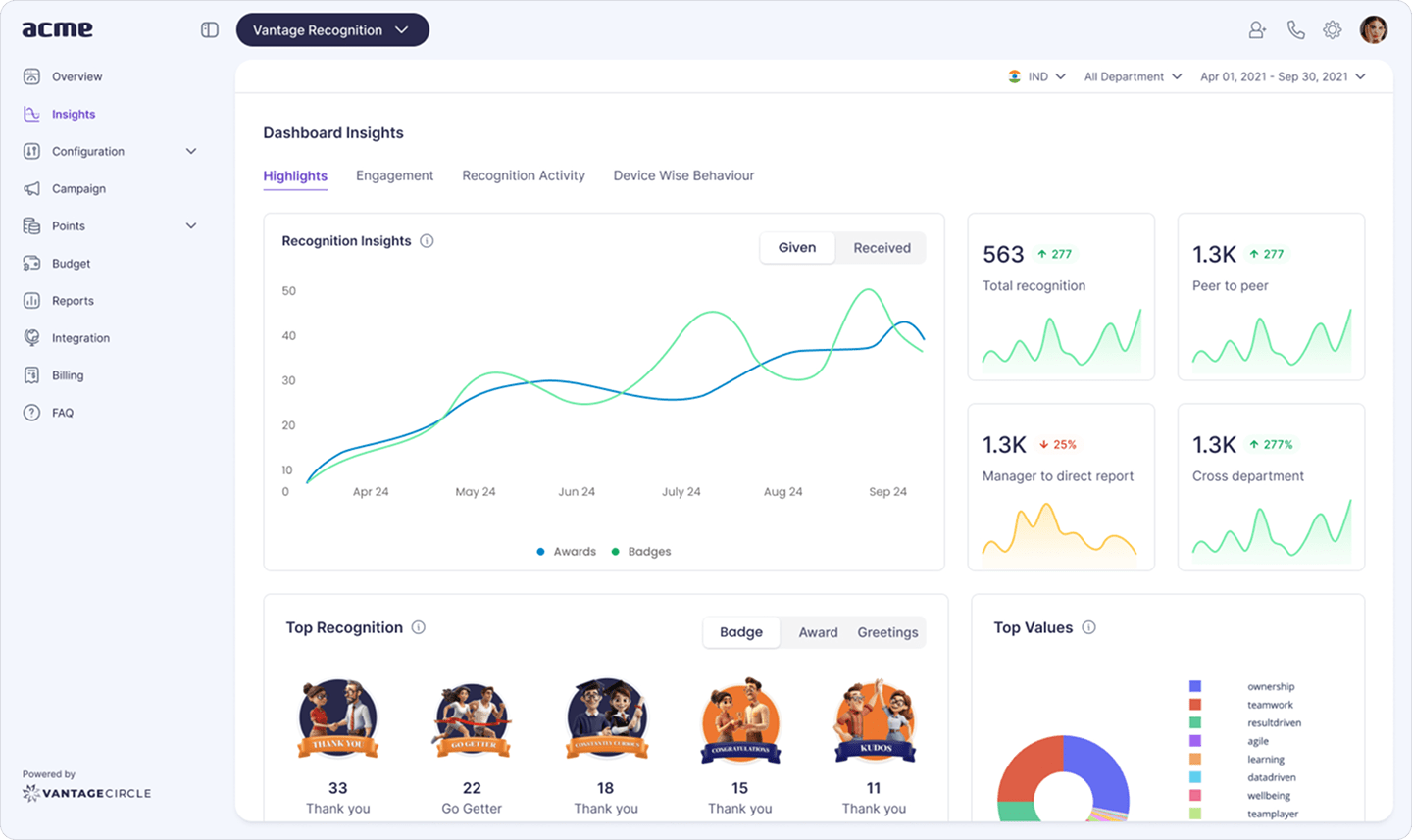
Example: if the plan needs cross-team collaboration, you check monthly how much recognition crosses department lines.
Strategic Planning Skills by Level
The same skills look different at each level. An individual contributor plans their own work, a manager plans for a team, and a senior leader plans for the organization.
| Skill | Individual contributor | People manager | Senior leader |
|---|---|---|---|
| Analysis | Spots patterns in their own results | Reads team data to find where output slips | Weighs market, cost and capability |
| Goal setting | Writes SMART goals for their quarter | Cascades team goals into individual goals | Sets a few company-wide objectives |
| prioritization | Orders tasks by impact | Chooses which projects get capacity | Decides which bets to fund and which to stop |
| Alignment | Keeps manager and peers informed | Links the team to neighboring teams | Brings the leadership group to one direction |
| Adapting | Re-plans the week when priorities move | Re-scopes team targets at each review | Changes the annual plan on new evidence |
| Reinforcing progress | Thanks peers who help hit a milestone | Recognizes the behaviors behind team milestones | Makes priority behaviors visible |
Our guide to leadership competencies shows where these skills sit among the rest.
Strategic Thinking vs Strategic Planning
Strategic thinking decides what matters and why. Strategic planning decides how and when. You need both, and the plan has to stay open to new thinking.
This is where a lot of strategic leadership goes wrong. Paul Glover, a C-suite performance coach and former federal court trial lawyer, put it sharply on the Vantage HR Influencers Podcast in 2022, in an episode on leadership blind spots:
"The strategic thinking blind spot... we do strategic planning, and we do that on an annual basis. But then we believe that the strategic thinking is not a part of that process, because thinking requires that we be resilient enough and adaptive enough to change the strategic plan... So the concept of being locked into a plan, because that's how it came to a decision, needs to go away."
Skill 9 is the answer to that.
How to Improve Your Strategic Planning Skills: A 90-Day Plan
You improve strategic planning skills fastest by practicing them on real work in short, reviewed cycles.
| Days | Practice | Evidence it's working |
|---|---|---|
| 1 to 30: Analyze | Run a SWOT on your team. Interview three stakeholders about what they need from you. | A one-page summary stakeholders confirm is accurate |
| 31 to 60: Plan | Write a one-page plan with three SMART goals. Agree the trade-offs and what is parked. | Your team can state the three goals without looking |
| 61 to 90: Execute and adapt | Hold biweekly check-ins, make one deliberate change to the plan, and run a short retrospective. | One documented re-plan, with the reason |
Gather data before writing goals, give every goal a date, and leave room for change. A repeatable process helps, such as Hoshin kanri, a Japanese method for aligning a team's activities with its strategic objectives. If your goals come from management by objectives, the biweekly check-in keeps them alive.
To check yourself, rate each of the 10 skills from 1 (emerging) to 4 (advanced) and pick your two lowest for the next 90 days. At the end of each cycle, a two-question pulse ("I understand our priorities"; "I know how my work contributes") tells you if the plan has been understood, not just written.
Turn the Plan Into Behaviors People See and Recognize
A plan becomes real when people know which behaviors move it forward and see those behaviors recognized.
In India, the gap is visible: only 38% of Indian organizations currently target the behaviors that business leaders prioritize, according to the AIRe Benchmarking Report India 2024-25 from Vantage Circle.
The fix starts on paper, and it's simpler than it sounds. Translate each goal into two or three behaviors you could see. "Improve customer retention" might become "follows up within a day" and "flags churn risk early".
Recognition is the usual way companies reinforce behaviors like these. Vantage Circle's State of Recognition and Rewards 2025 found that 89% of companies now use recognition and rewards programs to reinforce behaviors and shape culture, and 74% extend this to DE&I and sustainability-related behaviors.
The same report found that high-effectiveness programs were 2 to 3 times more likely than others to reward specific behaviors, not just outcomes. That's an association, not proof of cause.
Once the behaviors are named, core values alignment lets you tag recognition to them, so people see which actions move the plan forward. A time-bound campaign around a milestone, such as the first 90 days of a new service line, keeps attention there. In Vantage Recognition's campaign manager you set start and end dates, and the badges retire when the campaign ends.
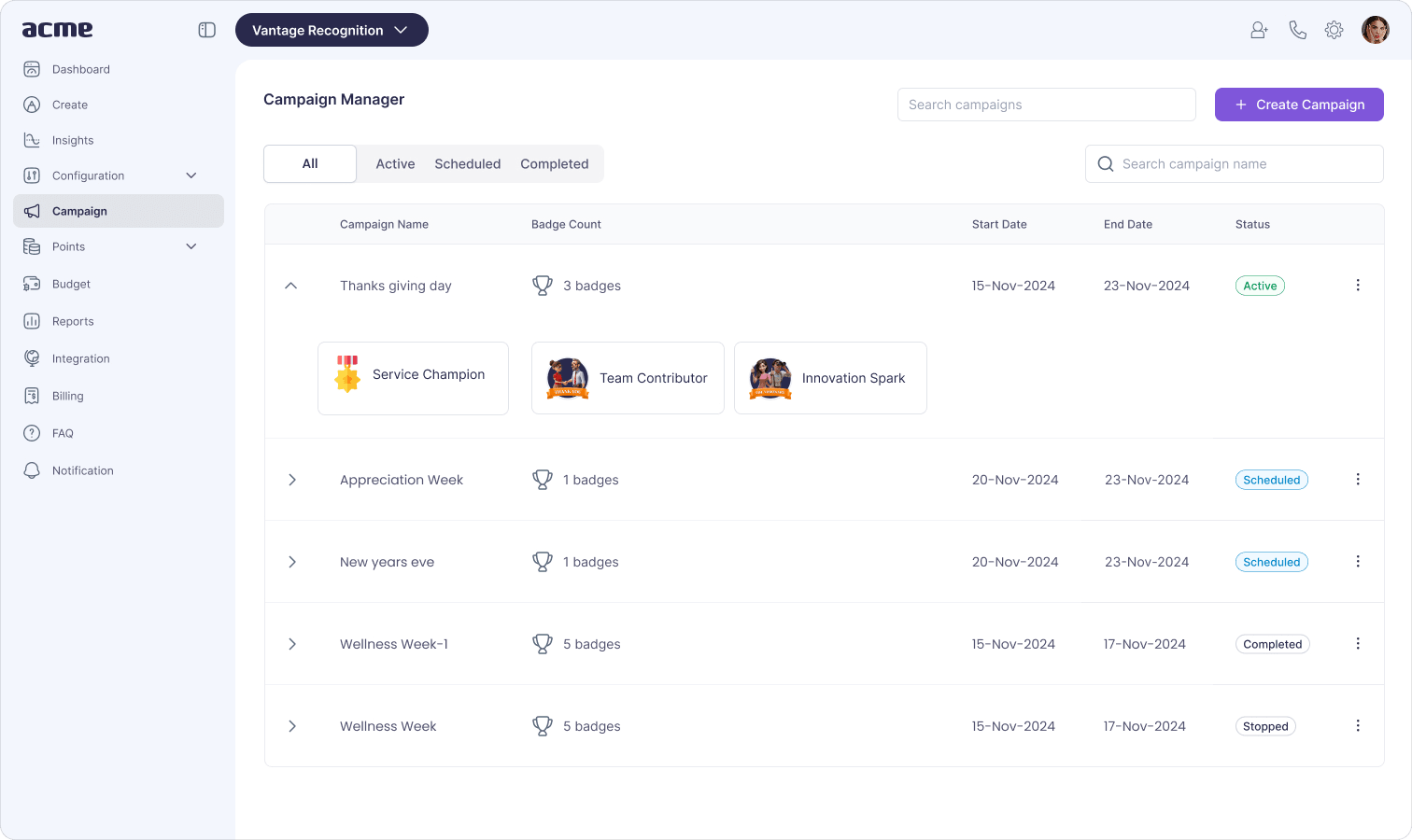
Recognize milestones and the behaviors behind them along the way, not only the end result. Our guide to goal setting for employees shows how to connect this to wider targets.
Strategic Planning for HR
HR's strategic plan translates the business plan into workforce priorities: capability, capacity, engagement and cost.
- Capability: the skills the plan needs that you lack today, and whether to build or hire.
- Capacity: how many people, where and when.
- Engagement: how people feel about the work ahead.
- Cost: what the plan costs, and what it saves in attrition and rework.
Surobheet Bhowmik, an HR leader on the Vantage HR Influencers Podcast in 2025, says HR must "anchor or align the talent strategy with the long-term vision of the firm," or it becomes "a collection of short-term, isolated, siloed HR programs that are bound to fail." Hear the full story in the episode on building a talent strategy that aligns with business goals.
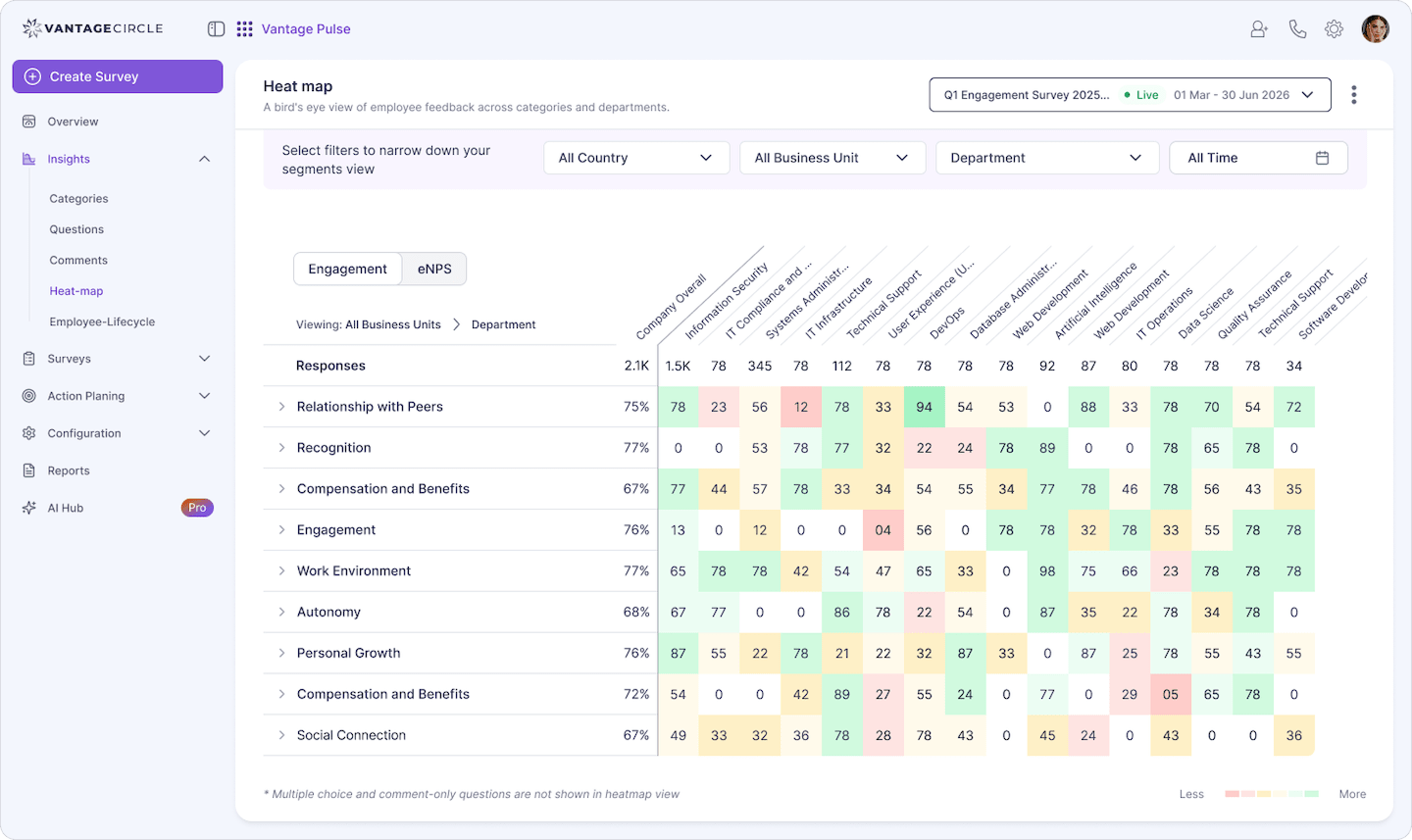
Most HR plans skip the situation analysis. A short pulse on capacity and morale shows where the plan will meet resistance. In Vantage Pulse you can survey selected departments or locations, and the heatmap compares feedback across teams.
How to Show Strategic Planning Skills on Your Resume
Show strategic planning skills with results: what you planned, the trade-off you made, and the outcome. Adapt these bullets with numbers you can defend.
- Built a one-year workforce plan for a 200-person division, cutting two low-priority projects to fund hiring for three critical roles.
- Re-planned a delayed project mid-quarter, agreeing a smaller scope with leadership and delivering on the revised date.
Strategic Planning Frameworks: Quick Answers
Sources differ on some of these, so each answer sticks to what's widely agreed.
| Framework | What it covers |
|---|---|
| 5 P's | Henry Mintzberg's five definitions of strategy (1987): plan, ploy, pattern, position and perspective |
| 5 C's | A marketing situation analysis checklist: company, customers, competitors, collaborators and context |
| 5 stages / 7 steps | Counts vary by source (see the FAQs below) |
| 7 elements of a plan | No single standard (see the FAQs below) |
| 4 P's | Several versions exist. Most people mean the marketing mix: product, price, place and promotion |
Source for the 5 P's: the Cambridge Institute for Manufacturing on Mintzberg's 5 Ps.
Conclusion
Strategic planning skills are habits, not talent, and that's good news. Pick your two lowest skills, put them into one real project this quarter, and review after 30 days and again after 90.
Frequently Asked Questions
What are the 5 P's of strategic planning?
Henry Mintzberg's 1987 five ways of defining strategy: plan, ploy, pattern, position and perspective.
What are the 5 C's of strategic planning?
Company, customers, competitors, collaborators and context, a situation analysis checklist, as Corporate Finance Institute lays it out.
What are the 7 basic elements of a strategic plan?
No single standard exists, and sources list different elements. Most cover the same ground: where you are now, where you want to be, how you'll get there, who does what with which resources, and how you'll track it.
What are the 5 stages of strategic planning?
The count varies by source. Most versions follow the same arc: set direction, analyze the situation, set goals, plan the actions, then monitor and adapt.
What are the 7 steps in strategic planning?
Some guides split the same process into seven stages, so the count depends on the source.
What are the four P's of strategic planning?
No standard set exists for planning. Most people mean the marketing mix: product, price, place and promotion.

Lupamudra is a content marketing specialist at Vantage Circle, where she has written 50+ articles on employee recognition, rewards, and workplace culture, alongside employee engagement, diversity and inclusion, and HR compliance topics, including how India's tax rules apply to recognition and rewards programs.
Connect with Lupamudra on LinkedIn.