An employee's decision to leave is rarely just about a better offer. More often, it reflects a growing gap between what the organization expects from its people and what those people experience at work.
For business leaders, that gap has real consequences. Replacing an employee can cost between one-half and two times their annual salary, according to Gallup. But the financial impact is only part of the equation. Departures take institutional knowledge with them, disrupt team dynamics, delay business priorities, and often leave remaining employees questioning their own future with the organization.
The uncomfortable truth is that organizations cannot build a stable workforce through compensation alone. Employees evaluate the entire experience by the quality of leadership, opportunities for career advancement, recognition for their contributions, flexibility, workplace relationships, and the fairness of the deal they receive in return for their work.
Retention is not about finding ways to persuade people to stay after they have decided to leave. It is about creating the conditions that make staying a worthwhile decision in the first place.
So, what actually influences that decision? Here are ten employee retention factors that organizations need to understand and address to build a workforce that is engaged, committed, and willing to grow with the business.
Vantage Influencers Podcast
Beyond Paychecks: What Truly Keeps Employees Engaged
Which Employee Retention Factors Matter Most?
Manager quality, career growth, and recognition have an outsized influence on an employee's decision to stay.
Career development carries similar weight. Gallup found that 11% of leavers whose exit was preventable said "creating opportunities for career advancement" could have kept them.
Recognition matters because employees want to know that their contributions are seen, valued, and appreciated. When good work consistently goes unnoticed, commitment becomes harder to sustain.
Notice what isn't leading this list: pay.
That doesn't make compensation any less important. Gallup's research on preventable employee turnover identifies better pay and benefits as the most common reason employees give for leaving when they believe their departure could have been avoided. Fair compensation is fundamental. But beyond a competitive baseline, money alone cannot compensate for poor management, limited career prospects, or a workplace where contributions go unacknowledged.
Foundation Factors: What Stops Employees From Leaving
Foundation factors don't make people stay on their own, but when they fail, nothing else compensates. No recognition program survives a pay gap people can see. No mentoring scheme survives a team running at 120% for a year.
Fair Pay and Total Rewards
Fair compensation is the foundation of retention, not a differentiator in itself. Employees expect their pay to reflect their responsibilities, skills, experience, and contribution. When that equation feels unfair, even a strong workplace culture may not be enough to keep them.
For HRs, this means looking beyond annual salary reviews. Regular market benchmarking, transparent pay structures, and consistent compensation practices help build trust. Total rewards should also reflect the different needs of the workforce, from healthcare and parental benefits to professional development and financial wellness.
The objective is not to offer everything to everyone. It is to ensure employees see their compensation as fair, relevant, and reflective of their value.
Manageable Workload and Well-being
Employees are more likely to stay when they can sustain good performance without compromising their well-being. The problem is not necessarily demanding work. It is when expectations keep growing, deadlines become unrealistic, and employees have little control over their time or priorities.
For organizations, workload management needs to be part of the retention strategy. Managers should regularly assess team capacity, distribute responsibilities fairly, and ensure employees have the resources to meet expectations.
Flexible work arrangements, mental health support, adequate time off, and respect for personal boundaries also contribute to a healthier work environment. Well-being should not be treated as an occasional initiative or a wellness campaign. It needs to be reflected in how work is assigned, managed, and measured.
The goal is not to make work less demanding, but to make it sustainable enough for employees to keep doing their best.
Onboarding and the First 90 Days
An employee's first 90 days can shape their long-term relationship with an organization. New hires join with expectations and the motivation to contribute. But unclear responsibilities, inadequate training, and limited manager support can quickly undermine that enthusiasm.
Effective onboarding goes beyond paperwork and policy presentations. Employees need to understand their roles, build relationships, learn organizational processes, and see how their work connects to business priorities.
A structured 30-60-90-day plan can help. The first month should focus on orientation and learning, the second on building confidence and taking ownership, and the third on independent contribution and feedback. Regular manager check-ins, peer buddies, and recognition of early achievements can make the transition easier.
A strong onboarding experience does more than help employees settle in. It gives them confidence that they made the right decision by joining.
Daily-Experience Factors: What Makes Employees Want to Stay
These factors decide how work feels on an ordinary Tuesday, which is why managers control most of them. Strategy decks don't retain people. Weeks do.
Manager Quality
Employees may join an organization for the opportunity, but their relationship with their manager often shapes whether they stay. Managers influence almost every aspect of the employee experience, from workload distribution and feedback to career conversations and team communication.
A manager who sets clear expectations, listens to concerns, and supports professional growth can build trust and make employees feel confident in their roles. Poor management, on the other hand, can turn an otherwise good job into a reason to leave.
Google's long-running Project Oxygen research reached a similar conclusion years ago. The behaviors that separated its best managers were the ones who coached, showed interest in people's success and well-being.
Recognition and Appreciation
People want to know that their contributions matter, not just that their targets have been met. When good work goes unnoticed, employees can gradually lose their sense of value and connection to the organization. Recognition helps bridge that gap by showing people that their efforts, ideas, and everyday contributions make a difference.
But effective recognition requires more than an annual award or a generic thank-you message. It needs to be timely, specific, and connected to the contribution being acknowledged. This is where having a structured recognition approach matters.
Vantage Circle's AIRe framework identifies four essential elements:
Appreciation
Specific, timely thanks for the effort and results behind the work.
Incentivization
Tangible rewards that give recognition real weight.
Reinforcement
Recognition tied to the behaviors and values the organization wants to see more of.
eMotional Connect
Making people feel seen and valued as people, not just for their output.
While appreciation and incentives acknowledge contributions, reinforcement connects recognition to the behaviors organizations want to encourage. Emotional connection makes employees feel valued beyond their output.
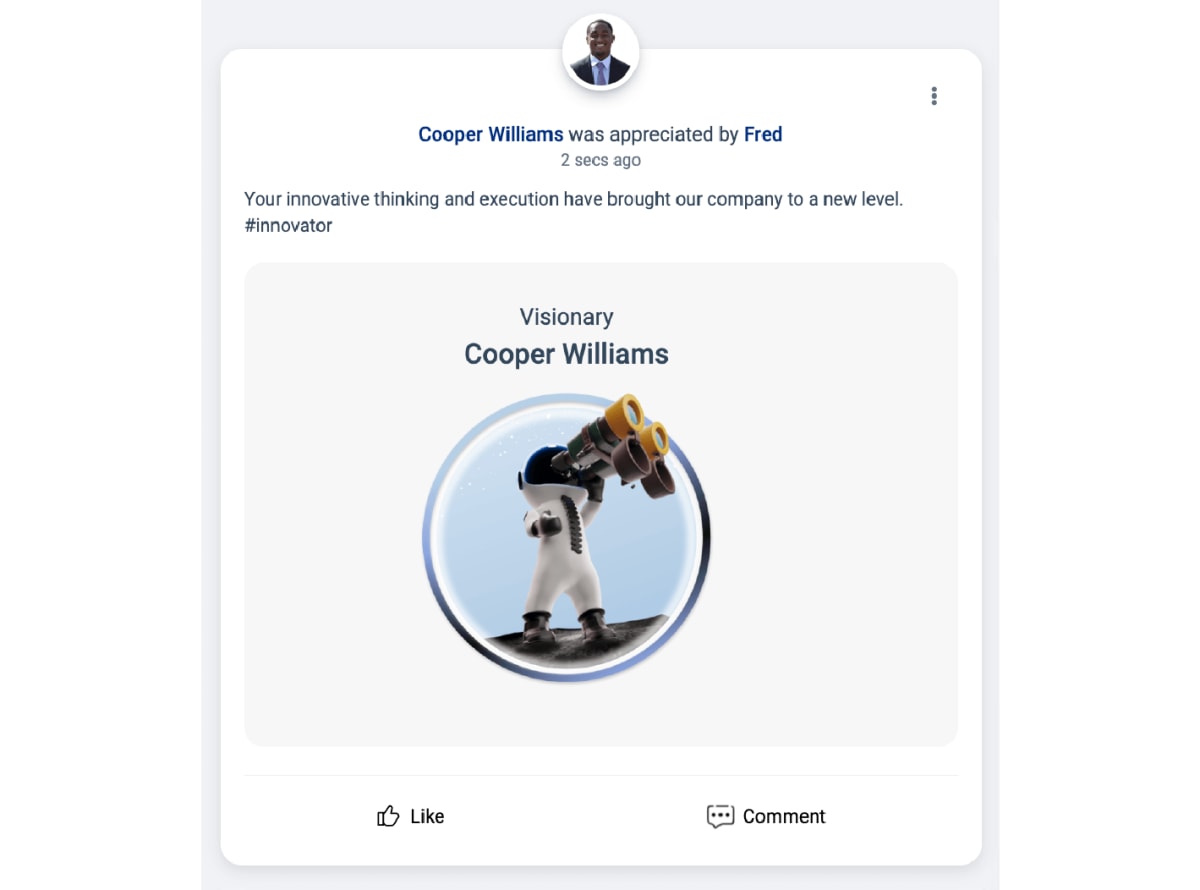
Peer-to-peer recognition is equally important. Managers may not witness every contribution, but colleagues often do. Peer-to-peer recognition helps make appreciation a shared responsibility rather than a top-down exercise.
Source: Vantage Recognition
Peer Relationships and Belonging
People are more likely to stay when they feel they are part of a team, not simply occupying a position within one. Relationships with colleagues influence how employees experience collaboration, handle challenges, and navigate difficult periods at work.
A supportive team can make demanding projects more manageable, while isolation, workplace conflicts, and exclusion can gradually weaken an employee's connection to the organization.
Building belonging requires more than organizing team lunches or social events. Organizations need to create opportunities for meaningful collaboration, encourage open communication, and ensure employees across locations, departments, and work arrangements have equal opportunities to participate.
Peer mentoring, cross-functional projects, team celebrations, and informal opportunities to connect can help strengthen workplace relationships.
Meaningful Work and Autonomy
Employees are more invested in their work when they understand its impact and have the freedom to make decisions about how they deliver it. A sense of purpose gives people a reason to care about their responsibilities, while autonomy gives them the confidence to take ownership of the outcomes.
In Drive (2009), Daniel Pink identifies autonomy, mastery, and purpose as three central drivers of motivation. The same ideas surface in Gallup's research on employee turnover, where departing employees have cited a lack of autonomy and limited investment in their future as reasons their employers could have addressed.
Purpose helps employees understand why their work matters. Autonomy gives them the ownership to make that work count.
Future-and-Trust Factors: What Keeps Employees for Years
Employees stay longer when they can see a future in the organization, trust its leadership, and feel they belong. Competitive pay and a positive daily experience may encourage people to stay in the short term. Long-term retention, however, depends on whether the organization continues to offer opportunities, earns employees' trust, and creates an environment where they can thrive.
Career Growth and Internal Mobility
Career growth is not limited to promotions or bigger titles. It also includes opportunities to develop new skills, take on challenging assignments, explore different roles, and expand professional responsibilities.
LinkedIn's Workplace Learning Report 2024 found that organizations with strong learning cultures have 57% higher retention rates. Employees want to know that their skills will continue to develop and that their organization is willing to invest in their professional future.
For HRs, this means making career development an ongoing process rather than an annual performance review exercise. Internal job postings, cross-functional projects, mentoring programs, learning budgets, and clearly defined career paths give employees tangible ways to progress.
Trust in Leadership and Transparent Communication
Employees are more willing to stay with organizations whose leaders communicate honestly, especially when things get difficult. Trust is built through consistent actions: explaining difficult decisions, acknowledging mistakes, following through on commitments, and giving employees a clear understanding of where the organization is headed.
Employees who don't receive clarity about organizational changes, business priorities, or their own prospects are more likely to fill the gaps with assumptions.
HRs can strengthen trust by making communication a regular leadership practice. Share the reasoning behind important decisions, address concerns before rumors spread, create opportunities for open Q&A, and encourage managers to have meaningful conversations about employees' concerns and career expectations.
For more practical guidance, explore our blog to transparency in the workplace.
Inclusive Culture and Psychological Safety
An inclusive culture gives employees a reason to belong, while psychological safety gives them the confidence to contribute. Both are essential to retaining talent. Employees need to know that their ideas will receive fair consideration, their contributions will be respected, and their differences will not limit their opportunities.
Psychological safety, a concept extensively researched by Harvard professor Amy Edmondson, is particularly important here. It describes an environment where employees can ask questions, admit mistakes, disagree with colleagues, and raise concerns without fearing negative consequences.
For HRs, this requires more than inclusion policies and mandatory training. It means holding leaders accountable for fair treatment, creating opportunities for diverse perspectives to influence decisions, addressing exclusionary behavior, and ensuring employees can raise concerns without retaliation.
How to Spot a Failing Retention Factor Before People Resign
Employee turnover rarely comes out of nowhere. Long before someone hands in their resignation, there may be signs that their relationship with the organization is changing.
A once-engaged employee becomes quieter in meetings. Recognition activity declines. One-on-ones become less productive, and conversations about career growth keep getting postponed. Individually, these may seem like minor workplace issues. Together, they can point to a retention problem that needs attention.
The challenge for HR leaders is that employees don't always communicate their dissatisfaction directly. Some have already started considering other opportunities. Others may have disengaged without knowing whether anything will change. Waiting for an exit interview to understand what went wrong is a reactive approach to a problem that could have been addressed earlier.
A more effective approach is to build regular listening into the employee experience. Three methods can help:
Ongoing
Pulse and eNPS Surveys
Regular pulse surveys help HR track changes in employee sentiment, workload satisfaction, management effectiveness, and workplace relationships. Employee Net Promoter Score (eNPS) adds another perspective by measuring how willing employees are to recommend the organization as a place to work. The real value lies in tracking patterns over time and identifying where sentiment is weakening.
Before they leave
Stay Interviews
Exit interviews explain why someone left. Stay interviews help understand what might make someone leave. Managers can ask employees what they value about their roles, where they feel stuck, what support they need, and what would improve their experience. These conversations are most useful when followed by visible action.
After they leave
Exit Interviews
When employees do leave, their feedback should inform more than an individual departure report. Categorize responses against the ten retention factors to identify recurring issues. If several employees cite limited career opportunities or poor management support, the organization has a pattern to investigate, not just separate resignations to process.
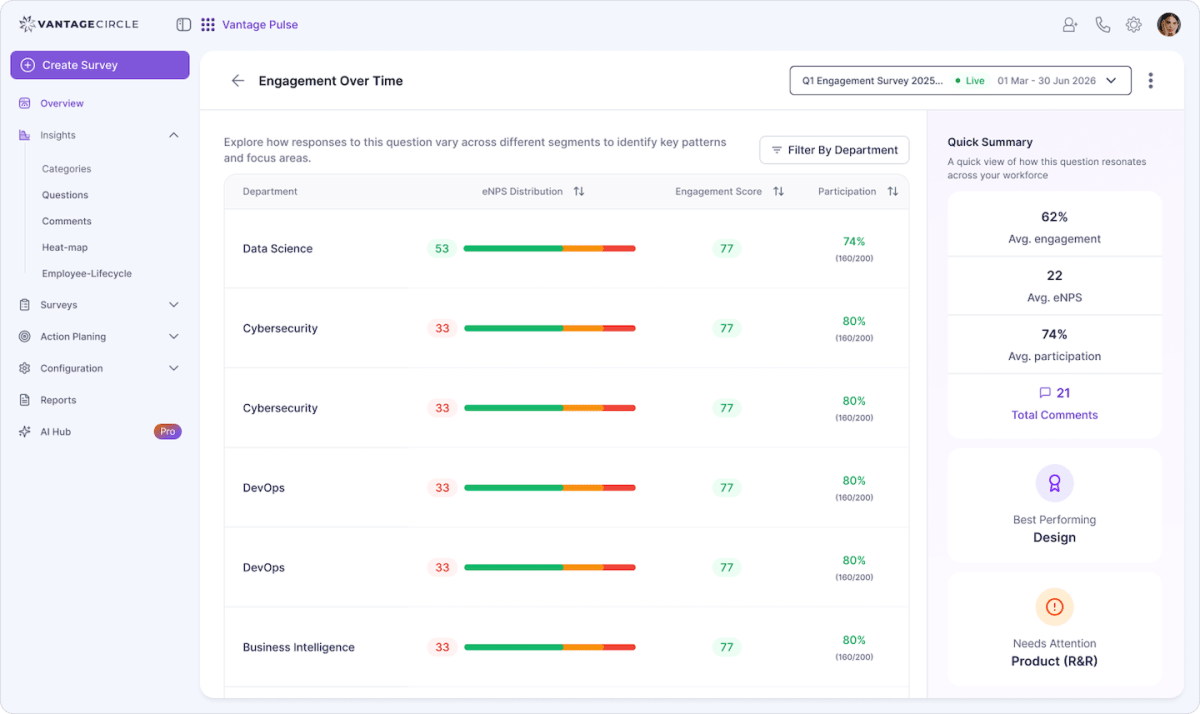
The analysis should go deeper than company-wide averages. Retention challenges often vary between departments, locations, and managers. A healthy overall engagement score can conceal a team struggling with excessive workloads or a lack of recognition. Anonymous feedback is particularly valuable when employees may hesitate to raise concerns about their immediate managers.
This is where tools such as Vantage Pulse can help HR teams collect feedback, monitor employee sentiment, and examine trends across teams.
Source: Vantage Pulse
The purpose of retention measurement is not to produce another HR dashboard. It is to turn employee feedback into decisions that improve the workplace before good people decide to leave.
Retention Factors for Frontline and Line Employees
For line employees, the top three retention issues are predictable schedules, fair pay for the shift, and a supervisor who notices good work.
Scheduling sits at the top because it touches everything else: childcare, second jobs, sleep, and take-home pay.
Logile's 2025 Labor Planning & Optimization Report, a survey of 500 US retail store associates, found 31% are actively considering quitting due to poor scheduling or lack of hours, and another 22% say they are close to that point if conditions don't improve.
And frontline turnover is not cheap just because hourly wages are lower. Gallup puts the cost of replacing a frontline employee at around 40% of their salary, multiplied across roles that often turn over far faster than desk jobs.
Most retention playbooks quietly assume a laptop, a calendar, and a weekly 1:1. Frontline workers often have none of those. Recognition happens in a corporate channel they never open. Feedback surveys arrive by email they never check. The result is a workforce that is surveyed least and recognized last.
What Works on the Floor
Frontline retention depends on whether employees experience the same consideration, communication, and appreciation as their office-based colleagues. That requires organizations to design practices around the realities of shift work, distributed teams, and limited access to workplace technology.
Publish Schedules Early and Keep Last-minute Changes Minimum
Unpredictable shifts make it difficult for employees to manage responsibilities outside work. Give teams advance notice of schedules, communicate changes clearly, and avoid treating employees' personal time as an extension of their working hours. Predictability gives frontline workers greater control over their lives and signals that the organization respects their time.
Make Recognition Mobile-first and Accessible
Frontline employees may not have regular access to company email or an internal desktop portal. Recognition should therefore reach them where they are, through a mobile-friendly platform that allows managers and colleagues to acknowledge contributions without requiring employees to log in from a workstation. A timely message on a phone can make appreciation part of the working day rather than something employees discover days later in an inbox.
Bring Phygital Recognition into Everyday Operations
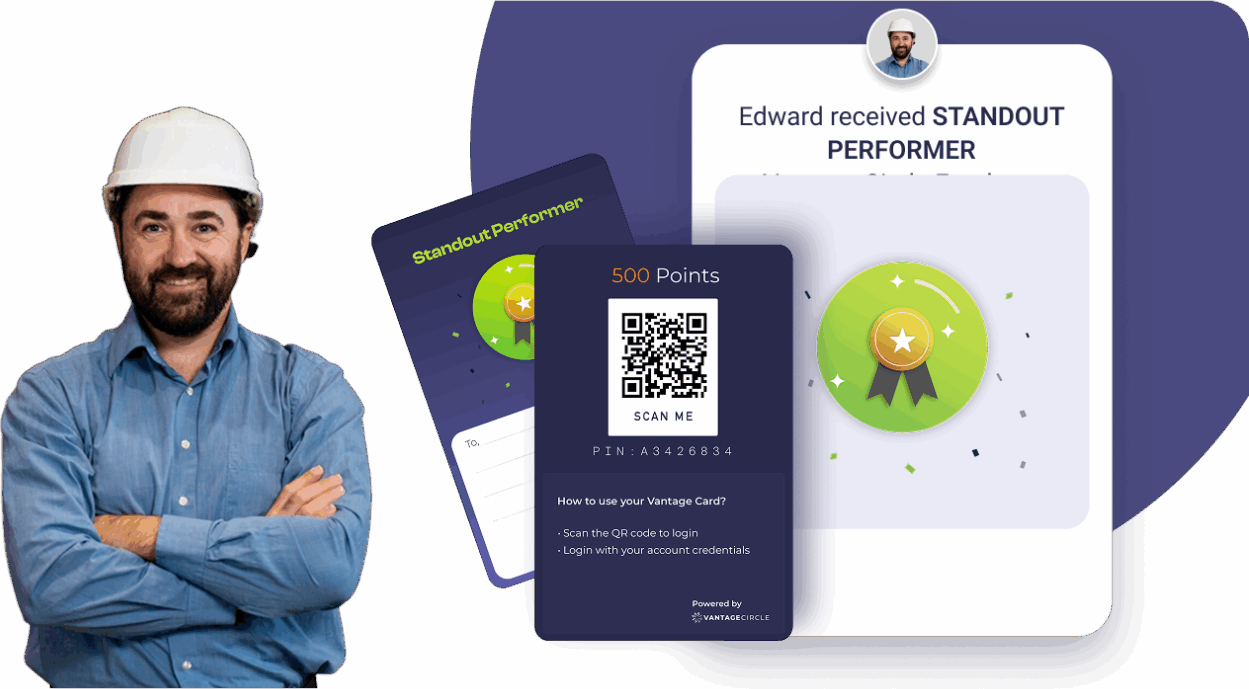
Digital recognition is convenient, but frontline employees should not have to choose between being appreciated online and being acknowledged in person. Vantage Recognition supports this phygital approach by integrating digital tracking, points systems, and personalized feedback with physical touchpoints, allowing organizations to deliver equitable, visible, and meaningful appreciation across diverse or remote workforces
Recognize Tenure When it Happens
Service milestones should not depend on whether an employee works at a desk or has a formal annual review. Track anniversaries accurately and acknowledge them on time, with a message that reflects the employee's contribution and years with the organization.
A public appreciation moment, a meaningful reward, or a personal thank-you from a supervisor can make long service feel seen. For a shift worker whose contribution may otherwise go unnoticed, that recognition is a tangible reminder that the organization values their commitment.
Conclusion
Employee retention is not won through a single policy, pay revision, or engagement initiative. It is built through the everyday experience of working for an organization. Employees stay when they are treated fairly, supported by capable managers, recognized for their contributions, and given a future worth working toward. They leave when those conditions are consistently missing.
The real work is identifying where that experience falls short and addressing it before dissatisfaction turns into resignation. That means listening to employees, acting on what they share, and making retention a shared responsibility across the organization.
FAQs
1. Which of these Factors has the Biggest Impact on Employee Retention?
Recognition & rewards, growth opportunities, and manager relationships consistently have the strongest influence on whether employees stay or leave.
2. How do these Factors change based on Industry or Generation?
Every group has its own motivators. Gen Z wants purpose, tech teams chase innovation, and seasoned employees value security. But across all, belonging and recognition matter most.
3. Have Remote work trends changed which Factors are most Important?
Yes. Flexibility, trust, and meaningful virtual connections have become critical to retaining talent in hybrid and remote setups.
4. What is the difference between Employee Retention Factors and Employee Retention Strategies?
Retention factors are the reasons people stay while retention strategies are the actions companies take to strengthen those reasons.

Shikha Gogoi is a Content Marketing Specialist focused on SEO-driven content around employee engagement, recognition, and workplace culture, helping build people-first workplaces.
Connect with Shikha on LinkedIn.