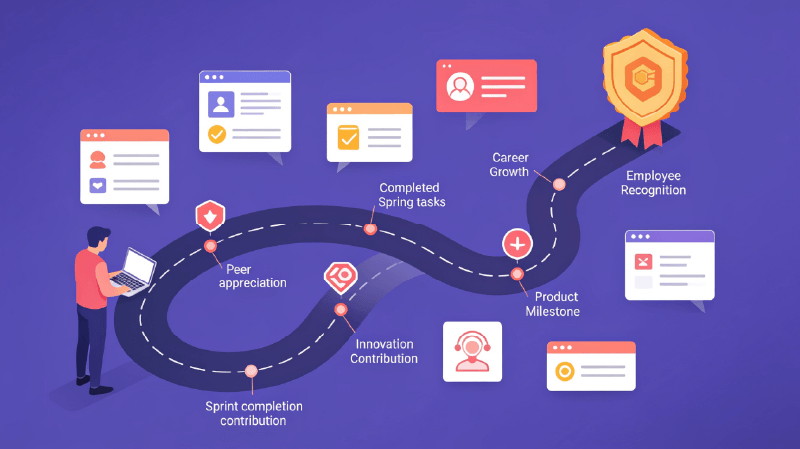
Most workload management advice comes from project-management software companies, and it shows. It is all about scheduling, capacity dashboards, and task boards, which is fair, since that is what those tools do. But workload is not just a scheduling problem. It is an engagement problem long before it becomes an attrition problem. The employee quietly carrying the heaviest load right now is not going to show up as a red flag in a task-tracking tool. They are going to show up as a dip in a pulse survey, weeks before they start updating their resume.
Workload management is the ongoing process of assessing, distributing, and monitoring how much work each team member carries, so that deadlines are met without pushing anyone into burnout. Done well, it is not a one-time scheduling exercise. It is a continuous signal HR and managers track alongside engagement and retention, and that is the practical, five-step approach this guide covers.
What Is Workload Management?
Workload management is the practice of distributing tasks across a team based on capacity, skill, and priority, then continuously checking that the distribution still holds as work changes. Task scheduling, deciding who does what by when, is the job of a project-management tool. Workload management is the broader layer around it: noticing when a schedule that looks fine on paper is quietly overloading one person, and catching it before it turns into disengagement or employee burnout.
That distinction matters because most workload advice stops at the scheduling layer. A proper management plan needs both: clear task allocation so work actually gets done, and an ongoing read on how the people doing it are holding up. Skip the second half, and you find out about an overload problem only after someone has already burned out or quit.
How Does Workload Connect to Engagement and Retention?
Workload connects to engagement and retention because sustained overload is one of the clearest, most measurable predictors of burnout, and burnout is what precedes disengagement and resignation. Forty percent of employees experienced significant stress the previous day, according to Gallup's 2025 workplace research, and burnout does not distribute evenly. It concentrates on whoever is quietly absorbing the most work.
The business cost is not abstract either. Gallup estimates that low wellbeing manifesting as employee burnout costs the global economy 322 billion dollars annually, and Microsoft's 2022 Work Trend Index found that 48 percent of employees and 53 percent of managers were already burned out at work. Neither figure is about task scheduling. Both are about what happens to people carrying an unsustainable load for too long without anyone noticing.
The Workload-Recognition Balance
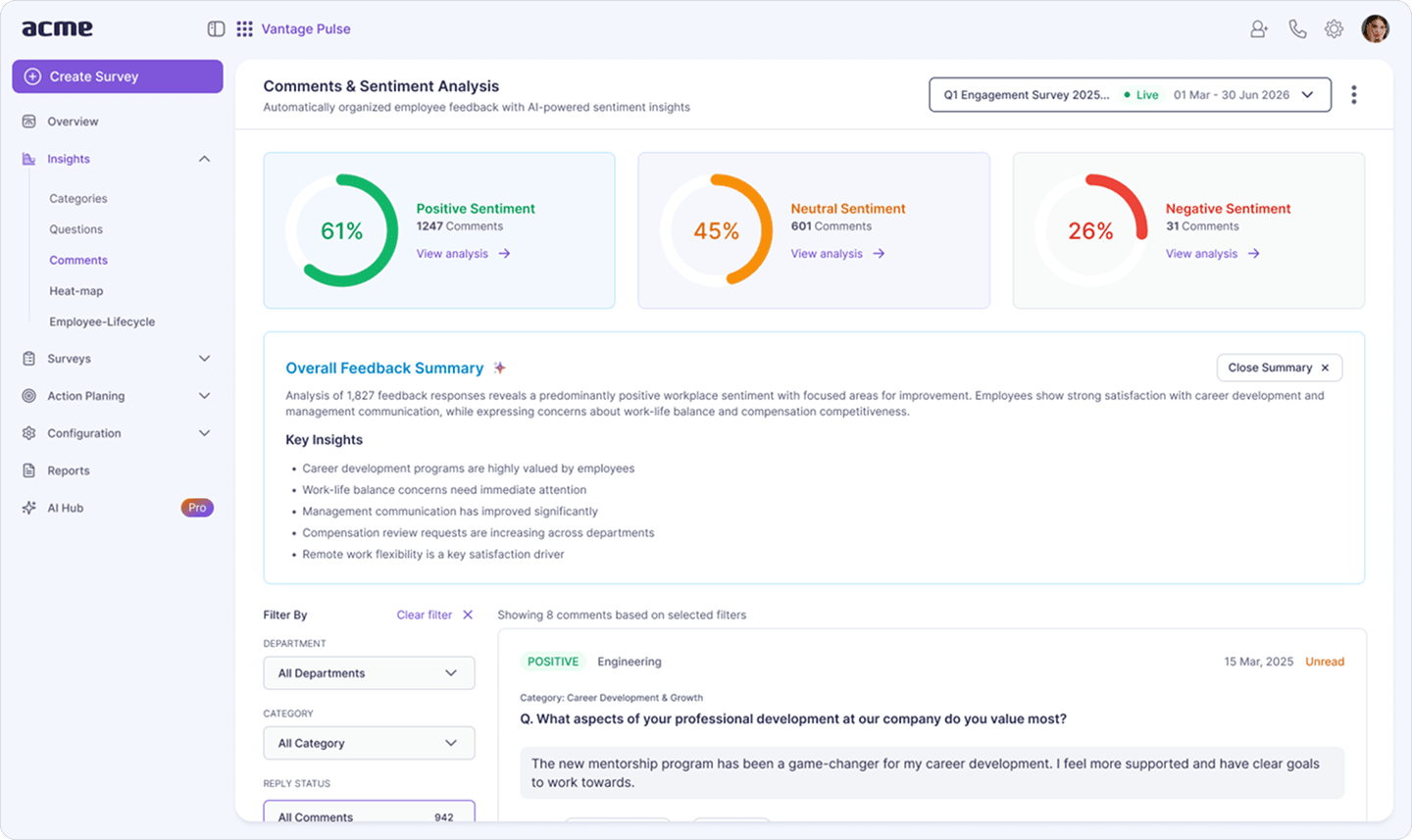
Overloaded-but-unrecognized employees burn out fastest. Two people can carry the exact same workload and have very different outcomes: the one whose effort gets acknowledged along the way tends to push through a heavy stretch, while the one who feels invisible starts disengaging well before the workload itself becomes the stated reason for leaving. Unrecognized overload is detectable through pulse and sentiment data before it ever shows up in attrition numbers, which is the actual window HR has to act in.
This is also where a workload-management tool cannot help you, and it is worth being direct about that. A scheduling tool can tell you a person has 60 hours of tasks assigned this week. It cannot tell you how that person feels about carrying them, whether they feel seen for it, or whether they are three weeks from quietly starting a job search. That read comes from ongoing listening, not from a Gantt chart.
5 Steps to Practice Effective Workload Management
Effective workload management comes down to five steps: assess current capacity, allocate tasks deliberately, follow up as conditions change, work on team efficiency, and choose tools that fit the job without overselling what they can do. Here is how each one works in practice.
1. Assess Current Workload and Capacity
Start by finding out what your team is actually carrying, not what you assume they are carrying. In a busy work environment, managers routinely underestimate existing workload because they see the assigned tasks, not the informal ones that eat up the rest of the day.
- List every active project and everything in the pipeline, by team.
- Note the nature of each one: size, complexity, number of delivery points, and who is actually working on it.
- Break the work down into weekly chunks so "workload" becomes a number you can compare, not a feeling.
- Rank everything by real priority, not by who asked most recently.
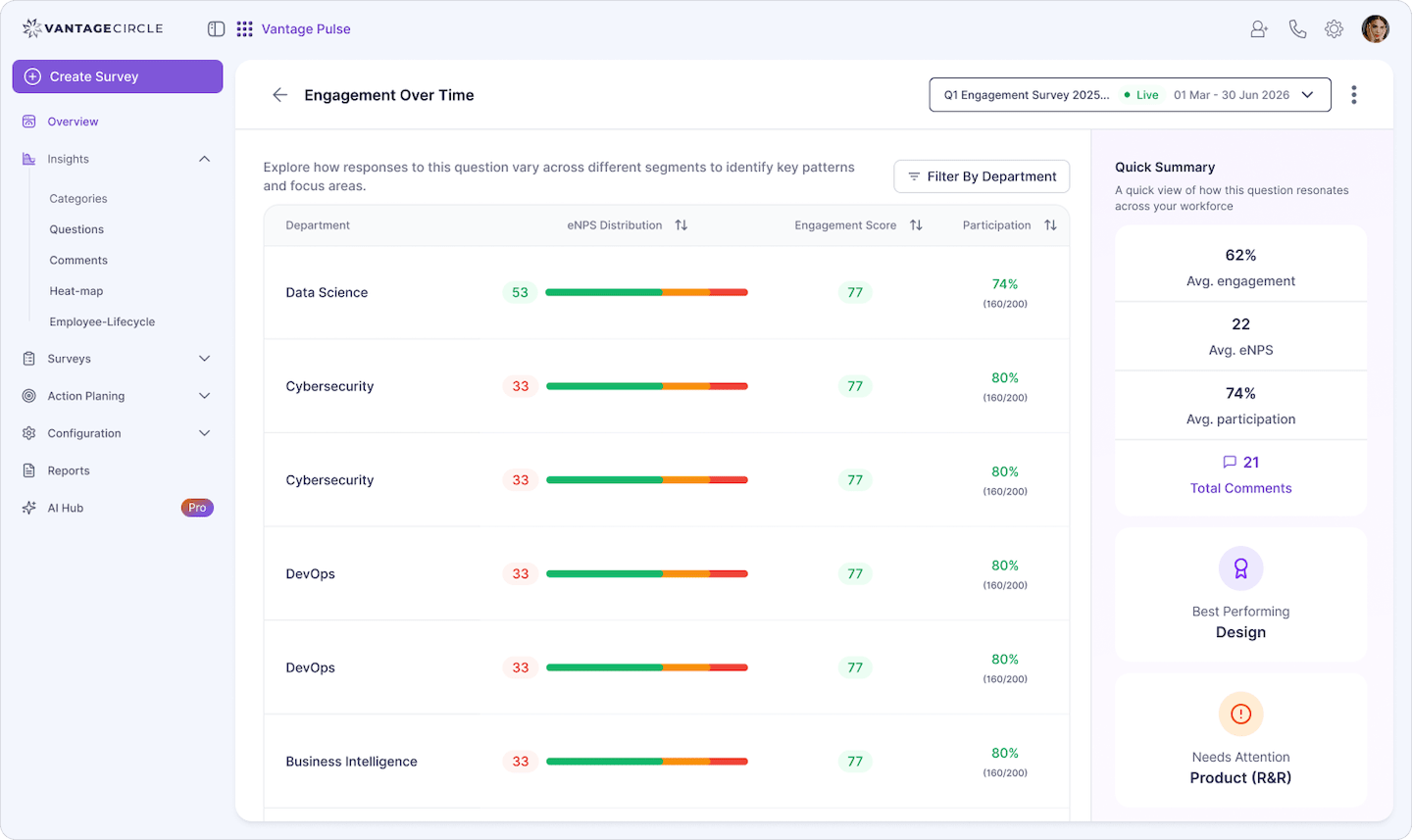
A company-wide average can hide a department that is quietly drowning while the rest of the business looks fine. Department-wise data is where that imbalance actually becomes visible, since a team stuck carrying more than its share rarely files a complaint about it, it just slows down or starts disengaging one person at a time.
2. Allocate Resources and Tasks
Once you know the real workload, assign tasks to whoever can handle them best, not whoever is available first. Poor allocation here undoes everything the assessment step just gave you.
- Assign the highest-priority work first, since it has the least slack.
- Set a realistic timeframe for each task. Realistic means enough time to do it well, not the fastest possible turnaround.
- Match the task to the person's actual skillset, not just their availability.
- Loop the team into the decision. Someone closer to the work often knows about a dependency or a conflict you cannot see from a step back.
- Task autonomy matters more than most managers assume: employees are 43 percent less likely to experience high levels of burnout when they have a say in what tasks they take on, according to Gallup's 2025 research.
3. Follow Up as Conditions Change
Even a well-built plan drifts once real work starts, so check in on progress instead of assuming the assignment stuck. If things are on track, say so. If they are not, get the team together and rework the plan rather than letting a deadline quietly slip.
Following up is also the moment you catch overload before it becomes a resignation. Few employees will tell a manager directly that they are drowning, especially if that manager is the one who assigned the work. Vantage Pulse's anonymous responses give people a channel to say that honestly, which a status check-in rarely gets you.
4. Improve Team Efficiency
Team efficiency determines whether the same workload feels manageable or crushing. Some people consistently finish comparable work faster than others, and the goal is to find out why, not just praise the employee appreciation angle and move on. It might be a tool, a shortcut, or a sequencing trick worth sharing with the rest of the team.
- Cut meetings that do not need to happen.
- Invest in employee training and development around the specific management skills that keep bottlenecking delivery.
- Build around individual strengths instead of assigning work identically across the team.
5. Choose the Right Tool for the Job
A workload or project-management tool distributes and tracks tasks across people based on skill and availability, and a good one genuinely simplifies scheduling, reporting, and follow-up. It is worth being clear about what it does and does not do. These tools manage the task-allocation side of workload. They do not tell you how someone feels about the workload they have been given, which is a separate, ongoing question that requires actually asking, not just tracking hours.
| Step | What It Involves | Warning Sign It Is Not Working |
|---|---|---|
| Assess capacity | List, categorize, and prioritize all active and pipeline work by team | Managers keep discovering "surprise" workloads mid-project |
| Allocate tasks | Match work to skill, set realistic timeframes, involve the team | Repeated missed deadlines on tasks that looked reasonable on paper |
| Follow up | Regular check-ins on progress, with room to reassign | Problems only surface at the deadline, never before it |
| Improve efficiency | Share what works, cut waste, train around real bottlenecks | The same few people are always the ones staying late |
| Choose the right tool | Software for scheduling; ongoing listening for how people feel about it | Dashboards look fine while resignations keep happening anyway |
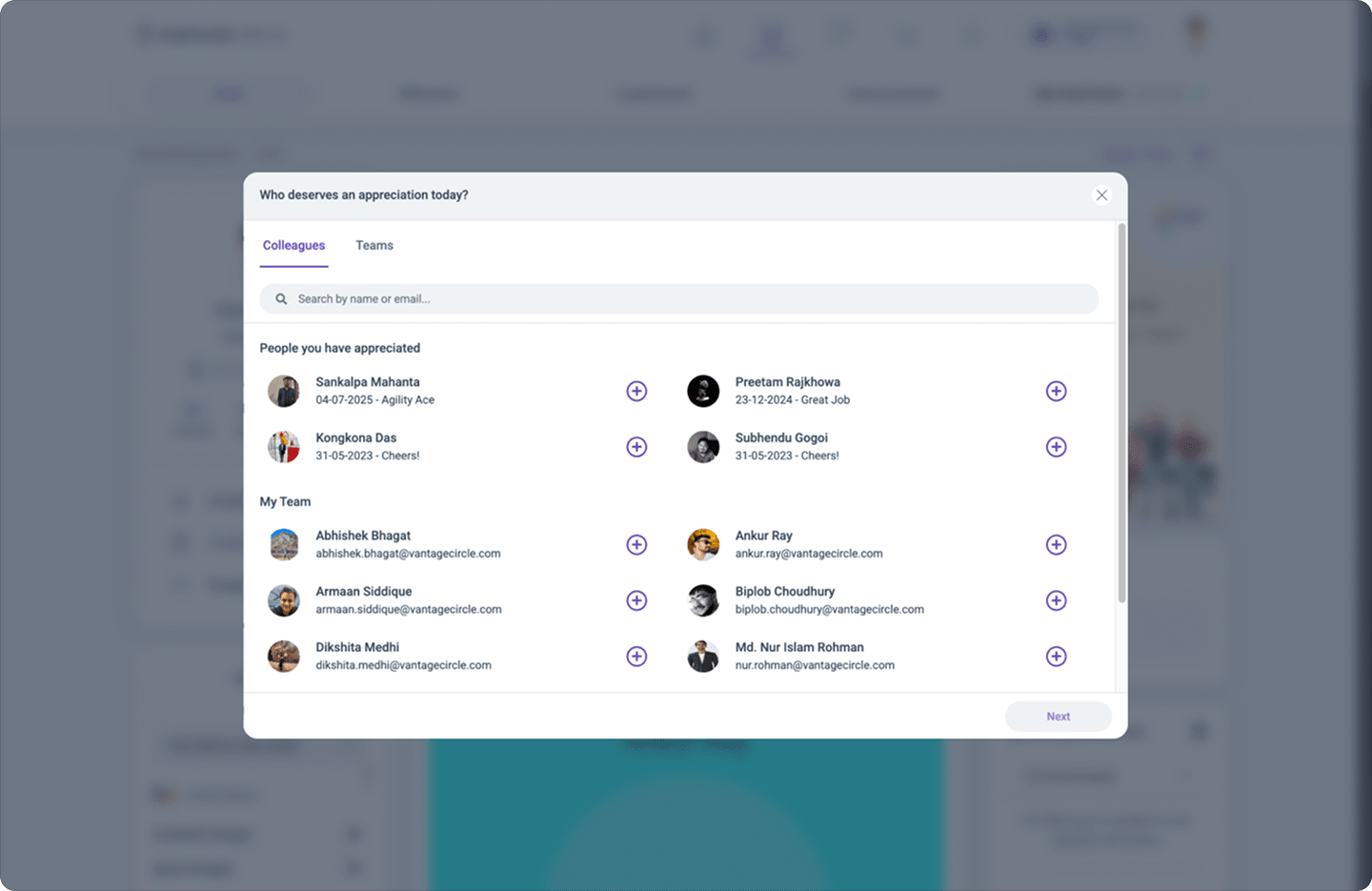
These five steps cover the allocation half of workload management. The other half, closing the loop once a hard stretch is over, is just as concrete: a manager SPOT award or a quick public thank-you takes a few seconds to send and directly answers the question a well-run tool never asks, whether the person who carried the extra load actually felt seen for it.
How Do I Professionally Say My Workload Is Too Much?
Say it directly, with specifics, and pair it with a proposed solution rather than just a complaint. "I want to flag that I am at capacity" lands better than "I'm too busy," because it names the constraint without sounding like an excuse.
A few ways to frame it depending on the setting:
- In a one-on-one, try: "I want to make sure I am prioritizing the right things. Right now I am carrying X, Y, and Z. Can we talk through what should come first?"
- In writing, try: "Flagging that my current workload includes [list]. I can hit [deadline] on [priority item], but the rest will need to shift unless something comes off my plate."
- When a new task lands on an already full plate, try: "I can take this on, but something else will slip. Which would you rather I deprioritize?"
Each version does the same thing: it states the constraint as a fact, not a grievance, and puts the tradeoff back on the person assigning the work.
Warning Signs of Work Overload
The clearest warning signs of work overload are a drop in quality on work that used to be reliable, longer hours becoming the norm rather than the exception, and a noticeable pull-back in participation, whether that is skipping meetings, going quiet in discussions, or a dip in survey response rates.
- Quality slips on routine work, and careless errors start showing up in tasks the person has done well for months.
- Hours quietly creep up, with late nights or weekend work becoming the default instead of the exception during a crunch.
- Engagement drops before anyone says anything. Lower participation, shorter answers, or a falling pulse survey score is often the earliest, most honest signal, since few people will tell a manager directly that they are overwhelmed, especially the manager who assigned the work.
- Effort goes unacknowledged. Redistributing tasks fixes the workload problem. Recognizing the person who carried an unsustainable load while it lasted is what actually keeps them from quietly starting a job search anyway, through something as direct as a manager SPOT award for pulling extra weight during a hard stretch.
- No practical relief exists in the meantime. Structural fixes to workload take time to implement. Wellness support in the interim, such as Vantage Fit's wellness challenges, gives an overloaded employee something concrete now rather than just a promise that things will improve eventually.
Left unaddressed, these signs compound into the job dissatisfaction and falling employee engagement that precede an exit, well before anyone frames it as a workload conversation.
Frequently Asked Questions
What do you mean by workload management?
Workload management means distributing tasks across a team based on capacity and skill, then continuously checking that the distribution stays fair and sustainable as priorities shift. It covers both the scheduling side, who does what by when, and the ongoing question of whether the people doing the work are being pushed past a healthy limit.
What is the 3-3-3 rule for time management?
The 3-3-3 rule is a daily planning method: spend three hours on your most important deep-work task, complete three shorter urgent tasks, and handle three maintenance items such as email or admin. Applied to workload management, it caps how much of a day gets claimed by shallow, reactive work, protecting one substantial block for the task that actually matters most.
How do I professionally say my workload is too much?
State it as a fact with specifics, not a complaint: name what you are currently carrying, propose what should be prioritized, and ask what can come off your plate if something new is added. This keeps the conversation focused on tradeoffs rather than putting your manager on the defensive.
Conclusion
Workload management done well is not a one-time exercise in scheduling. It is a continuous read on both what your team is carrying and how they are holding up under it, tracked with the same seriousness as any deadline. The five steps above cover the allocation side. The harder, easier-to-miss half is catching the strain before it shows up as an exit interview.

Lupamudra is a content marketing specialist at Vantage Circle, where she has written 50+ articles on employee recognition, rewards, and workplace culture, alongside employee engagement, diversity and inclusion, and HR compliance topics, including how India's tax rules apply to recognition and rewards programs.
Connect with Lupamudra on LinkedIn.