

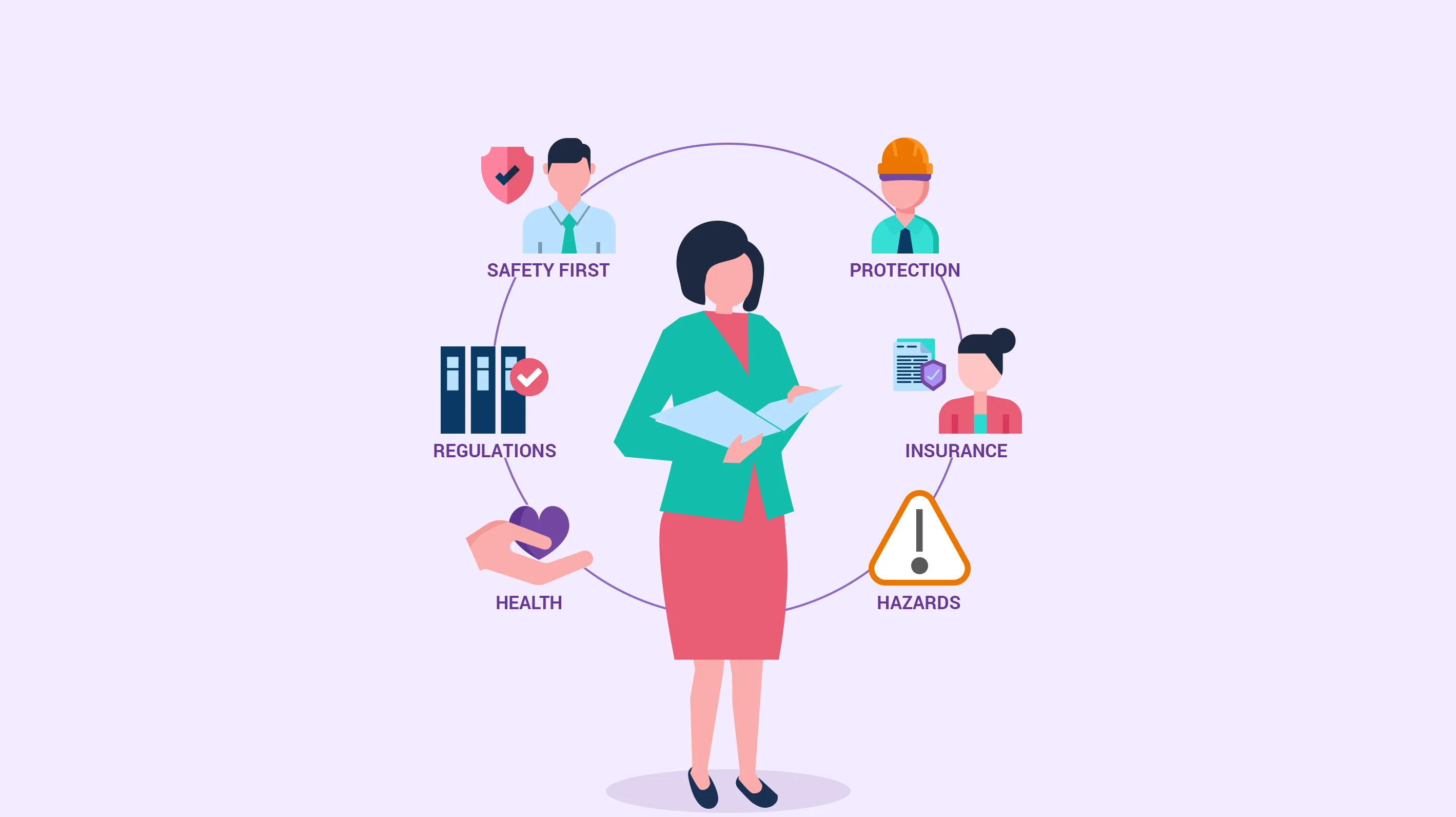
More than 5,000 workers in the United States die on the job every year. The Bureau of Labor Statistics (BLS) counted 5,070 fatal work injuries in 2024, a rate of 3.3 per 100,000 full-time workers. The harder number to count is the hazards that someone noticed and did not feel able to raise.
Most articles on this topic hand you a list of hazards and stop there. This guide is for the person who has to decide what to do on Monday. It gives HR and site leaders 12 practical workplace safety tips built on the framework of the Occupational Safety and Health Administration (OSHA), 10 rules to share with employees, the 6 types of hazard, and a plain way to recognise safe behaviour without hiding injuries.
What Is Workplace Safety?
Definition
Workplace safety is the set of policies, practices and habits that prevent injuries, illnesses and deaths at work. Employers must keep the workplace free of recognised hazards, provide personal protective equipment (PPE) and training, and let people report risks without retaliation. Employees share the duty by following procedures and reporting what they see.
In the US, this is a legal duty, because the Occupational Safety and Health Act (the OSH Act) has a general duty clause that requires employers to provide a workplace free from recognised hazards that are causing or are likely to cause death or serious physical harm, and OSHA enforces it.
Outside the US, the duty sits with local regulators. In the UK, the Health and Safety Executive (HSE) enforces the Health and Safety at Work etc Act 1974. In India, the Occupational Safety, Health and Working Conditions Code, 2020 came into force on 21 November 2025, and the Ministry of Labour and Employment publishes the rules. ISO 45001 is the international standard for occupational health and safety management systems. Whichever applies to you, check the current rules where you operate.
This guide is about physical safety, so if you are looking for the team-trust side of the topic, our guide to psychological safety covers it.
Why Is Workplace Safety Important?
Workplace safety matters because it protects lives first, and because injuries carry costs that land on people, teams and budgets.
So what does a safe site actually buy you? Four things stand out.
- Fewer injuries and deaths. OSHA puts worker deaths at about 38 a day in 1970. The BLS count of 5,070 deaths in 2024 works out to about 14 a day, so the toll has fallen by well over half in five decades, though not nearly far enough. Non-fatal cases are falling too: private employers reported 2.4 million injuries and illnesses in 2025, down 3.0% from 2024.
- Lower costs. The National Safety Council (NSC) estimates that work injuries cost the US $181.4 billion in 2024, counting lost wages and productivity, medical bills and administrative costs.
- Less absence and disruption. In 2025, private employers reported 842,500 injuries and illnesses that kept people away from work. The latest median the BLS has published for these cases is 8 days away, from 2024. BLS counts calendar days, so that is roughly a week of one person's work that a team has to cover.
- Trust and retention. People stay where they feel looked after. A site that fixes what people report earns the kind of loyalty that feeds employee engagement.
What Are the 6 Types of Workplace Hazards?
The 6 common types of workplace hazards are safety, chemical, physical, biological, ergonomic and work organisation hazards. The standard classification used by OSHA and the National Institute for Occupational Safety and Health (NIOSH) has the same six.
| Hazard type | Examples | First control to try |
|---|---|---|
| Safety | Slips, trips, unguarded machinery, working at height | Fix the condition (guarding, housekeeping) |
| Chemical | Solvents, cleaning agents, fumes | Substitute a safer product, add ventilation |
| Physical | Noise, heat, radiation, vibration | Engineering controls, exposure limits |
| Biological | Bloodborne pathogens, mould, infectious disease | Vaccination, hygiene, PPE |
| Ergonomic | Repetitive motion, poor lifting, workstation setup | Job redesign, lifting aids |
| Work organisation | Excessive workload, long shifts, harassment, violence | Staffing, shift limits, reporting routes |
The last row is easy to overlook, yet long shifts and pressure to hit targets injure people as surely as a missing guard does. If this row sounds familiar, read our guides to workplace harassment and burnout.
Office and hybrid teams are not exempt, and their hazards are mostly ergonomic and organisational: a poorly set-up desk, hours of sitting and long days of screen work. When did anyone last check a remote worker's setup? Offer a short workstation self-check, build in screen breaks, and treat fatigue and overwork as safety issues.
What is the number one workplace safety problem? There is no single answer, because it depends on how you measure it. In OSHA's list of most frequently cited standards, fall protection (29 CFR 1926.501) comes first. For a view by cost, the Liberty Mutual Workplace Safety Index ranks the causes of serious non-fatal injuries, so check its latest edition for your industry. Falls and manual handling are sensible places to start.
A tidy site prevents many of the safety hazards in the first row. The 5S method is a simple way to build that housekeeping habit.
12 Workplace Safety Tips for Employers
The most effective workplace safety tips put leaders on the hook, fix hazards before handing out protective gear, and make reporting and safe behaviour visible on every shift. In plain words, an employer must keep the workplace free of hazards, provide protective equipment at no cost, train people in a language they understand, and let them report problems without retaliation.
The 12 tips are grouped around the seven elements of OSHA's Recommended Practices for Safety and Health Programs: management leadership, worker participation, hazard identification, hazard prevention and control, education and training, programme evaluation, and coordination with contractors.
Lead it from the top
1. Put safety above the production target, out loud
Leaders show that safety is a value when they stop the line for it, not when they hang a "Safety First" poster. Back that choice the first time someone stops work and the schedule slips. What happens on your site when the two collide?
2. Give supervisors safety KPIs, not just output KPIs
Supervisors protect what they are measured on, so add safety behaviours to their scorecard. Good examples are near misses reported, safety walks completed and toolbox talks held. Measure what a supervisor does, not only how many people were hurt on their shift.
3. Write a one-page safety policy with a named owner
A short policy with one accountable owner beats a long manual nobody reads.
Find and fix hazards
4. Walk the floor and run a risk assessment
Hazards are found where the work happens, so walk each area with the people who do the job. Ask what nearly went wrong last month and what they work around. On a packing line, for example, the answer is often a guard that jams, so people prop it open to keep the belt moving, and only the operator will tell you about that. Use the hazard types in Table 1 as your prompt list, and rate each finding by how likely it is and how badly it could hurt someone.
5. Use the hierarchy of controls before reaching for PPE
Remove the hazard first and use PPE last, because PPE only works when people wear it correctly every time. NIOSH ranks the ways to control a hazard from most to least effective.
| Control level | What it means | Example |
|---|---|---|
| Elimination | Remove the hazard completely | Stop working at height by assembling parts on the ground |
| Substitution | Replace the hazard with a safer one | Switch to a water-based cleaner |
| Engineering controls | Isolate people from the hazard | Guards, ventilation, noise enclosures |
| Administrative controls | Change how people work | Training, job rotation, rest breaks |
| PPE | Protect the person when the hazard remains | Gloves, ear defenders, respirators |
6. Provide PPE that fits, free of charge
Employers in the US must pay for most required PPE under OSHA 29 CFR 1910.132(h), and it only protects people if it fits, since PPE left in the store room protects no one. Which items do your people avoid, and why?
7. Keep exits clear and drill your emergency plan
Run emergency drills often enough that people act without thinking, and keep every walkway and exit clear.
Build the habit
8. Train in the language people actually use
Safety training works when it is delivered in a language and format workers understand, and when it is repeated. "Training completed" is a record, while "understood" is a result, and only the second one prevents injuries.
9. Make reporting near misses easy and safe
A workplace with few reported near misses is usually under-reporting, not unusually safe. How many did your site report last month? Give people a 30-second route to report, such as a QR code on the machine, an app or a quick word to a supervisor, plus an anonymous option.
Picture a new starter who spots a loose guard on day three. If the only route is a busy supervisor, many will say nothing. If reporting takes half a minute, more will speak up, and a near miss is a free lesson where an injury is the same lesson at full price.
Be plain about the law as well, because in the US, retaliating against an employee for reporting an injury or a hazard is illegal under Section 11(c) of the OSH Act. OSHA's recordkeeping rule, 29 CFR 1904.35, adds that employers must tell employees how to report, and must not discharge or discriminate against anyone for reporting. Put that in writing for your own site too.
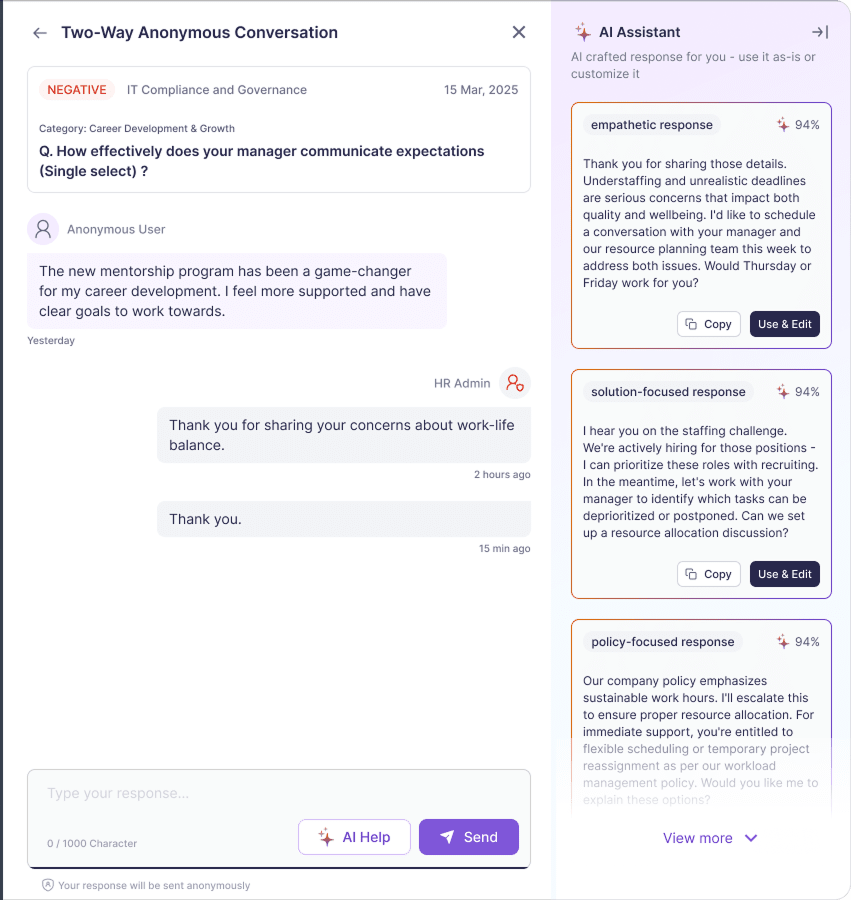
An anonymous channel catches the concerns someone will not raise to their supervisor's face. With Vantage Pulse, employees can flag a concern without their name attached, and HR can reply through a two-way anonymous thread to get the detail needed to fix it, while the reporter stays anonymous.
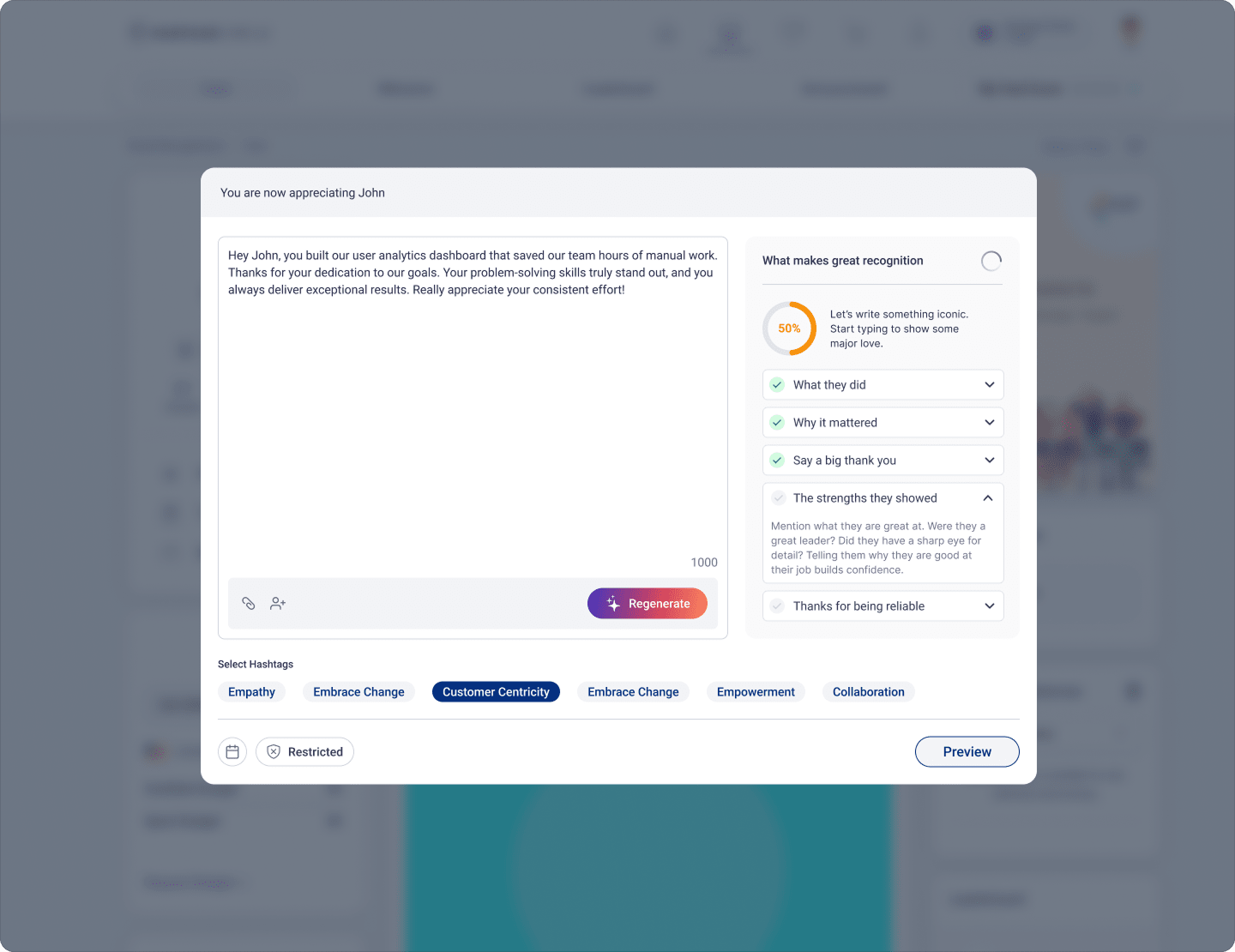
10. Recognise safe behaviours, not injury-free days
Recognise the behaviours that prevent injuries, such as reporting a near miss, stopping unsafe work or coaching a new starter, rather than rewarding a team for a low injury count.
The reason is practical: a reward for an injury-free month can make people think twice before reporting an injury. OSHA addressed this in an October 2018 memo, which says rate-based incentive programmes are permitted as long as they are not implemented in a way that discourages reporting.
Our own research, which covers recognition programmes in general and not safety programmes, points to the alternative by showing how the programmes that work best pick their winners. 77% of high-effectiveness programs choose award recipients mainly on observed behaviors, compared with 27% of other programs, according to The State of Recognition & Rewards 2025 (Vantage Circle).
Applied to safety, it is a design choice: pick people for what they did, not for what did not happen. A supervisor who posts "Thanks for tagging out the conveyor before clearing the jam" teaches the whole shift what good looks like. Recognition works best when it is immediate and names the behaviour, and a spot award in Vantage Recognition lets a supervisor do exactly that on the spot.
What about people who show the same safe behaviour again and again? 60% of high-effectiveness programs use escalating rewards, badges or titles for employees who repeatedly show desired behaviors, compared with 13% of other programs, according to The State of Recognition & Rewards 2025 (Vantage Circle).
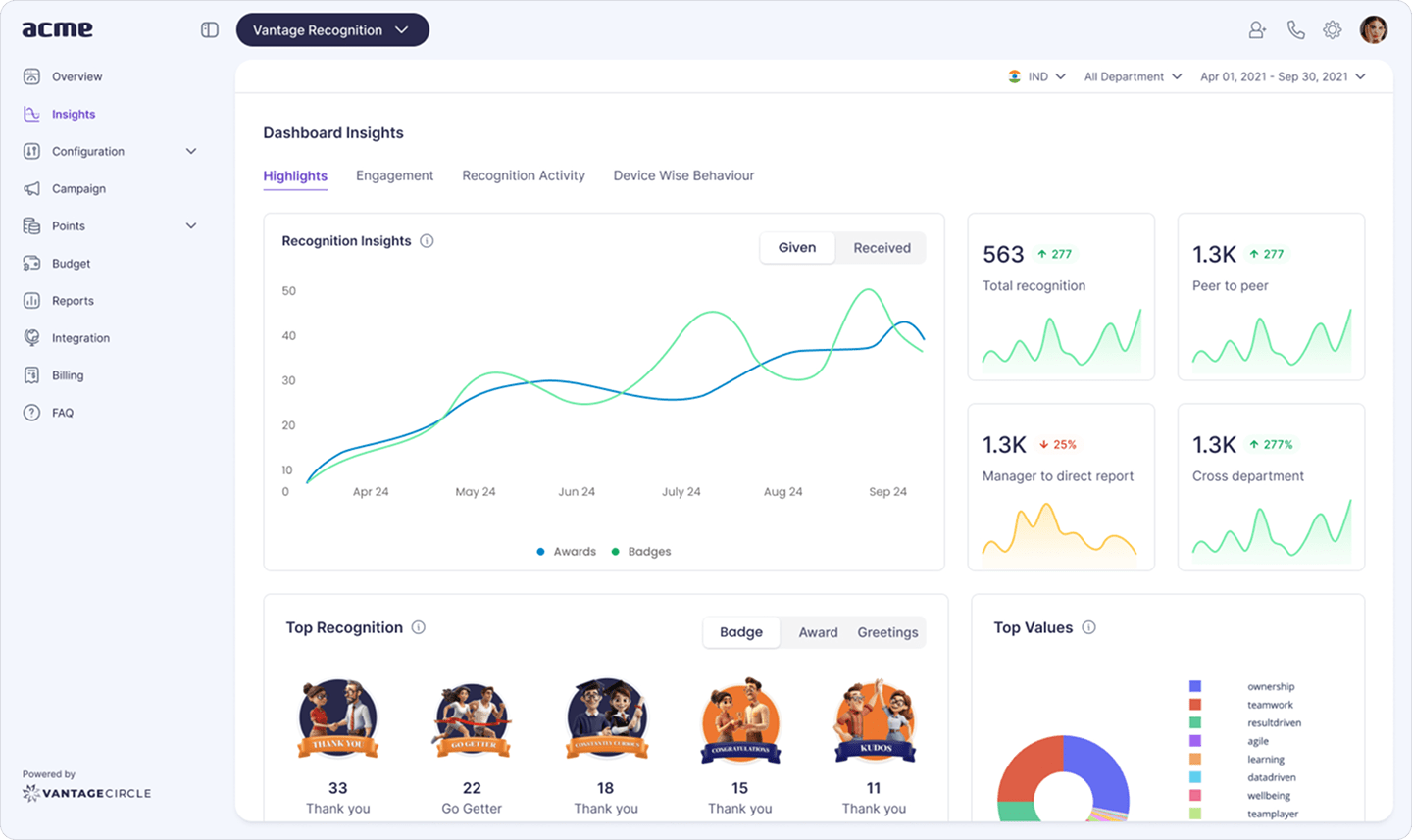
Again, that describes recognition programmes in general, but for safety it suggests a quarterly "Safety Champion" campaign with tiered badges, which rewards the people who keep raising issues instead of one lucky team with no incidents. Campaign tools in Vantage Recognition can run it without a spreadsheet.
What to recognise
Six safety behaviours worth a public thank-you:
- Reporting a near miss, even a small one
- Stopping work when something looks unsafe
- Coaching a new starter on a safe method
- Spotting and fixing a housekeeping hazard
- Suggesting a change that removes a hazard
- Running a clear, useful toolbox talk
For incentive types and what to avoid, see our guide to safety reward programs. For how safety and compliance milestones can earn points, see points-based rewards.
11. Include contractors, temps and every shift
Safety only works if it reaches everyone on site, including contractors, agency staff and the night shift. OSHA's recommended practices include a coordination element for host employers, contractors and staffing agencies, and it matters because new arrivals can know the least about a site's hazards.
Does recognition reach them too? Only 31% of US recognition programs cover contract workers, and just under 25% exclude blue-collar workers, according to AIRe Benchmarking Report USA 2023-24 (Vantage Circle).
These are recognition figures, not safety figures, and they come from US programmes in 2023-24. They still show the coverage gap this tip is about: a safety culture that thanks only the day shift and permanent staff leaves the rest unseen. Recognition analytics show which sites, shifts or worker types never receive recognition, so the night shift and agency staff are not invisible. Our guide to frontline employees goes deeper on reaching them.
12. Track leading indicators, not only incidents
Incident rates are a post-mortem and leading indicators are a forecast, so you need a mix of both.
| Indicator | Leading or lagging | What it tells you |
|---|---|---|
| Near misses reported | Leading | Willingness to speak up |
| Safety walks completed | Leading | Leader presence |
| Training completion | Leading | Readiness |
| Safety recognitions given per site | Leading | Whether safe behaviour is noticed |
| Total recordable incident rate (TRIR) | Lagging | Injuries that have already happened |
| Days away from work | Lagging | Severity and cost |
A short pulse question, such as "I can raise a safety concern without negative consequences", broken down by site and shift, shows where reporting is likely to be suppressed before an incident does. Department-wise insights in Vantage Pulse make that comparison easy. For ideas on what to ask, see our list of survey questions about the work environment.
10 Workplace Safety Rules for Employees
The 10 basic rules for workplace safety are: wear your PPE, inspect tools before use, keep walkways clear, lift with your legs and ask for help, never bypass a guard, follow lockout/tagout, report hazards and near misses immediately, know your exits, take breaks and speak up about fatigue, and stop work if it is not safe.
- Wear your PPE. It only protects you when it is on.
- Inspect tools before use. A damaged tool is a hazard you can see coming.
- Keep walkways clear. A box left in an aisle is a trip waiting to happen.
- Lift with your legs and ask for help. A heavy load is a team job.
- Never bypass a guard. It is there to stop an injury.
- Follow lockout/tagout. Energy that is not isolated can start a machine while you are inside it.
- Report hazards and near misses immediately. The next person may not be as lucky.
- Know your exits. Check where they are on your first day.
- Take breaks and speak up about fatigue. Tired people make mistakes.
- Stop work if it is not safe. No target is worth an injury.
What Are the 5 E's of Workplace Safety?
The 5 E's of workplace safety are Engineering, Education, Enforcement, Encouragement and Evaluation. It is a simple way to remember that safety needs more than rules.
| The E | What it looks like at work |
|---|---|
| Engineering | Guards, ventilation and equipment designed to remove the hazard |
| Education | Induction, toolbox talks and refreshers in a language people understand |
| Enforcement | Clear rules applied fairly to everyone, including leaders |
| Encouragement | Recognition for safe behaviour and for raising concerns |
| Evaluation | Audits, near-miss reviews and leading indicators that show what to fix next |
How to Build a Safety Culture That Outlasts the Checklist
A safety culture exists when employees raise a risk because they believe it matters, not because an audit is due. Checklists and PPE rules are necessary, but they are the floor.
Ana Carolina Mason, Head of HR at Americana Foods, described the difference on our podcast.

Vantage Influencers Podcast
"When you have a real, true safety culture, this is when it comes from the employee ... he has the ability to say, 'look, supervisor, this is not right, this is not okay.'"
Ana Carolina Mason · Head of HR, Americana Foods
Listen to the EpisodeWhat does that look like day to day? Three practices turn the idea into habit.
- Leaders choose safety over the target when the two conflict, and say so afterwards. This is Tip 1 repeated until people believe it.
- Supervisors thank people for raising issues. The first reaction to a concern decides whether there is a second one.
- Safety boards and recognition walls sit on the floor, not only in email. A feed of safety thank-yous does what a "Safety First" poster cannot, because it shows real colleagues doing the right thing this week.
Trust is the thread running through all three, and our guide on how to build psychological safety shows how to make speaking up feel normal. For the factory-floor context, see our guide to engagement in manufacturing. Safety at work also looks different for different people, which we cover in women's safety at work.
Conclusion
Workplace safety is a set of habits that leaders build, not a poster. You do not need to do all 12 tips at once. Pick three to start this month: one from each group (leading from the top, fixing hazards and building the habit). Walk the floor, make reporting easy, and thank the first person who uses it.

Frequently Asked Questions
What is workplace safety about?
Workplace safety is about preventing injuries, illnesses and deaths at work. It covers the policies, equipment, training and habits that keep people safe, and the shared duty of employers and employees to spot hazards, report them and fix them before someone is hurt.
What are 5 examples of unsafe conditions in the workplace?
Five common unsafe conditions are wet or cluttered floors, unguarded or damaged machinery, missing or ill-fitting PPE, blocked exits and poor lighting. Others include loud noise without hearing protection, poor ventilation around chemicals, and workstations that force awkward postures, all of which a floor walk can catch.
What are the 10 most common workplace hazards?
There is no single official ranking, but the hazards that show up on most sites include slips, trips and falls, manual handling, machinery, chemicals, noise, heat, repetitive strain, infectious disease and workplace violence or harassment.
What is the #1 workplace safety problem?
It depends on the measure. Fall protection is OSHA's most frequently cited standard, and Liberty Mutual's Workplace Safety Index ranks the causes of serious non-fatal injuries by cost, so check its latest edition for your industry. Falls and manual handling are sensible places to start.
How do you improve safety in the workplace?
Start by walking the floor with the people who do the job and fixing what they flag. Make reporting easy and safe, train in the language people use, and recognise safe behaviour in the moment. Then track near misses and safety walks, not only injuries, so you can act earlier.
Written by