
Every team runs on work that never shows up in a performance review. The teammate who stays late to unblock a launch. The colleague who quietly fixes a mistake before it reaches the client. The person who trains the new hire without being asked. This is the effort that actually carries a team. And most of it goes unsaid.
That silence is what most employee recognition gets wrong. For decades, it has moved in only one direction: top-down, from managers to their teams. The everyday moments between colleagues slip by unnoticed. Here is the shift worth making. Recognition is not a top-down job. It belongs to everyone. Peer-to-peer recognition is when colleagues acknowledge each other's contributions directly, without waiting for a manager to notice. Because peers see the work up close, it lands as timely, specific, and real.
The stakes are not soft. Gallup (2024) finds only 32% of US employees feel genuinely engaged, and no raise or perk has moved that number for long. What moves it is people feeling seen for the work they actually do.
At Vantage Circle, after working with over 700 organizations and 3.2 million employees, we've seen the same pattern again and again. Recognition is either the invisible engine that powers engagement or the silent killer of it. Done right, it scales culture. Done poorly, it becomes noise.
This guide brings you 15 peer-to-peer recognition ideas, grouped into digital, low-cost, and formal formats, plus copy-paste messages for office, remote, and hybrid teams. So, let's dive in.
Peer-to-Peer Recognition at a Glance
| Aspect | Detail |
|---|---|
| What it is | Colleagues recognizing each other directly, flowing across the team rather than top-down |
| Why it matters | Featured in 60%+ of recognition programs; linked to higher engagement, retention, and a 4X experience advantage |
| The three formats | Digital and virtual, casual and low-cost, formal and structured |
| Quickest win | A #kudos shout-out channel your team can start today |
| Best for | HR leaders, people managers, and team leads |
What is Peer-to-Peer Recognition?
Peer-to-peer recognition happens when colleagues acknowledge each other's contributions directly, flowing horizontally across teams rather than top-down from a manager. It captures the everyday effort that managers often miss.
Unlike traditional programs where managers evaluate and reward performance, peer-to-peer recognition works because colleagues see each other's daily efforts up close. They witness the extra hours, the creative solutions, and the collaborative spirit. When recognition comes from someone who truly understands your work, it carries authentic weight.
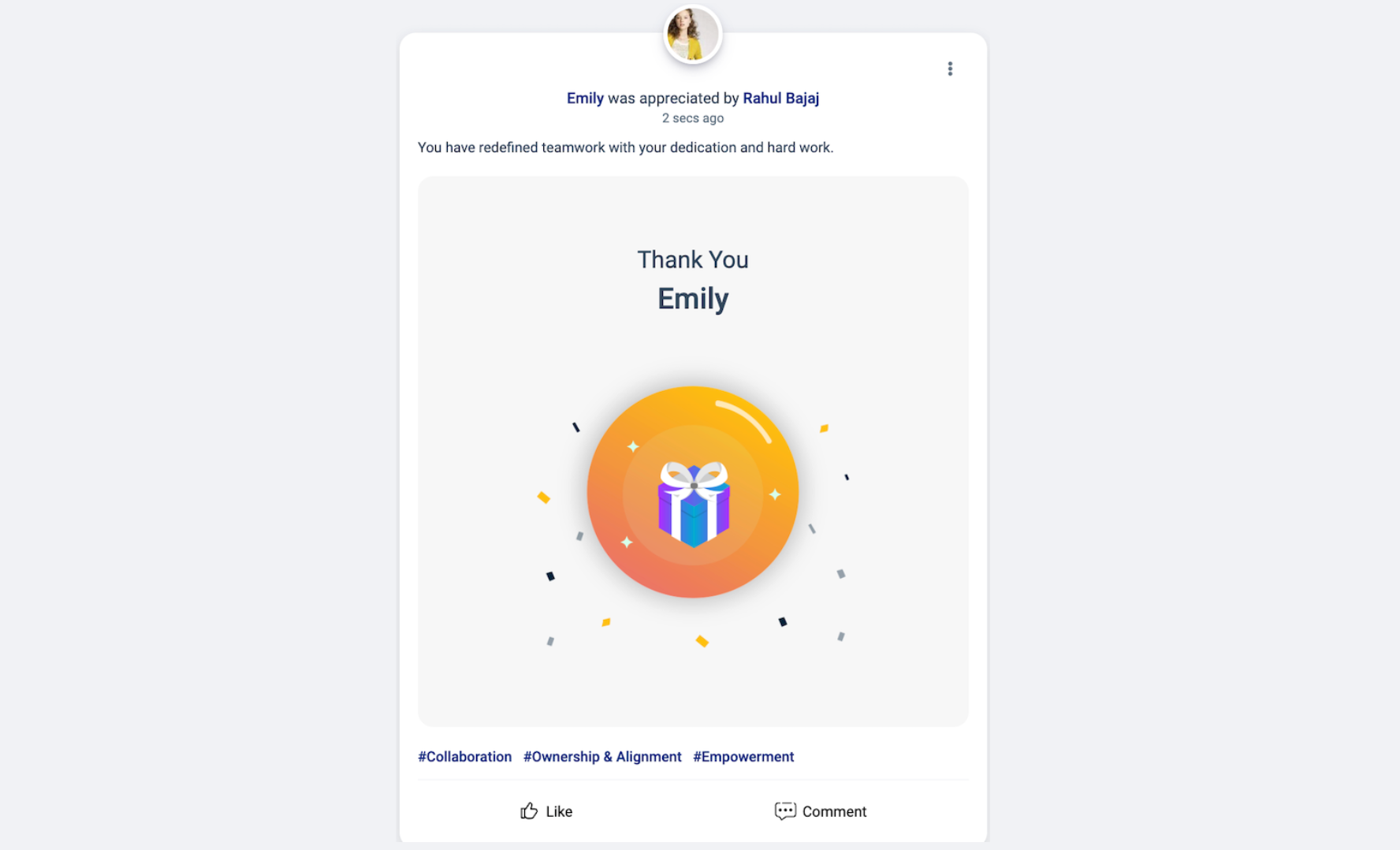
Effective peer recognition builds four foundational elements in workplace culture:
- Trust develops naturally. When team members regularly acknowledge each other's strengths, psychological safety increases. People feel more comfortable sharing ideas, admitting mistakes, and asking for help.
- Teamwork improves organically. Recognition that highlights collaborative effort reinforces the behaviors you want more of. Teams start viewing success as collective rather than individual.
- Belonging strengthens over time. Employees who receive regular peer recognition feel more connected to their workplace community. They see their contributions as valued.
- Supportive culture emerges. Organizations with strong peer recognition create environments where helping others becomes natural. Success stories get shared. Best practices spread faster.
The most successful programs blend formal structure with spontaneous appreciation. They provide tools and frameworks while encouraging authentic, timely feedback between colleagues.

Vantage Influencers Podcast
"Employee recognition is actually conflict prevention. It's that building and maintaining those relationships."
— Christopher Littlefield, Employee Appreciation Speaker and Founder of Beyond Thank You
Listen to the EpisodeWhy Peer Recognition Works: The Business Case
Peer recognition delivers measurable business outcomes across engagement, retention, and performance, and Vantage Circle's own research shows it is already the backbone of most modern recognition programs.
Here is what the data tells us. Leadership communication drives program adoption for 75% of companies, and peer recognition sits at the center of the rest.
Read together, these numbers point to the same conclusion. Peer recognition is not a soft perk. It is a lever that moves engagement, retention, and output at once, and it already sits at the center of most mature programs. The question for HR leaders is no longer whether to run it, but how to run it well enough to close the effectiveness gap below.
The gap: While most companies run some form of recognition, few run it well. A study we conducted with CPHR Alberta found that less than 30% of companies rate their rewards and recognition programs as highly effective.
That gap between intention and execution is the opportunity. It also explains why the recognition gap persists even in companies that invest heavily. For a fuller picture of the numbers, see our roundup of employee recognition statistics.
Recommended Resource: Employee Recognition Program: Examples, Benefits, Best Practices & How to Build
15 Peer-to-Peer Recognition Ideas
The 15 ideas below are grouped into three formats: digital and virtual, casual and low-cost, and formal and structured. Pick a mix that fits your budget, your tools, and whether your team is in-office, remote, or hybrid. A balanced program usually pulls from all three, because different people respond to different kinds of appreciation.
Here is how the three formats compare at a glance:
| Format | Best for | Typical budget | Example ideas |
|---|---|---|---|
| Digital & Virtual | Remote and hybrid teams that need visible, instant recognition | Low to medium | Shout-out channels, recognition walls, digital badges |
| Casual & Low-Cost | Teams building a recognition habit without new tools | Near zero | Thank-you notes, desk drops, gratitude boards |
| Formal & Structured | Organizations that want fairness, scale, and values alignment | Medium to high | Peer bonus points, monthly awards, values-in-action |
Digital & Virtual Ideas (best for remote and hybrid teams)
Digital ideas make recognition visible and instant across distributed teams, turning everyday tools like chat apps and intranets into appreciation channels. They work best when the whole team can see and react to each shout-out. For remote and hybrid teams, digital recognition is often the only channel where everyone is present at the same time, so it carries extra weight.
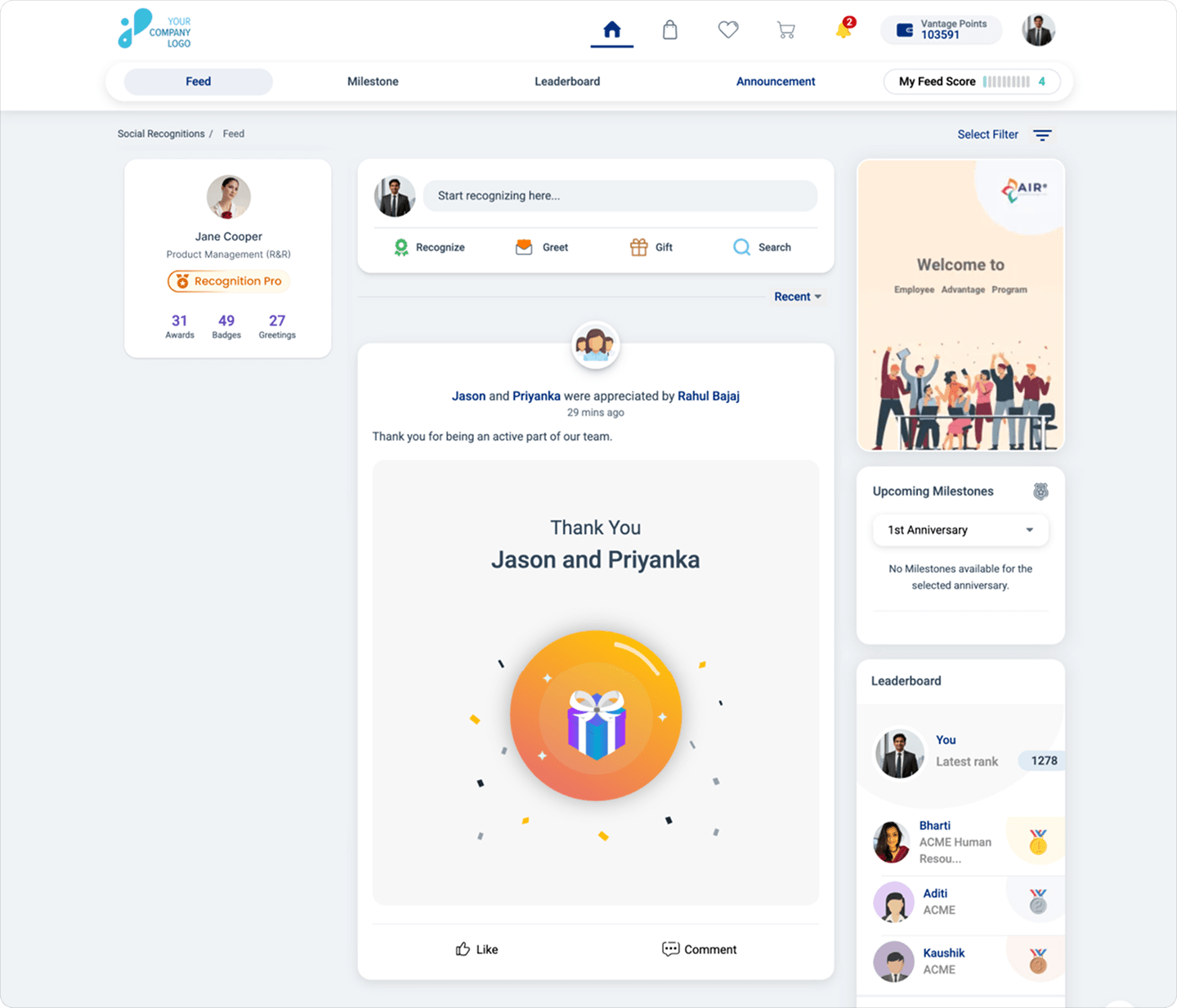
Source: Vantage Recognition
1. Shout-out channels. Create a dedicated messaging channel, like #kudos or #peer-praise, in a team chat tool such as Slack, Microsoft Teams, or Google Chat. Encourage people to highlight wins and tag the colleagues who helped them. Keep it public so appreciation compounds.
2. Digital recognition walls. Set up a virtual space where employees post appreciation for all to see. This can live on your intranet or a dedicated platform. A public feed keeps recognition from scrolling away, which is exactly what social recognition is designed to do at scale. Photos, reactions, and comments turn a single thank-you into a moment the whole team gets to share.
3. Custom badges and emojis. Develop digital badges or custom emojis for specific achievements, like a "Team Player" or "Problem Solver" badge. Small visual tokens make recognition fun, repeatable, and tied to the behaviors you want to see.
4. Real-time recognition tools. Use a platform that lets anyone appreciate a colleague the moment it happens. Speed matters. Recognition loses power the longer it waits, so instant peer feedback beats a delayed formal award.
5. LinkedIn endorsements. Encourage coworkers to write recommendations or endorse each other's skills on professional networks. This builds external reputation while strengthening internal relationships. Provide simple templates so people know what to write.
Casual & Low-Cost Ideas (near-zero budget)
Casual ideas cost little or nothing and rely on personal, human touches that make appreciation feel genuine. They are ideal for teams that want to start building a recognition habit without new software. The low cost is the point. It lowers the barrier so recognition becomes a daily reflex rather than a scheduled event.
6. Handwritten thank-you notes. Keep blank thank-you cards in common areas so anyone can leave a quick note for a colleague. A handwritten note offers a highly personal touch that builds deep connections. For remote teams, a short video message works the same way.
7. Desk drops. Encourage employees to occasionally leave a coworker's favorite snack, a sweet treat, or a cup of coffee on their desk. Small, unexpected gestures signal that someone noticed and cared. For remote teams, a surprise gift card or a snack delivery to someone's home carries the same warmth. The surprise is what makes it land.
8. Gratitude boards. Set up a physical or digital board where staff can pin sticky notes of appreciation. A visible wall of thank-yous turns individual gratitude into a shared team ritual.
9. Meeting shout-out rituals. Start team stand-ups or all-hands meetings with a few minutes dedicated to peer shout-outs. Keep each one to a couple of minutes, share the specific impact, and connect it to a team goal.
10. Peer Feedback Fridays. Dedicate time each week for structured peer appreciation and constructive feedback. Use rotating small groups and a positive-first approach. For remote teams, run it over video or asynchronously. The weekly rhythm matters more than the format. A predictable slot trains people to look for good work instead of only noticing what went wrong.
Formal & Structured Ideas (for scale and fairness)
Formal ideas add structure, budget, and consistency so recognition reaches everyone, not just the loudest contributors. They matter most when you want fairness and want to tie appreciation to company values. Structure also solves a quiet problem. Left to chance, recognition tends to cluster around a few visible people while equally strong contributors go unnoticed.
11. Peer bonus and points systems. Give employees a small monthly budget or points to award colleagues directly. Team members redeem points for rewards they actually want, and HR gets full visibility into spend. Track usage so recognition stays equitable across teams. A points-based platform automates the tracking, redemption catalog, and reporting, so the program runs without manual admin.
12. Peer-nominated monthly awards. Run a monthly program, like "Values Champion," where staff nominate peers who best embody a core value. The winner receives a small prize or certificate. Peer nomination keeps the award credible because it comes from the people who see the work. Rotate the theme each month so recognition does not always reward the same behaviors, and read a short nomination story aloud so the whole team learns what good looks like.
13. Cross-department nominations. Encourage teams to recognize colleagues outside their immediate group. This breaks down silos and builds organization-wide appreciation. Create a quarterly nomination process and share the stories company-wide. Cross-team recognition is especially powerful because it surfaces the invisible support work that keeps projects moving but rarely shows up in one team's metrics.
14. Collaborative achievement awards. Create recognition specifically for teamwork and cross-functional projects rather than individual performance. Use peer voting to highlight work that required real cooperation and shared problem-solving.
15. Values-in-action recognition. Align peer recognition directly with company values by highlighting specific behaviors that demonstrate them. Create a category for each value and encourage detailed, specific nominations. This is where a structured employee recognition program turns scattered praise into culture reinforcement.
Peer-to-Peer Recognition Message Examples and Words
A strong peer recognition message is specific, timely, and tied to impact. Name what the person did, explain the difference it made, and connect it to a team or company goal. Vague praise like "great job" fades fast. Specific praise sticks.
The reason is simple. A generic compliment tells someone you noticed them. A specific one tells them you understood exactly what they did and why it mattered. That second message is the one people remember, screenshot, and pass on.
Here are copy-paste examples you can adapt:
- "Sarah saved our sprint yesterday by spending three extra hours debugging. Her patience taught me new techniques I'll use going forward."
- "Mike, your client presentation was exceptional. You anticipated every question and had backup data ready. That preparation helped us close the deal."
- "Thank you, Priya, for jumping in on the onboarding docs when I was underwater. You didn't wait to be asked, and it kept the whole launch on track."
- "Huge thanks to Daniel for mentoring the two new analysts this month. Their ramp-up time was cut in half because of your patience."
- "Ana, your calm during the outage kept the whole team steady. You communicated clearly, stayed focused, and got us back online fast."
- "Shout-out to Marcus for catching the pricing error before it reached the customer. Your attention to detail protected the account and our credibility."
A few words and phrases that consistently make recognition land: thoughtful, dependable, went above and beyond, stepped up, made my day easier, quietly brilliant, saved the day, showed real ownership.
One habit to build: send the message within a day of the moment you want to recognize. Recognition that arrives a month later feels like paperwork. Recognition that arrives while the work is still fresh feels real.
Free Download: 50 Peer-to-Peer Recognition Messages and a Words-That-Work Bank (PDF): 50 copy-paste messages across 10 occasions, plus openers, traits, and impact phrases to build your own.
How to Encourage Peer-to-Peer Recognition
To encourage peer-to-peer recognition, make it easy, model it from the top, and tie it to real outcomes so it becomes a habit rather than a mandate. The ideas above only work if the environment supports them.
Model it from the top. Executives and managers set the tone. When leaders publicly recognize colleagues and celebrate peer appreciation in meetings, employees follow. Visibility demonstrates commitment beyond policy documents. If leaders never participate, employees read the silence as permission to skip it too.
Make it inclusive and accessible. Some employees prefer public recognition while others value private appreciation. Offer multiple channels, including anonymous and written options, and account for cultural differences in global teams.
Choose easy tools. Complex systems fail because people abandon complicated processes. Pick tools that fit existing workflows and need minimal training. The best recognition tools feel natural, not burdensome.
Mix recognition types. Combine monetary rewards, experiences, and social recognition. Different people respond to different forms. Track preferences over time to optimize the mix.
Build consistency without forcing it. Programs need rhythm but genuine sentiment. Set a weekly or monthly cadence while leaving room for spontaneous appreciation. Provide guidelines and examples without scripting exact words.
Close recognition gaps proactively. Monitor who is being recognized. Some contributors get frequent praise while others are overlooked despite strong work. Use data to spot and fix these imbalances.
Train people to recognize well. Good recognition is a skill, not an instinct. Show employees the difference between "great job" and a message that names the action, the impact, and the value it reflects. Share a few strong examples and a few weak ones. When people know what quality looks like, participation and sincerity both rise.
If you are starting from scratch, our guide on how to start a peer-to-peer recognition program walks through the setup step by step. And if you are not sure whether your current recognition is landing, the AIRe framework scores a program across Appreciation, Incentivization, Respect, and eMotional Connect so you can see exactly where the gaps are.
Summing It Up
Building a thriving peer recognition culture starts with a simple truth. Employees crave appreciation from colleagues who understand their work. The data backs it up. Recognition drives engagement, retention, and performance.
Your organization already has the foundation. Colleagues help each other solve problems and meet deadlines every day. The opportunity is to make that collaboration visible and celebrated.
Start small. Pick one or two ideas from this guide that fit your culture. Test them with a willing team this week, measure engagement over the next month, then expand what works. Recognition culture changes one appreciation moment at a time.
FAQs
What is an example of peer-to-peer recognition?
A developer stays late to fix a major issue blocking the team. The next day, a colleague posts: "Sarah saved our sprint yesterday by spending three extra hours debugging. Her patience taught me new techniques I'll use going forward." It is specific, timely, and meaningful. That is peer-to-peer recognition.
What are good employee recognition ideas?
Good ideas span three formats. Digital ones include shout-out channels and recognition walls. Low-cost ones include handwritten notes, desk drops, and gratitude boards. Formal ones include peer bonus points, monthly peer-nominated awards, and values-in-action recognition. The best programs blend all three.
How do you promote peer-to-peer recognition?
Promote it by making it easy, modeling it from leadership, and tying it to outcomes. Give people simple tools inside the apps they already use, have leaders recognize peers publicly, offer multiple channels for different personalities, and keep a steady cadence while leaving room for spontaneous appreciation.
What are the 5 types of recognition?
The five common types are peer-to-peer recognition, manager-to-employee recognition, structured or formal recognition such as awards, informal or spontaneous recognition such as a quick thank-you, and milestone recognition for anniversaries and achievements. Peer-to-peer recognition is the one that scales culture fastest.
What is a peer-to-peer recognition message example?
A strong message names the action, the impact, and the value it reflects. For example: "Mike, your presentation to the client yesterday was exceptional. You anticipated every question and had backup data ready. Your preparation helped us close the deal and showed our attention to detail. Thank you for representing our values so well."

Nilotpal M Saharia is an Assistant Manager, Content Marketing at Vantage Circle and a recognition-and-rewards (R&R) strategist with 9 years of experience spanning Marketing, HR, and content strategy. He helps HR leaders turn employee recognition and leadership research into practical workplace programs.
Connect with Nilotpal on LinkedIn.