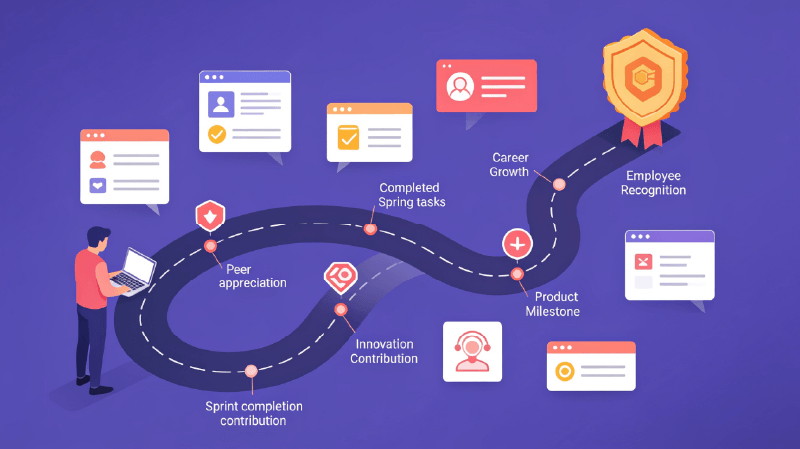
You have a team of ten people. One thrives on public praise. Another finds it embarrassing. One needs total autonomy to do their best work. Another loses motivation the moment they feel isolated. Same manager. Same policies. Completely different people.
Managing them the same way isn't just ineffective — it's one of the most common reasons good employees quietly disengage and eventually leave.
According to Gallup's 2025 workplace data, only 31% of US employees are engaged at work — and 17% are actively disengaged. That leaves roughly half the US workforce somewhere in the middle: present, but not fully invested.
The organizations closing that gap aren't doing it with better perks or bigger budgets. They're doing it by understanding that different employees need fundamentally different things to feel valued, motivated, and connected to their work. What keeps a star performer energized is very different from what keeps a free spirit committed. What makes a relationship-driven employee feel seen looks nothing like what satisfies a deep expert.
The organizations that figure this out — and build their recognition, feedback, and culture practices around it — retain their best people. The ones that don't watch them leave for companies that do.
"Understand what are the employee personas that are existing within the organization. What is it that motivates them the best? And accordingly if we are able to bring in those personalization aspects into our R&R strategy, I think that will help create that long-term sustainability."
— Dedeepya Ajit John, Senior Director of Research & Advisory at SHRM | The Power Of Strategic Rewards And Recognition
This guide breaks down every major way employees are classified — by employment status, performance level, and behavioral archetype — with specific strategies for engaging each one.
Types of Employees by Employment Status
The most fundamental way to classify employees is by their employment status — the legal and structural terms that govern how they work, how they're compensated, and what benefits they receive. These categories matter for compliance, benefits administration, and how you integrate different workers into your team.
Full-Time Employees
Full-time employees typically work 35–40 hours per week and are eligible for the full benefits package: health insurance, retirement plans, paid leave, and any equity programs the company offers. For ACA purposes, the IRS defines full-time as 30 or more hours per week.
They represent the deepest organizational investment — the people most likely to build institutional knowledge, lead long-term projects, and shape culture over time. That investment cuts both ways: full-time employees are also the most affected when the culture, recognition, or growth opportunities don't materialize. Engagement strategies have the highest leverage — and the highest cost of neglect — with this group.
Part-Time Employees
Part-time employees work fewer than 35 hours per week. Benefits eligibility varies by employer and applicable law — some organizations extend partial benefits; others don't. Part-time workers are common in retail, healthcare, hospitality, and food service.
The most common mistake organizations make with this group is treating limited hours as limited commitment. Part-time employees who feel included, recognized, and connected to the team's purpose show up differently — and stay longer — than those treated as interchangeable. The engagement investment is smaller; the return often isn't.
Contract Employees (Independent Contractors)
Independent contractors are self-employed individuals who provide services under a defined agreement. They're not employees in the legal sense — the organization doesn't withhold taxes, provide benefits, or control how the work gets done, only the outcome.
The IRS applies a behavioral, financial, and type-of-relationship test to determine worker classification. Misclassification — treating a contractor as an employee or vice versa — carries significant legal and financial exposure.
Temporary Employees
Temporary employees are hired for a defined period: to cover leave, handle a surge in workload, or fill a seat while a permanent hire is found. They're often placed through staffing agencies, which may act as the employer of record.
Organizations that integrate temp workers into team culture — with access to recognition and communication channels — consistently get better output and build a stronger pipeline for future permanent hires.
Seasonal Employees
Seasonal workers are hired during predictable high-demand periods: holiday retail, summer tourism, tax season, harvest cycles. The engagement window is short, which means onboarding and recognition need to happen faster and more deliberately than with permanent staff. A brief but genuinely human integration — introductions, team acknowledgment, a clear point of contact — makes a measurable difference in how seasonal workers show up.
Freelancers
Freelancers are independent workers who take on project-based assignments, often for multiple clients at once. Like contractors, they're not employees — but they play an increasingly significant role in how knowledge work gets done, particularly in creative, technical, and consulting functions. Treating them as collaborators rather than vendors tends to produce better work and longer working relationships.
💡 Did you know?
Misclassifying a worker as an independent contractor when they function as an employee isn't just an HR error — it can trigger back taxes, penalties, and legal liability. The IRS three-part test is the definitive guide, and it looks at behavior, finances, and the nature of the relationship — not just job titles or contracts.
Types of Employees by Performance
Beyond employment status, performance is a critical lens for managers — not to permanently label people, but to understand what level of attention, development, and recognition each person needs at any given time.
High Performers
High performers consistently exceed expectations. They hit targets, take initiative, and often raise the standard for those around them. They're also the easiest people to lose quietly — a high performer who feels capped or taken for granted rarely signals dissatisfaction openly. They update their resume.
The management priority is development and trajectory. Clear growth pathways, stretch assignments, and regular honest conversations about where they're headed matter more to this group than most compensation adjustments. Treat them as an investment with a retention horizon, not just a reliable resource.
Core Performers (Solid Contributors)
Core performers reliably meet expectations. They do solid work, rarely cause problems, and tend to be overlooked precisely because they don't demand attention. Most engagement investment flows to star performers or struggling employees, while the people keeping the organization running quietly and consistently get little recognition.
This is a retention risk that compounds over time. Regular, specific acknowledgment of consistent contribution — not just exceptional output — is what prevents core performers from slowly disengaging.
💡 Did you know?
The majority of recognition and development investment goes to the top 10–15% and the bottom performers who need managing. The people quietly keeping the organization running are also the most likely to leave without ever raising a flag.
Low Performers
Low performers consistently fall below expectations. The causes vary: role mismatch, unclear goals, insufficient training, disengagement, or poor fit. Effective managers distinguish between employees who can be developed with the right support and those who genuinely cannot — and manage accordingly.
The worst outcomes come from treating all underperformance the same: either ignoring it or moving immediately to exit without diagnosis. A structured approach — clear expectations, honest and timely feedback, defined improvement timelines — produces better results for both the employee and the organization.
💡 Did you know?
Not all low performance looks the same. A top performer in the wrong role will look identical to a genuinely disengaged employee — same missed targets, same lack of initiative. The difference only shows up when you ask why. One conversation asking "what's getting in your way?" can tell you more than months of performance data.
Types of Employees by Behavior: 9 Archetypes and How to Engage Each One
The classification frameworks above tell you the structural and performance picture. But they don't tell you what actually motivates someone — which is where engagement strategy lives. The nine archetypes below are behavioral types: patterns of motivation, working style, and what each person needs to feel genuinely valued.
No employee fits neatly into a single box, and the same person can shift types depending on their life stage or role. The point isn't to label permanently — it's to build enough range into your engagement approach that most people find something that resonates.
| Archetype | Core motivation | Key engagement lever |
|---|---|---|
| The Stable Employee | Security and predictability | Milestone recognition, transparent communication |
| The Social Employee | Belonging and connection | Peer-to-peer recognition, team culture |
| The Star Performer | Being publicly seen as excellent | Public recognition, nomination awards |
| The Ambitious Employee | Responsibility and influence | Ownership, leadership exposure |
| The Money-Motivated Employee | Financial reward | Competitive comp, perks, total rewards visibility |
| The Deep Expert | Mastery and intellectual recognition | Continuous feedback, learning opportunities |
| The Creative | Creative freedom and visible impact | New projects, innovation recognition |
| The Autonomous Employee | Trust and independence | Flexibility, outcomes-based measurement |
| The Culture Carrier | Making the workplace human | Platform, formal recognition of cultural impact |
1. The Stable Employee
Who they are: This person values security above most things. They're not chasing the next big title or jumping ship for a 5% raise — they want to know their role is solid, their company is stable, and their future is predictable. They tend to be reliable, process-oriented, and deeply loyal once trust is established.
How to spot them: They rarely job-hop, they follow processes closely, and they rarely complain about structure — they find structure reassuring rather than constraining. They're the ones who've been with the company for years without ever making noise about leaving, and who know where everything is when a new hire needs help.
What disengages them: Uncertainty. Surprise reorgs, unclear communication about company direction, or feeling like their tenure isn't valued will quietly erode this employee's commitment. They don't disengage loudly — they disengage slowly and permanently.
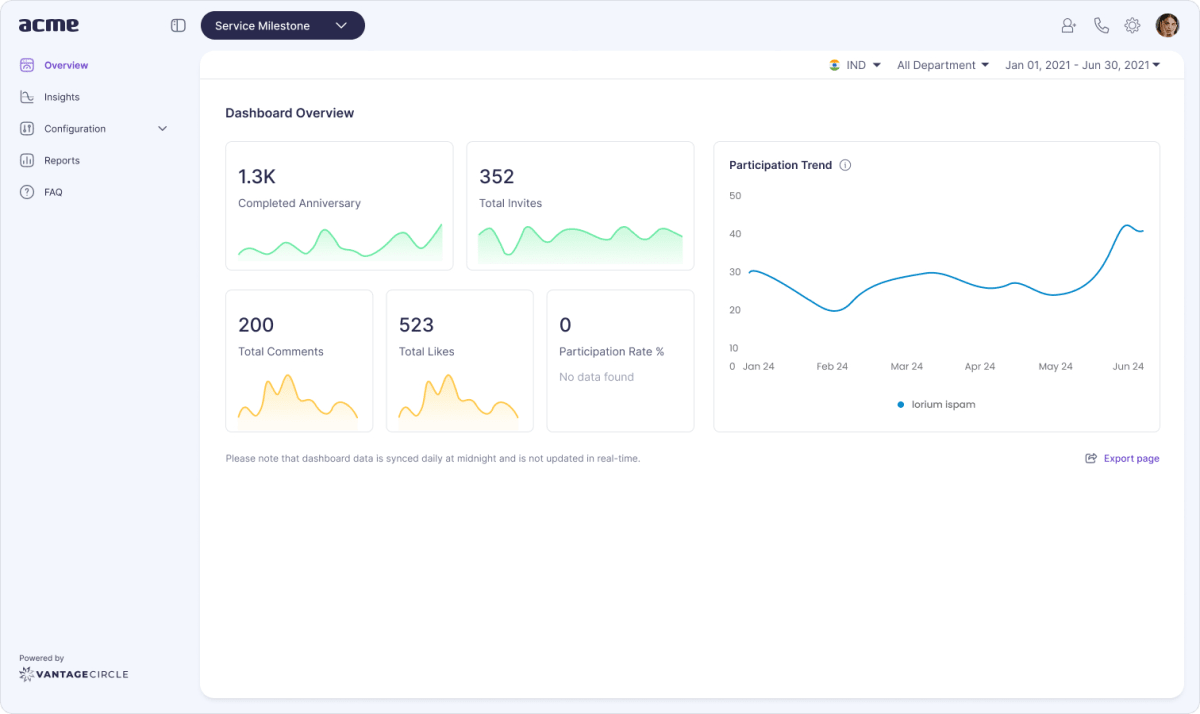
How to engage them: Stable employees need consistent, transparent workplace communication — especially around company performance and direction. Regular check-ins from their manager that acknowledge progress (not just problems) go a long way. More than anything, recognizing their loyalty matters: milestone-based recognition like service anniversary awards sends a clear signal that the company values long-term commitment, not just recent output. Vantage Recognition automates service anniversary recognition so these employees are never quietly overlooked on the dates that mean the most to them.
2. The Social Employee (The Friend-Seeker)
Who they are: This person is energized by relationships. They show up for the team, invest in their colleagues, and thrive in a culture where people genuinely like each other. Work, for them, is as much about the people as the work itself — and that's not a weakness. It's often the glue that holds teams together through difficult stretches. They're the ones organizing birthday collections, remembering who had a rough week, and always up for a team lunch — usually the first to welcome a new hire and the last to let a teammate struggle alone. In remote or hybrid settings, they're the ones keeping async channels warm.
What disengages them: Isolation. Remote work without intentional social touchpoints, siloed teams, or a culture that's purely transactional will drain this employee's motivation faster than almost anything else. They don't need a lot — but they need to feel like they belong.
How to engage them: Belonging is the primary engagement lever here.
Gallup finds that employees with a best friend at work are seven times more likely to be engaged.
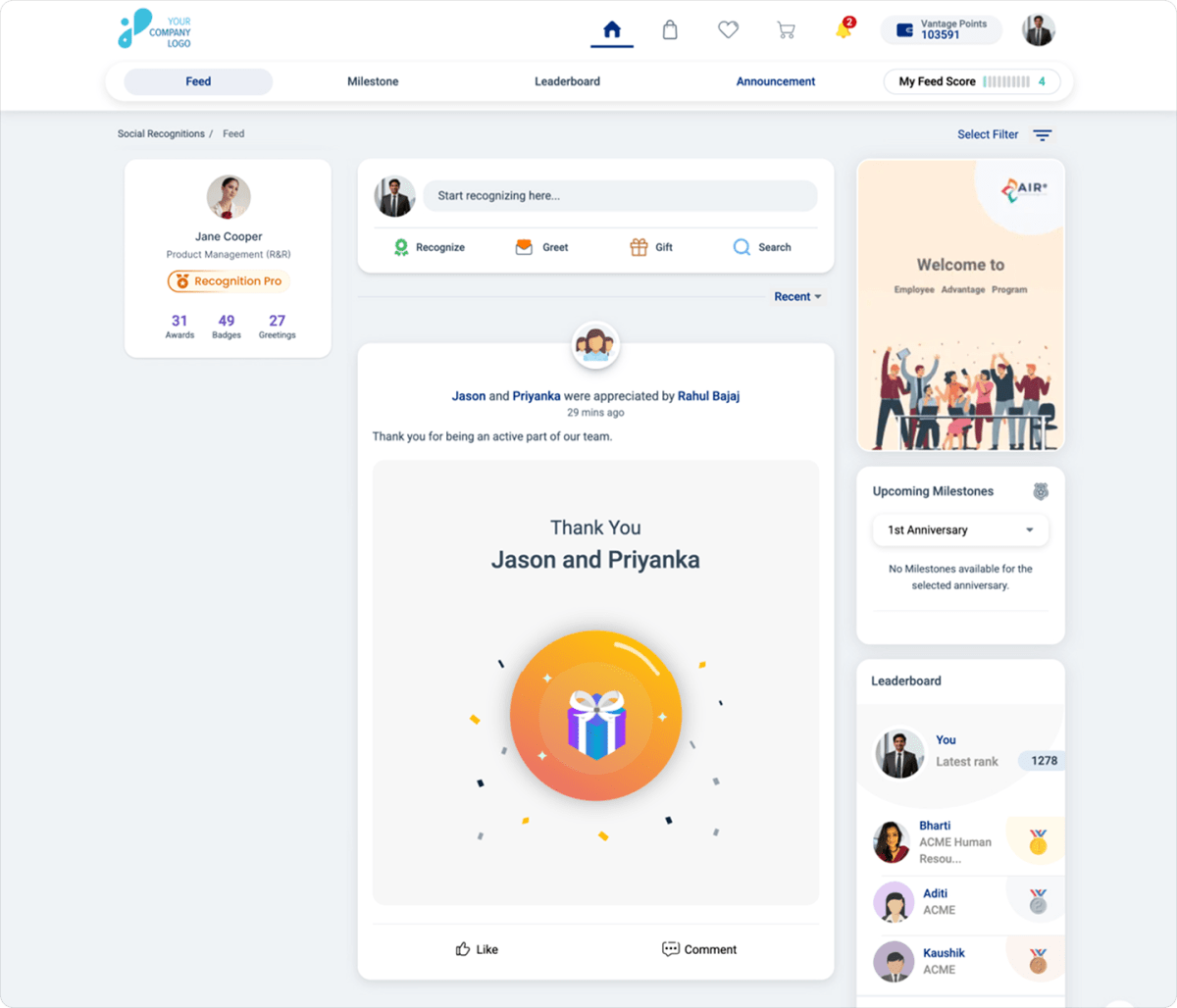
For social employees, that connection isn't background noise, it's the whole signal. According to SHRM, 69% of employees say they would work harder if their efforts were better recognized — and for social employees, peer-to-peer recognition carries the most weight. A social recognition feed, where appreciation is visible to the whole team, fuels exactly the kind of connection they're looking for. Pair that with structured team-building activities and a genuinely warm culture, and this employee will rarely want to leave.
3. The Star Performer
Who they are: Driven, competitive, and results-oriented. They keep score — internally, against their past performance, and against peers — and they want to know they're winning. They consistently hit or exceed targets, are always near the top of any leaderboard, and notice — quickly — when their results go unacknowledged. They're also usually the first to know when a peer with similar output gets recognized and they don't. Star performers are often your highest-output employees, but they're also among the most sensitive to feeling undervalued. They have options, and they know it.
What disengages them: Invisibility.
Gallup finds that employees who don't feel adequately recognized are twice as likely to say they'll quit in the next year.
For star performers, that timeline compresses fast. A star performer who feels like their results are being taken for granted will begin scanning the market within weeks. They don't just want to be paid well — they want to be publicly seen as excellent. A private thank-you from a manager is fine; recognition in front of their peers is what actually moves the needle.
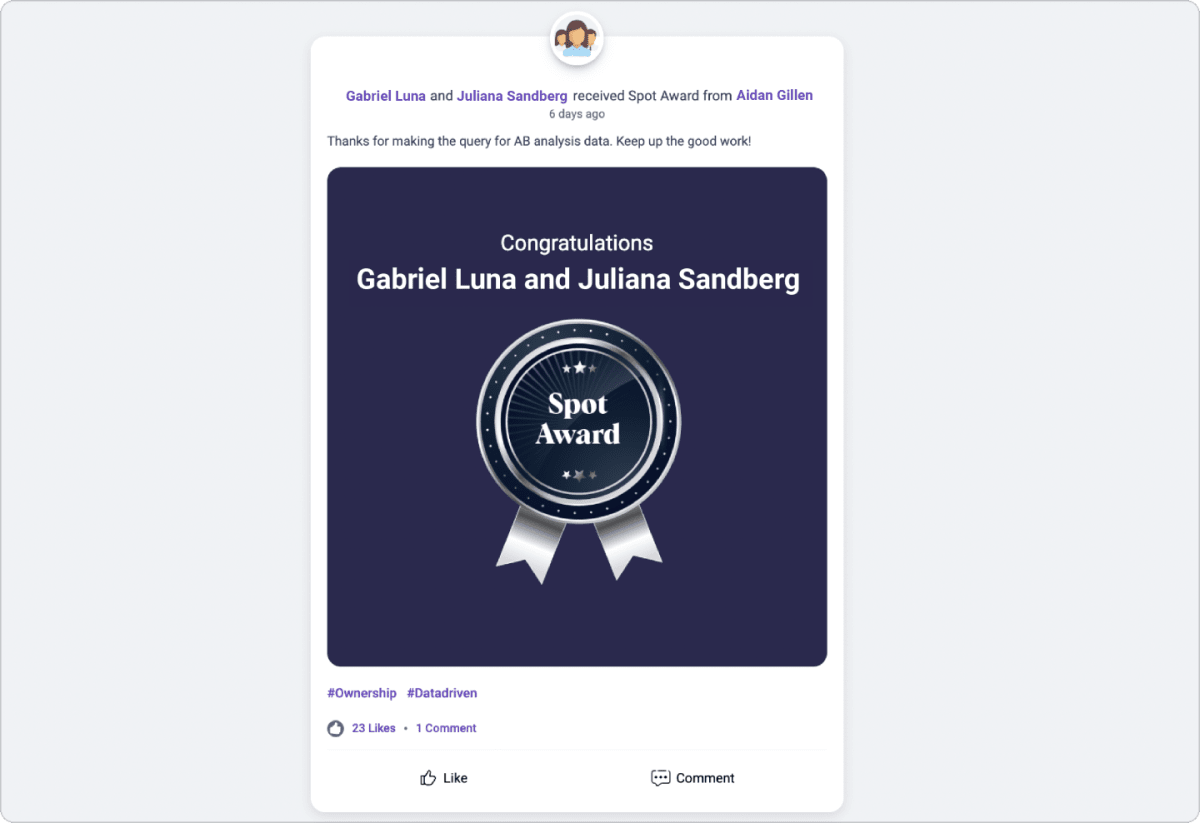
How to engage them: Public recognition is the key. Nomination-based awards, performance leaderboards, and timely employee recognition that's visible across the organization keep this type engaged and competitive in the right direction. The risk is silent disengagement: once a star performer decides their output is invisible here, they'll find a company that sees them — often before you notice they've checked out.
4. The Ambitious Employee (The Director)
Who they are: This type is drawn to responsibility and influence. They want to lead, shape decisions, and have their voice matter in the room. They volunteer for project ownership, are often naturally looked to for direction even without a formal title, and push back (respectfully) when excluded from decisions they could contribute to — they're also the ones asking about career paths early in their tenure. They think in terms of ownership and impact, not just tasks and deadlines. Left in a purely executional role with no visibility into strategy, they'll become restless fast.
What disengages them: Stagnation and exclusion. Being kept in an executional lane indefinitely — with no stretch projects, no leadership exposure, no visible pathway — will push this employee out the door. They read flat org structures as a ceiling, not a feature.
How to engage them: Give them meaningful ownership — not just tasks, but outcomes. Leadership-track development, stretch assignments, and recognition that's explicitly tied to their impact (not just effort) signal that the company sees their potential. Manager nomination awards that recognize leadership at any level — not just the executive tier — are especially effective. Involve them in decisions where they can contribute. That visibility is worth more to them than most monetary rewards.
5. The Money-Motivated Employee
How to spot them: They negotiate hard during hiring, leave for better pay rather than better titles, and track their comp relative to peers. They're often the first to notice when a compensation adjustment doesn't keep up with the market — and the first to mention it. Compensation is simply the primary lens through which this person evaluates their job — and they know, often to a decimal point, what they're worth. That's not cynicism; it's clarity.
What disengages them: Being underpaid, or being paid well but feeling like the company doesn't acknowledge the financial value of their contribution. Generic perks that don't translate to real financial value (a pizza party for a record-breaking quarter) land particularly badly with this type.
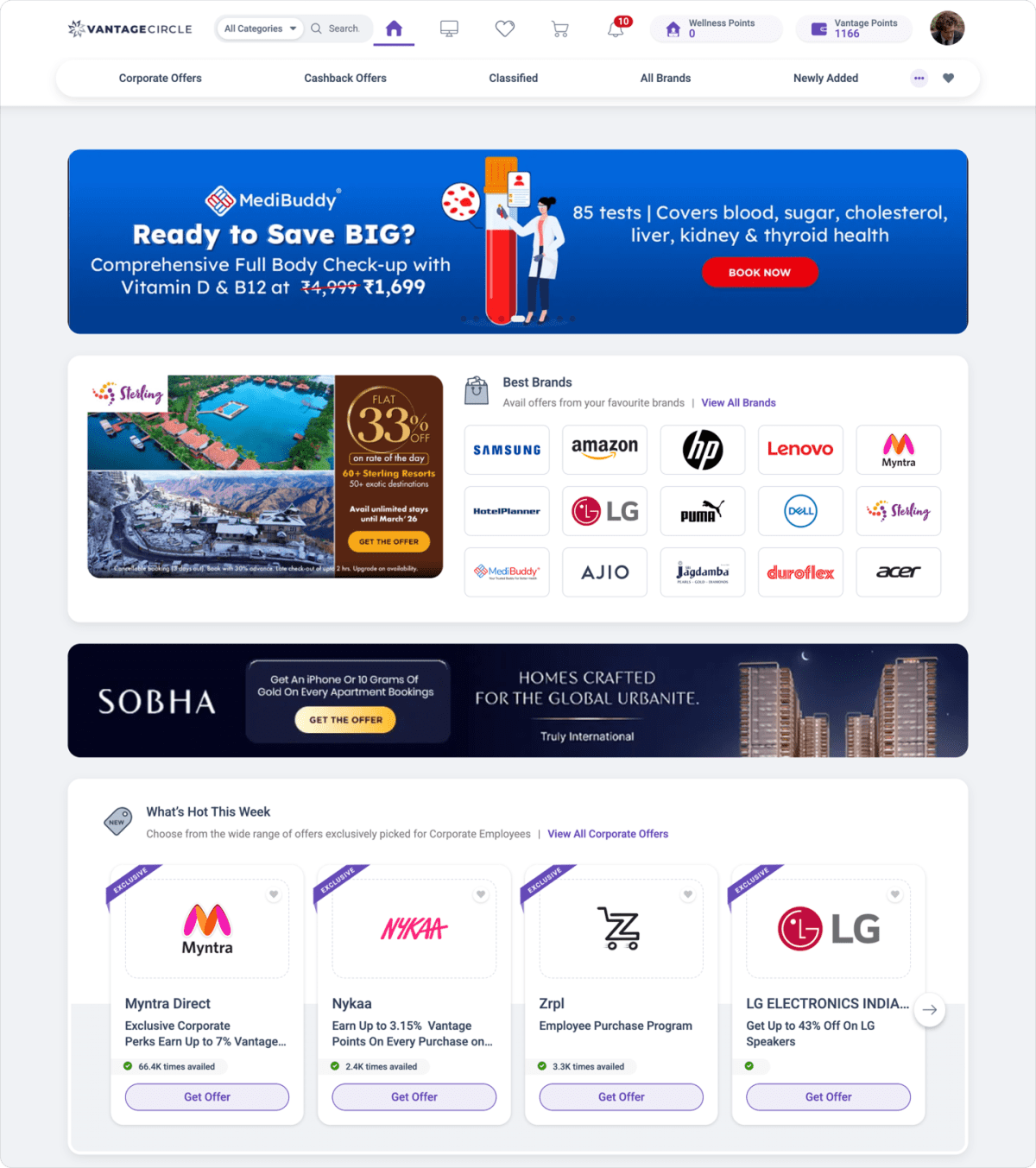
How to engage them: Competitive base pay is table stakes, but beyond salary, points-based reward systems that let employees redeem for high-value items or gift cards add meaningful flexibility to the total package. Employee perks and discounts on everyday purchases, travel, and lifestyle also stretch the effective value of compensation without increasing fixed costs. Critically: make the full financial value of their total rewards visible, not just their take-home pay. Many employees in this category are motivated by seeing the number — so show them.
6. The Deep Expert
Who they are: The deep expert has built their professional identity around mastery. They've read everything on the topic, follow field developments in their own time, and are genuinely frustrated when their expertise is underused or bypassed. For them, being recognized as a subject-matter authority matters as much as being recognized for output.
How to spot them: They're the go-to person on their team for hard questions. They stay current on field developments in their own time, and they find shallow, repetitive work demotivating. They're also often the most useful people in the room during a technical crisis — and the most quietly resentful when their knowledge is bypassed.
What disengages them: Being underutilized or ignored. An expert who isn't being challenged, who feels their knowledge isn't valued, or who receives no meaningful feedback on their work will disengage deeply — and often permanently. When it happens, the signs are subtle: they become more guarded with their knowledge, less collaborative, more transactional. By the time it's visible, they've usually already decided.
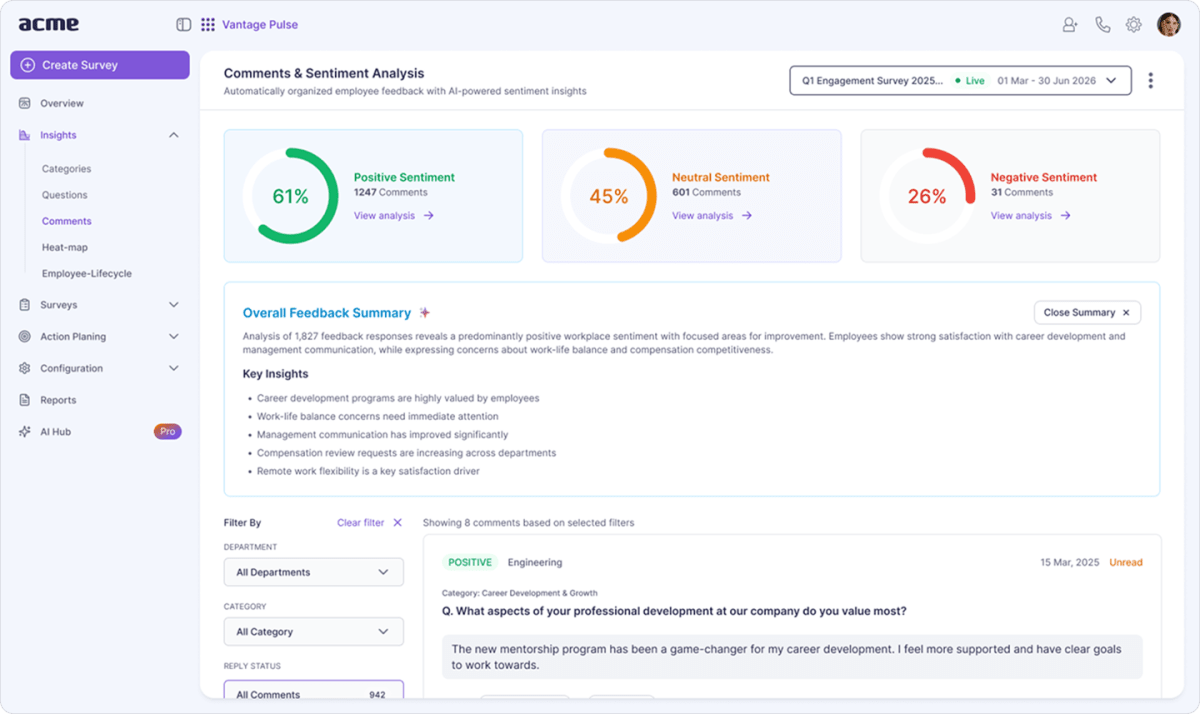
How to engage them: Learning and growth opportunities are the primary lever. Employee training and development — including access to conferences, certifications, and cross-functional projects — keeps them invested. But equally important is continuous feedback. This employee wants to know how their work is landing, not annually, but regularly. Gallup research shows employees who receive strengths-based feedback have 14.9% lower turnover — a finding that maps directly to this type. Vantage Pulse gives managers and HR tools to run continuous feedback cycles, so deep experts hear how their contributions are valued and where they can grow.
7. The Creative (The Maker)
Who they are: Give a creative a process to follow indefinitely and watch them quietly fade. They think in ideas, connect dots others miss, and want space to build something that didn't exist before. In practice: they're always pitching something in meetings, they approach standard problems from unusual angles, and they respond poorly to "that's not how we do things here" — not because they're difficult, but because they fundamentally believe most things can be done better. They're often your best problem-solvers precisely because they refuse to accept that the current way is the only way.
What disengages them: Routine and invisibility. Putting a creative in a role that rewards consistency over innovation, or failing to acknowledge when their ideas move the needle, will demotivate them quickly. They need to see that their thinking creates change — otherwise why think differently at all?
How to engage them: Keep them on new projects and give them genuine creative latitude. Critically, recognize their ideas visibly — spot awards tied to innovation or creative contributions send a clear message that the company values original thinking, not just execution. Involving them in cross-functional problem-solving also keeps them energized and prevents the stagnation that accelerates turnover for this type. Structured innovation recognition programs (where employees can nominate peers for creative impact) work particularly well.
8. The Autonomous Employee (The Free Spirit)
Who they are: The autonomous employee doesn't need to be managed — they need to be trusted. Give them a clear outcome and get out of the way. They push back on unnecessary check-ins and process overhead, prefer async communication, and tend to thrive in remote or hybrid settings where others struggle — because they already knew how to work independently. That's not laziness or a red flag; it's optimal conditions.
What disengages them: Micromanagement. This is non-negotiable. Excessive oversight, mandatory visibility theater (cameras on in every meeting, response-time SLAs on Slack), or outcome evaluation that's really just presence evaluation will actively push this employee out. Sometimes irreversibly.
A 2024 Nature study of over 1,600 employees found that hybrid work arrangements reduced quit rates by one-third.
For the autonomous employee, flexibility isn't a perk, it's a prerequisite.
How to engage them: Trust is the foundation. Outcomes-based performance measurement, flexible work arrangements, and recognition that highlights independent contributions — rather than participation in meetings — signal respect for how this employee works best. Wellness benefits and flexible lifestyle perks through Vantage Fit also resonate with this type, as they tend to value holistic autonomy over structured corporate programs.
9. The Culture Carrier (The Entertainer)
Who they are: High energy, widely liked, and the person who makes the workplace feel human. They don't just do their job — they actively make everyone around them better at theirs by lowering friction, raising morale, and making it easier for people to bring their whole self to work.
How to spot them: They're the reason a tense meeting ends on a lighter note. They read the energy in a room and adjust it — not through force of personality, but through genuine warmth and timing. New hires feel like part of the team faster when this person is around. In their absence, teams notice. They're not just participating in culture; they're actively making it.
What disengages them: Being invisible. The Culture Carrier's contribution is real but hard to measure — which means it often goes unrecognized in performance reviews and reward systems built purely around output metrics. When the company treats their cultural work as decoration rather than infrastructure, they stop doing it. And the environment quietly gets worse for everyone.
How to engage them: Give them a platform and formally recognize cultural impact — not just productivity. Spot awards tied to culture contribution, involvement in onboarding programs, and a role in shaping team rituals signal that the organization values what they bring. Wellness programs and team experiences also resonate, as they tend to invest heavily in team wellbeing well beyond their formal job description.
Why Getting This Right Matters More Than Ever
The stakes for engagement have never been higher. US employee engagement has hit a 10-year low — and disengaged employees aren't just unproductive, they're actively costly. Gallup estimates disengagement costs the global economy $10 trillion in lost productivity annually.
The organizations pulling engagement back up aren't doing it with one initiative. They're doing it by building systems that can reach different people in different ways — peer recognition for the social employee, public awards for the star performer, continuous feedback for the deep expert, flexibility for the autonomous employee. Multiple pathways, one consistent underlying message: we see you.
The three frameworks in this guide work together, not in isolation. Employment status tells you the structural reality you're operating in. Performance tells you the level of investment someone needs right now. Behavioral archetype tells you how to deliver that investment in a way that actually lands. Using all three gives managers a far more complete picture than any single lens alone.
A recognition and engagement platform like Vantage Circle is built to do exactly that — giving HR teams and managers the tools to reach every employee type, not just the loudest or most visible ones.
Frequently Asked Questions
1. What are the different types of employees in a workplace?
Employees can be categorized in several ways: by employment status (full-time, part-time, contract, seasonal), by performance level (high performers, core performers, low performers), or by behavioral and motivational type. The behavioral framework — which looks at what drives individual engagement — is typically most useful for managers focused on retention and performance.
2. What are the 4 main types of employees by performance?
A commonly used performance-based model identifies four types: high performers with high potential (invest heavily), high performers with lower potential (retain and reward), low performers with high potential (develop and support), and low performers with lower potential (manage out or redirect). Each requires a different management approach.
3. How do you manage different types of employees effectively?
The core principle is to match your management style to what the employee actually needs — not what's easiest to deliver uniformly. Star performers need public recognition. Experts need feedback and growth. Autonomous employees need trust and flexibility. Social employees need belonging and peer connection. The manager's job is to diagnose what's driving each person and adjust accordingly.
4. What type of employee is most valuable to an organization?
It depends on the context, but research consistently shows that engaged employees — regardless of archetype — outperform disengaged ones. Gallup finds that engaged teams show 23% higher profitability than disengaged ones. The most valuable employee isn't a specific type — it's any employee who is genuinely engaged in their role.
5. What is the difference between an engaged and a disengaged employee?
Engaged employees bring discretionary effort — they do more than what's required because they care about the outcome. Disengaged employees do the minimum. Actively disengaged employees can actively undermine team culture and performance. Nearly 1 in 5 US employees falls into the actively disengaged category — meaning they're not just checked out, they're creating problems. The shift from disengaged to engaged typically requires addressing the specific unmet need that caused the disengagement in the first place.
6. How do you identify what type of employee someone is?
Observation over time is the most reliable method. Pay attention to what energizes them (social interaction, solo deep work, new challenges, stability), what they complain about (micromanagement, isolation, lack of recognition, stagnation), and what they ask for in development conversations. Regular one-on-ones and [pulse surveys](/en/blog/pulse-surveys/) also surface motivational patterns that aren't visible in day-to-day work.

Susmita Sarma is a Digital Marketer at Vantage Circle, making employee recognition less of a checkbox and more meaningful - helping organizations say we value our people and truly mean it.
Connect with Susmita on LinkedIn.